
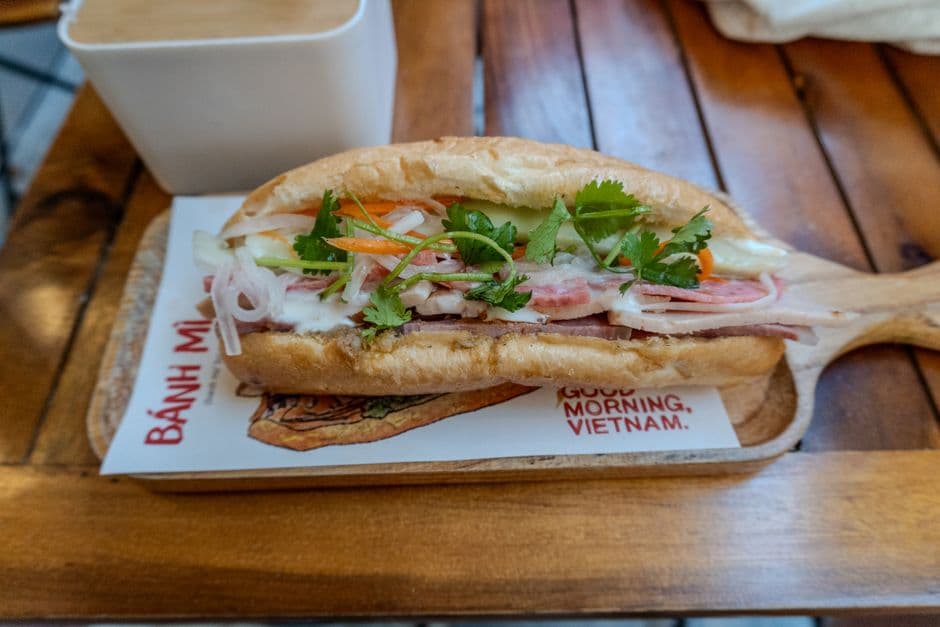
Bánh Mì — Bocadillo Vietnamita
El legendario bocadillo vietnamita en baguette relleno de cerdo, daikon y zanahoria encurtidos, hierbas frescas, chile y paté: una unión perfecta de sabores franceses y vietnamitas.
Acerca de esta receta
El bánh mì es quizá el mejor bocadillo del mundo: una obra maestra de fusión culinaria nacida del periodo colonial francés en Vietnam. El nombre significa simplemente 'pan' en vietnamita, en referencia a la baguette adaptada que se volvió central en la cultura de la comida callejera vietnamita. Lo que lo hace extraordinario es el contraste: la baguette crujiente y aireada se unta con un rico paté de hígado de cerdo y mayonesa, y luego se carga con cerdo char siu o panceta agridulce, daikon y zanahoria encurtidos y ácidos, pepino fresco, cilantro brillante, chile en rodajas ardiente y un chorro de salsa Maggi. Cada bocado ofrece crujiente, picante, acidez, untuosidad y frescor a la vez.
Ingredientes
Sirve 4
- 4baguettes vietnamitas o baguettes francesas ligeras(de 25–30 cm cada una)
- 400 gpanceta o paletilla de cerdo(para el char siu)
- 3 cdasalsa hoisin
- 2 cdasalsa de soja
- 1 cdamiel
- 1 cdtapolvo de cinco especias chino
- 2 dientesajo(picado)
- 1 cdtaaceite de sésamo
- 200 grábano daikon(pelado, en juliana)
- 2zanahorias grandes(peladas, en juliana)
- 4 cdavinagre de vino de arroz
- 2 cdaazúcar blanquilla
- 1 cdtasal(para los encurtidos)
- 80 gpaté suave de hígado de cerdo(o paté de hígado de pollo)
- 4 cdamayonesa japonesa o Kewpie
- 1pepino(en bastones finos)
- 1 manojo grandecilantro fresco
- 2–4chiles frescos rojos o verdes(en rodajas finas)
- 2 cdtasalsa Maggi o salsa de soja ligera(para rociar)
Instrucciones
- 1
Hacer los encurtidos (esto primero)
Combina el daikon y la zanahoria en juliana en un bol. Mézclalos con 1 cucharadita de sal y déjalos 15 minutos: soltarán agua y se ablandarán. Exprime el agua con firmeza. En un cazo pequeño, calienta el vinagre de vino de arroz, el azúcar y 4 cucharadas de agua hasta que el azúcar se disuelva. Vierte sobre las verduras aún caliente. Deja enfriar por completo y luego refrigera al menos 30 minutos. Los encurtidos pueden hacerse hasta con una semana de antelación y guardarse en un tarro en la nevera.
Los encurtidos son la columna vertebral del bánh mì: aportan la acidez que corta el rico paté y el cerdo. No te saltes ni apresures este paso.
- 2
Marinar y cocinar el cerdo char siu
Combina la salsa hoisin, la salsa de soja, la miel, las cinco especias, el ajo y el aceite de sésamo en un bol. Haz cortes en la panceta o paletilla con un cuchillo afilado y cúbrela bien con la marinada. Tapa y marina al menos 30 minutos a temperatura ambiente, o toda la noche en la nevera. Cocina sobre una rejilla en el horno a 200 °C durante 25–30 minutos, pincelando con la marinada restante a mitad de cocción, hasta que esté caramelizado y hecho. Deja reposar 10 minutos y luego corta en rodajas finas.
- 3
Preparar el pan
El pan es fundamental para un bánh mì auténtico. Las baguettes vietnamitas son más ligeras y menos correosas que las francesas: tienen una corteza más fina y crujiente y una miga más aireada. Si usas baguettes francesas, retira algo de miga del interior para crear espacio y reducir la proporción de masa respecto al relleno. Si el pan no está recién salido del horno, caliéntalo a 180 °C durante 5 minutos para recuperar el crujiente antes de montar.
- 4
Montar el bánh mì
Abre la baguette casi por completo, dejando un borde como bisagra. Unta el interior de la mitad superior con paté. Unta el interior de la mitad inferior generosamente con mayonesa. Dispón el cerdo char siu en rodajas sobre la mayonesa. Añade un montón generoso de daikon y zanahoria encurtidos y escurridos. Añade los bastones de pepino y un puñado grande de cilantro fresco: no seas tímido, el cilantro debe ser abundante.
- 5
Añadir el picante y terminar
Coloca chile fresco en rodajas por encima, tanto o tan poco como prefieras. Rocía unas gotas de salsa Maggi o salsa de soja ligera sobre el relleno. Cierra el bocadillo con firmeza. Los mejores bánh mì se comen de inmediato, mientras el pan sigue crujiente. Envuélvelo en papel si vas a comerlo de camino.
¿Has preparado esta receta?
Valórala y ayuda a otros a encontrar las recetas que de verdad funcionan.
Inicia sesión con un toque y guardaremos la valoración que acabas de elegir.
Todo lo que necesitas para planificar tu semana — gratis
- Calendario de comidas
- Lista de compras
- Ideas de recetas con IA
Controla lo que comes
Fotografía tu comida para registrar calorías y macros, usa temporizadores de ayuno y controla tu agua en la app gratuita SnapCal.
Consejos profesionales
- →
El pan fresco y de buena calidad es el factor más importante. Un bánh mì hecho con pan duro o demasiado correoso nunca satisface. Busca panaderías vietnamitas si puedes.
- →
La combinación de paté Y mayonesa no es opcional: ambos son esenciales para la untuosidad que equilibra los encurtidos y las hierbas.
- →
Haz una tanda grande de encurtidos: duran dos semanas en la nevera y realzan de todo, desde el bánh mì hasta tacos, pescado a la parrilla y ensaladas.
- →
Para el resultado más auténtico, incluye chả lụa (embutido de cerdo vietnamita, disponible en supermercados asiáticos) como proteína adicional junto al char siu.
Variaciones
- •
Bánh mì de tofu: marina y dora en sartén tofu firme con la marinada de char siu para una versión vegana satisfactoria; los encurtidos y las hierbas no cambian.
- •
Bánh mì de pollo a la hierba limón: marina muslos de pollo con hierba limón, salsa de pescado, ajo y chile antes de asarlos para una alternativa más ligera y aromática.
- •
Banh mi thit nguoi (estilo fiambres): omite el char siu y usa fiambres vietnamitas —embutido chả lụa, queso de cabeza y jamón vietnamita— para la versión de puesto callejero de Saigón.
- •
Vegetariana: cambia la proteína por setas king oyster asadas, tofu ahumado o garbanzos cocidos; ajusta la sazón ligeramente al alza para compensar.
Almacenamiento
El bánh mì debe montarse y comerse de inmediato: no se conserva bien una vez armado. Los componentes individuales se conservan bien: los encurtidos 2 semanas refrigerados en un tarro, el cerdo char siu 3 días refrigerado y recalentado, el paté según su envase. Monta al momento para mejores resultados.
Historia y origen
El bánh mì nació durante el periodo colonial francés en Vietnam (1887–1954), cuando se introdujeron las baguettes en el país. Los panaderos vietnamitas adaptaron la receta, creando un pan más ligero con una corteza más fina y crujiente, adecuada al clima tropical. Tras la caída de Saigón en 1975, la diáspora vietnamita difundió el bánh mì por Australia, Francia, Estados Unidos y más allá, donde ganó una devota afición internacional. Hoy se reconoce ampliamente como uno de los grandes bocadillos del mundo y aparece en las cartas de restaurantes con estrella Michelin y de humildes puestos callejeros por igual.
Preguntas frecuentes
¿En qué se diferencia una baguette vietnamita de una francesa?
Las baguettes vietnamitas se hacen con una mezcla de harina de trigo y, a veces, una pequeña cantidad de harina de arroz, lo que produce una miga más ligera y delicada y una corteza excepcionalmente fina y crujiente. Son más cortas que las baguettes francesas y pesan bastante menos. Las baguettes francesas tienen un interior más correoso y denso y una corteza más gruesa. Para el bánh mì, buscas la textura más ligera: el pan debe aportar crujiente sin competir con el relleno. Si usas baguette francesa, vacía algo de miga para compensar.
¿Puedo sustituir el paté de hígado de cerdo?
El paté de hígado de pollo es un sustituto muy usado y excelente, con un sabor algo más suave y dulce. En un apuro, un buen paté suave de hígado de pato también funciona de maravilla. Si quieres evitar el paté de hígado por completo, una fina capa de queso crema aporta una untuosidad cremosa, aunque carece del característico sabor salado y profundo. Algunos bánh mì en Vietnam omiten el paté por completo y usan solo mayonesa: el bocadillo queda más ligero pero sigue siendo delicioso.
¿El bánh mì siempre se hace con cerdo?
No. El cerdo es la proteína más tradicional en el bánh mì thit (bánh mì de carne), pero el bocadillo es maravillosamente versátil. Los rellenos habituales incluyen pollo a la parrilla, ternera a la hierba limón, gambas, sardinas y versiones totalmente sin carne con tofu, huevos o solo verduras. El bánh mì trứng (bánh mì de huevo) —con un huevo frito como proteína— es una versión popular y muy económica que se vende en los puestos de desayuno vietnamitas. Los encurtidos, las hierbas, el paté y el pan son las constantes; la proteína es adaptable.
¿Puedo prepararlo con antelación?
Sí; la mayoría de los componentes pueden prepararse hasta un día antes y refrigerarse por separado. Recalienta suavemente y monta justo antes de servir para que las texturas se mantengan distintas.
Datos nutricionales
Por porción (380g) · 4 porciones totales
Resumen de tiempo
¿Tiene preguntas?
Pregúntele a nuestro asistente de cocina con IA cualquier cosa sobre esta receta: sustituciones, técnicas, escalado.
Chatea con AI Chef →Destacado en Guías
Esta receta aparece en las siguientes guías seleccionadas:
Más recetas de cocina vietnamita
También Te Puede Gustar
Platos similares de otras cocinas del mundo.
Explorar por Ingrediente
Más recetas construidas alrededor de los mismos ingredientes principales.
Herramientas de Cocina Gratuitas
Calculadoras y conversores que acompañan a esta página — sin registro.
Calculadora para escalar recetas
Reduce a la mitad o duplica cada cantidad de esta receta sin hacer cuentas mentales.
Conversor de medidas
Convierte tazas, gramos, onzas y mililitros en ambos sentidos.
Conversor para freidora de aire
Convierte el tiempo y la temperatura del horno a ajustes de freidora de aire.
Conviértelo en un Plan
Prográmalo, haz la compra y controla lo que ya tienes.
Calendario de planificación de comidas
Coloca esta receta en un día y organiza la semana a su alrededor.
App de lista de la compra
Convierte esta lista de ingredientes en una lista de la compra agrupada por pasillo.
Importador de recetas
Guarda esta receta —y cualquier URL de receta— en una biblioteca ordenada.
Sigue Leyendo
Lecturas más largas que profundizan en las ideas detrás de este plato.
Cocina vietnamita: una guía completa de Pho, Banh Mi y el arte del sabor fresco
14 mín.
Linaza, lignanos y equilibrio hormonal: una ciencia completa explicada
12 mín.
La dieta Galveston para la menopausia: una alimentación antiinflamatoria completa para combatir el aumento de peso en la mediana edad
14 mín.
Comunidad
Únete a la conversación
Inicia sesión para dejar un comentario y guardar tus recetas favoritas