
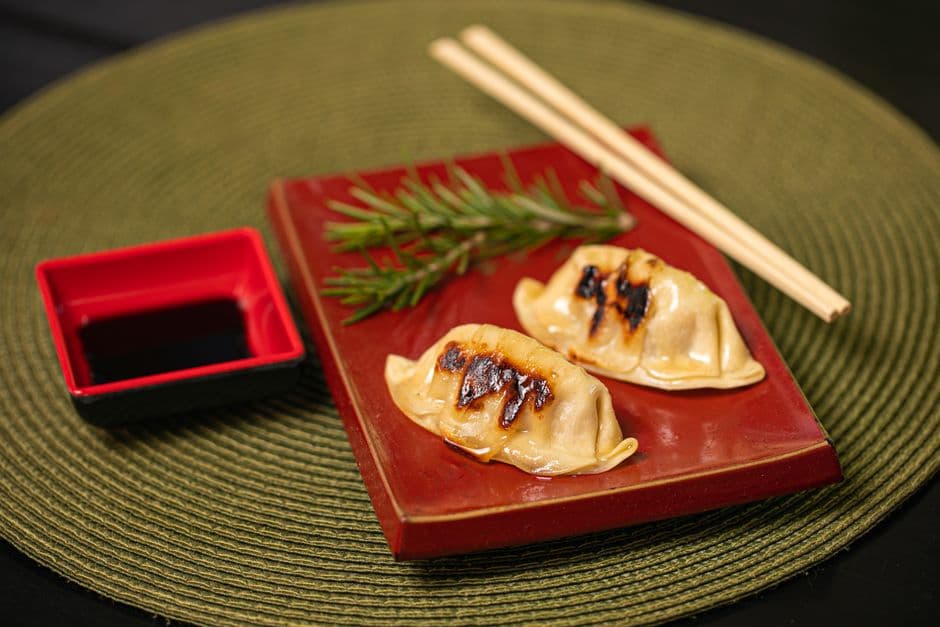
Gyoza
Las queridas empanadillas japonesas a la plancha: una base crujiente y dorada y una parte superior tierna al vapor, rellenas de jugoso cerdo, col y jengibre, servidas con una salsa para mojar ácida.
Acerca de esta receta
Los Gyoza (餃子) llegaron a Japón desde China como una versión de los jiaozi, pero los japoneses los transformaron en algo claramente propio: de masa más fina, sazonados de forma más delicada y cocinados con la característica técnica de 'freír al vapor' (yaki-mushi) que produce simultáneamente una base perfectamente crujiente y una parte superior tierna al vapor. El relleno clásico es cerdo picado combinado con col china finamente rallada y salada (que suelta su humedad antes de escurrirse a presión), cebollino ajo, jengibre y aceite de sésamo: una combinación de sabor delicado y textura jugosa. El pliegue plisado es la marca de un experto en gyoza. Los gyoza se sirven con una salsa para mojar de salsa de soja, vinagre de arroz y unas gotas de aceite de chile, y son una de las tapas de bar (izakaya) más populares de Japón, a menudo comidas con cerveza fría.
Ingredientes
Sirve 4
- 250 gcerdo picado
- 200 gcol china(finamente rallada)
- 2 cucharadascebollino ajo (nira)(finamente picado; o cebolleta)
- 2 dientesajo(finamente picado)
- 1 cucharaditajengibre fresco(finamente rallado)
- 1 cucharadasalsa de soja
- 1 cucharadaaceite de sésamo
- 1 cucharaditasake o vino de Shaoxing
- 0.5 cucharaditapimienta blanca
- 30obleas para gyoza(redondas, compradas o caseras)
- 3 cucharadasaceite vegetal(para freír)
- 100 mlagua(para cocer al vapor)
- 3 cucharadassalsa de soja(para la salsa para mojar)
- 1 cucharadavinagre de arroz(para la salsa para mojar)
- 0.5 cucharaditaaceite de chile(para la salsa para mojar)
Instrucciones
- 1
Preparar la col
Mezcla la col rallada con una generosa pizca de sal. Deja reposar 10 minutos, luego escurre con las manos toda la humedad posible. Este paso es esencial: la col mojada cuece el relleno al vapor y lo vuelve aguado.
Escurrir bien la col es el paso más importante para un relleno jugoso pero no aguado. Usa un paño de cocina limpio para exprimir hasta la última gota.
- 2
Preparar el relleno
Combina el cerdo picado, la col escurrida, el cebollino ajo, el ajo, el jengibre, la salsa de soja, el aceite de sésamo, el sake y la pimienta blanca. Mezcla con energía en una sola dirección hasta que el relleno se vuelva pegajoso y se mantenga unido: esto desarrolla la estructura proteica para un relleno jugoso.
- 3
Plegar los gyoza
Coloca una oblea de gyoza en la palma de la mano. Añade una cucharadita rasa de relleno en el centro. Moja un dedo en agua y humedece la mitad del borde de la oblea. Pliega en media luna y presiona los bordes para sellar. En la parte delantera, haz 4–5 pequeños pliegues para darle al gyoza su característica forma de media luna. Presiona con firmeza para sellar.
- 4
Freír los gyoza a la plancha
Calienta el aceite vegetal en una sartén antiadherente grande a fuego medio-alto. Coloca los gyoza con el lado plano hacia abajo en una sola capa sin que se toquen. Cocina durante 2–3 minutos hasta que las bases estén doradas.
- 5
Terminar al vapor
Vierte 100 ml de agua alrededor de los gyoza (con cuidado, ya que salpicará), tapa de inmediato y cuece al vapor durante 5–6 minutos hasta que el agua se haya evaporado y las obleas estén translúcidas y bien cocidas. Retira la tapa y deja que la humedad restante se evapore durante 1 minuto para que las bases vuelvan a quedar crujientes.
- 6
Servir
Desliza sobre un plato, con el lado crujiente hacia arriba. Mezcla la salsa de soja, el vinagre de arroz y el aceite de chile para la salsa para mojar. Sirve de inmediato.
¿Has preparado esta receta?
Valórala y ayuda a otros a encontrar las recetas que de verdad funcionan.
Inicia sesión con un toque y guardaremos la valoración que acabas de elegir.
Todo lo que necesitas para planificar tu semana — gratis
- Calendario de comidas
- Lista de compras
- Ideas de recetas con IA
Controla lo que comes
Fotografía tu comida para registrar calorías y macros, usa temporizadores de ayuno y controla tu agua en la app gratuita SnapCal.
Consejos profesionales
- →
Mezclar el relleno en una sola dirección desarrolla la proteína y da a los gyoza una textura jugosa y firme en lugar de desmenuzable.
- →
No rellenes en exceso: una cantidad pequeña y ordenada de relleno se sella más fácilmente y se cocina por igual.
- →
Una sartén antiadherente es esencial; los gyoza se pegan con violencia al acero inoxidable durante la fase de vapor.
- →
Prueba y ajusta la sal justo al final: los sabores se concentran a medida que los líquidos se reducen, y una pizca final de sal en escamas realza todo el plato.
Variaciones
- •
Los gyoza vegetarianos usan tofu firme, setas y col con jengibre y aceite de sésamo.
- •
Los gyoza de gamba (ebi gyoza) combinan gamba picada con un poco de grasa de cerdo para un relleno delicado y jugoso.
- •
Más picante: añade un chile fresco finamente picado o una cucharadita de pimiento de Alepo/Urfa triturado a los aromáticos para un calor cálido y con capas en vez de un golpe único y agudo.
- •
Más ligero: reduce la grasa en un tercio y termina con un chorrito de cítrico o un toque de vinagre para mantener la frescura sin perder cuerpo.
Almacenamiento
Congela los gyoza sin cocinar en una bandeja en una sola capa, luego pásalos a bolsas. Cocina directamente del congelador, añadiendo 2 minutos al tiempo de vapor. Los gyoza cocidos se conservan 2 días en la nevera.
Historia y origen
Los gyoza fueron introducidos en Japón por soldados que regresaban de China tras la Segunda Guerra Mundial, que trajeron consigo los jiaozi del norte de China. Los cocineros japoneses modificaron la receta —usando obleas más finas, más ajo y una mayor proporción de verdura respecto al cerdo—, creando una empanadilla claramente japonesa. Utsunomiya y Hamamatsu se consideran las capitales del gyoza en Japón.
Preguntas frecuentes
¿Puedo hervir los gyoza en lugar de freírlos?
Sí: los suigyoza (gyoza hervidos) se cuecen en agua a fuego lento durante 5 minutos hasta que flotan. La textura es más blanda y delicada. Suelen servirse en un caldo ligero.
¿Puedo prepararlo con antelación?
Sí, la mayoría de los componentes pueden prepararse hasta un día antes y refrigerarse por separado. Recalienta con suavidad y monta justo antes de servir para que las texturas se mantengan diferenciadas.
¿Qué puedo sustituir si no tengo todos los ingredientes?
Mantente cerca del papel que cumple cada ingrediente: sustituye los aromáticos por otros similares (chalota por cebolla, lima por limón) y conserva el equilibrio de grasa, ácido y sal. Las mezclas de especias suelen poder aproximarse con lo que haya en la despensa.
¿Cómo sé si es auténtico?
La autenticidad se sitúa en un espectro; lo que más importa es honrar la técnica y el equilibrio de sabores. Si el plato sabe armonioso y respeta cómo lo elaborarían los cocineros de su región de origen, vas por buen camino.
Datos nutricionales
Por porción (300g) · 4 porciones totales
Resumen de tiempo
¿Tiene preguntas?
Pregúntele a nuestro asistente de cocina con IA cualquier cosa sobre esta receta: sustituciones, técnicas, escalado.
Chatea con AI Chef →Destacado en Guías
Esta receta aparece en las siguientes guías seleccionadas:
Más recetas de cocina japonesa
También Te Puede Gustar
Platos similares de otras cocinas del mundo.
Explorar por Ingrediente
Más recetas construidas alrededor de los mismos ingredientes principales.
Herramientas de Cocina Gratuitas
Calculadoras y conversores que acompañan a esta página — sin registro.
Calculadora para escalar recetas
Reduce a la mitad o duplica cada cantidad de esta receta sin hacer cuentas mentales.
Conversor de medidas
Convierte tazas, gramos, onzas y mililitros en ambos sentidos.
Conversor para freidora de aire
Convierte el tiempo y la temperatura del horno a ajustes de freidora de aire.
Conviértelo en un Plan
Prográmalo, haz la compra y controla lo que ya tienes.
Calendario de planificación de comidas
Coloca esta receta en un día y organiza la semana a su alrededor.
App de lista de la compra
Convierte esta lista de ingredientes en una lista de la compra agrupada por pasillo.
Importador de recetas
Guarda esta receta —y cualquier URL de receta— en una biblioteca ordenada.
Sigue Leyendo
Lecturas más largas que profundizan en las ideas detrás de este plato.
Alimentos fermentados japoneses: beneficios completos para la salud del miso, la salsa de soja, el natto y el tsukemono
16 mín.
Cocina casera japonesa: platos, técnicas y productos básicos de despensa esenciales que todo cocinero debería dominar
14 mín.
Elementos esenciales de la despensa japonesa: 15 ingredientes completos que desbloquean la cocina japonesa
15 mín.
Comunidad
Únete a la conversación
Inicia sesión para dejar un comentario y guardar tus recetas favoritas