
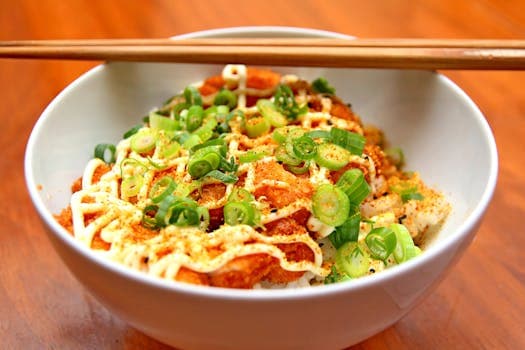
Katsudon (bol de arroz con chuleta de cerdo y huevo)
La comida reconfortante por excelencia de Japón: crujiente chuleta de cerdo tonkatsu cocida brevemente en una salsa de dashi, soja y mirin con huevo, servida sobre arroz al vapor. Pura satisfacción entre semana.
Acerca de esta receta
El katsudon es uno de los platos donburi (bol de arroz) más queridos de Japón y un clásico del yoshoku, la cocina japonesa de influencia occidental. Una chuleta de cerdo tonkatsu prefrita se cuece brevemente en una salsa dashi agridulce con cebolla en rodajas, y luego se termina con huevo vertido por encima en los últimos 30 segundos. El huevo apenas cuaja —solo cuajado pero aún cremoso— antes de volcar todo sobre arroz caliente al vapor. El resultado es una sucesión de texturas y sabores: cerdo empanado crujiente que se ablanda ligeramente en la salsa, cebolla agridulce, huevo sedoso a medio cuajar y arroz esponjoso que absorbe todos los jugos de cocción. El katsudon se come tradicionalmente antes de los exámenes en Japón: 'katsu' es un homófono de la palabra que significa 'ganar' o 'superar'. Arraigado en la cocina cotidiana de los hogares japoneses, el Katsudon (bol de arroz con chuleta de cerdo y huevo) equilibra técnica y tradición: las chuletas de lomo de cerdo (unos 150 g cada una), sin grasa se tratan con cuidado, recurriendo a proporciones consagradas que los lugareños han perfeccionado a lo largo de generaciones. El plato lleva una firma sensorial inconfundible: aromas que llenan la cocina mientras se cocina, texturas en capas que se revelan bocado a bocado y una profundidad de sabor que proviene de un sazonado paciente y no de atajos. Ya se sirva como cena entre semana o como pieza central de una mesa de celebración, refleja una despensa regional donde los productos locales, los hábitos de sazonado y los utensilios de cocción dan forma al resultado final. Quienes cocinan este plato en casa suelen notar lo indulgente que es una vez que se comprende el método básico, y cómo unas pocas pequeñas decisiones —la frescura de las chuletas de lomo de cerdo (unos 150 g cada una), sin grasa, el orden de los ingredientes, el tiempo de reposo al final— separan una buena versión de una memorable. Esta receta recorre esas decisiones para que el plato llegue con el carácter que tiene en su tierra natal.
Ingredientes
Sirve 2
- 2chuletas de lomo de cerdo (unos 150 g cada una), sin grasa
- 30 gharina común
- 1huevo, batido (para rebozar)
- 80 gpan rallado panko
- 300 mlaceite vegetal, para freír
- 1cebolla mediana, en rodajas finas
- salsa
- 200 mlcaldo dashi
- 3 cdasalsa de soja
- 3 cdamirin
- 1 cdaazúcar extrafino
- 4huevos, ligeramente batidos (para el katsudon)
- 400 garroz japonés de grano corto cocido, caliente
- 2 cdacebolleta en rodajas finas, para decorar
Instrucciones
- 1
Preparar el tonkatsu
Haz cortes en el borde graso de cada chuleta con un cuchillo (evita que se enrosque). Golpéalas suavemente para igualar el grosor. Sazona con sal y pimienta. Reboza en harina, sumerge en huevo batido y luego presiona con firmeza en el pan rallado panko.
- 2
Freír las chuletas
Calienta el aceite a 170 °C en una sartén honda. Fríe las chuletas durante 4–5 minutos por lado hasta que estén bien doradas y cocidas por dentro (72 °C de temperatura interna). Escurre sobre una rejilla. Córtalas en rodajas de 2 cm: mantén la chuleta unida como una sola pieza.
- 3
Preparar el katsudon
En una sartén pequeña (20 cm), combina el dashi, la soja, el mirin y el azúcar. Lleva a fuego lento a fuego medio. Añade las rodajas de cebolla y cuece a fuego lento 3–4 minutos hasta que se ablanden.
- 4
Añadir la chuleta
Coloca el tonkatsu en rodajas sobre las cebollas hirviendo a fuego lento. Vierte el huevo batido con movimiento circular sobre la chuleta. Tapa la sartén de inmediato.
- 5
Cuajar el huevo
Cocina tapado durante exactamente 30–45 segundos. El huevo debe quedar apenas cuajado por encima pero aún cremoso. No lo cocines en exceso: el huevo sigue cuajándose con el calor residual al colocarlo sobre el arroz.
- 6
Servir
Vuelca todo el contenido de la sartén sobre un bol de arroz caliente. Decora con cebolleta.
¿Has preparado esta receta?
Valórala y ayuda a otros a encontrar las recetas que de verdad funcionan.
Inicia sesión con un toque y guardaremos la valoración que acabas de elegir.
Todo lo que necesitas para planificar tu semana — gratis
- Calendario de comidas
- Lista de compras
- Ideas de recetas con IA
Controla lo que comes
Fotografía tu comida para registrar calorías y macros, usa temporizadores de ayuno y controla tu agua en la app gratuita SnapCal.
Consejos profesionales
- →
El tamaño pequeño de la sartén importa: conviene que el huevo se acumule alrededor de la chuleta y cuaje de manera uniforme, no que se extienda fino sobre una superficie grande.
- →
Retira del fuego mientras el huevo aún esté un poco crudo: termina de cuajarse sobre el arroz caliente.
- →
Si no tienes dashi, usa 200 ml de agua + 1 cucharadita de dashi en polvo (hondashi) como atajo.
- →
Consigue las chuletas de lomo de cerdo (unos 150 g cada una), sin grasa más frescas que encuentres: son el ancla de sabor del plato.
- →
Sazona en capas a medida que avanzas; probar en cada etapa evita un resultado final soso o demasiado salado.
Variaciones
- •
Katsudon de pollo: sustituye el cerdo por pechuga de pollo, igual de delicioso y ligeramente más ligero.
- •
Oyakodon: omite el tonkatsu por completo; cuece trozos de pollo con cebolla en la misma salsa y añade huevo para terminar. El otro donburi icónico de Japón.
- •
Katsudon con queso: coloca una loncha de queso suave sobre la chuleta antes de añadir el huevo.
- •
Vegetariana: sustituye la proteína principal por champiñones, paneer, tofu o legumbres contundentes para una versión sin carne.
- •
Más picante: añade chile fresco, una pasta de chile o una pizca de cayena con los aromáticos para un perfil más cálido.
Almacenamiento
Mejor comerlo de inmediato. Si lo preparas con antelación, mantén separados el tonkatsu frito y los componentes de la salsa y ensámblalos por ración.
Historia y origen
El katsudon se creó a principios del siglo XX, combinando el entonces recién popularizado tonkatsu (un plato yoshoku de influencia occidental) con la tradición japonesa del donburi. La zona de la Universidad de Waseda, en Tokio, reclama su origen, y la cultura universitaria difundió el plato como comida asequible para estudiantes. La asociación de su nombre con 'katsu' (ganar) lo convirtió en una comida tradicional antes de los exámenes.
Preguntas frecuentes
¿Puedo preparar el Katsudon (bol de arroz con chuleta de cerdo y huevo) con antelación?
Sí: la mayoría de los componentes se conservan bien en la nevera durante uno o dos días. Recalienta suavemente con un chorrito de líquido para devolverle la vida.
¿Por qué puedo sustituir las chuletas de lomo de cerdo (unos 150 g cada una), sin grasa?
Si las chuletas de lomo de cerdo (unos 150 g cada una), sin grasa son difíciles de encontrar, los sustitutos más cercanos comparten su textura y contenido de agua. Ajusta ligeramente el sazón, ya que los sustitutos suelen tener menos carácter propio.
¿Es esta receta auténtica de la cocina japonesa?
Sigue la plantilla casera más ampliamente aceptada. Existen variantes regionales y señalamos las principales en la sección de variaciones.
¿Por qué mi versión quedó sosa?
Normalmente por falta de sazón o por apresurar la etapa de los aromáticos. Construye el sabor en capas, prueba a medida que avanzas y termina con un toque de acidez o sal para realzar el plato.
Datos nutricionales
Por porción · 2 porciones totales
Resumen de tiempo
¿Tiene preguntas?
Pregúntele a nuestro asistente de cocina con IA cualquier cosa sobre esta receta: sustituciones, técnicas, escalado.
Chatea con AI Chef →Destacado en Guías
Esta receta aparece en las siguientes guías seleccionadas:
Más recetas de cocina japonesa
También Te Puede Gustar
Platos similares de otras cocinas del mundo.
Explorar por Ingrediente
Más recetas construidas alrededor de los mismos ingredientes principales.
Herramientas de Cocina Gratuitas
Calculadoras y conversores que acompañan a esta página — sin registro.
Conviértelo en un Plan
Prográmalo, haz la compra y controla lo que ya tienes.
Calendario de planificación de comidas
Coloca esta receta en un día y organiza la semana a su alrededor.
App de lista de la compra
Convierte esta lista de ingredientes en una lista de la compra agrupada por pasillo.
Importador de recetas
Guarda esta receta —y cualquier URL de receta— en una biblioteca ordenada.
Sigue Leyendo
Lecturas más largas que profundizan en las ideas detrás de este plato.
Comunidad
Únete a la conversación
Inicia sesión para dejar un comentario y guardar tus recetas favoritas