
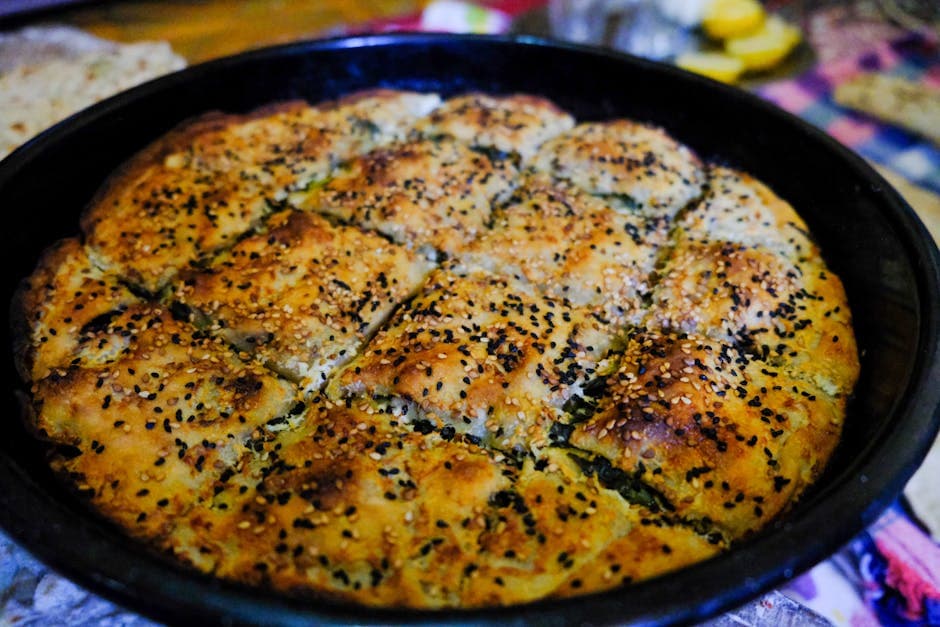
Malawach (Yemeni Jewish Flaky Pan Bread)
El extraordinario pan hojaldrado en capas de Yemen: laminado con mantequilla clarificada y frito hasta que las capas se separan formando una estructura crujiente similar a un panal. Servido con tomate rallado, zhug y miel.
Acerca de esta receta
El malawach (מלאווח) es uno de los grandes panes del mundo y, después de la inmigración masiva de judíos yemeníes a Israel en las décadas de 1940 y 1950, se ha convertido en un elemento definitorio de la cultura israelí del desayuno y la comida callejera. Es un pan laminado: capas de masa separadas por mantequilla clarificada, dobladas repetidamente (como el croissant o la técnica del filo) y luego fritas en lugar de horneadas, lo que hace que las capas se separen en una estructura crujiente en forma de panal que es simultáneamente crujiente en los bordes y masticable por dentro. Los acompañamientos tradicionales: tomate fresco rallado (salado y escurrido, servido frío), zhug (pasta de chile verde yemení) y un chorrito de miel; la combinación de pan crujiente, acidez del tomate crudo, zhug picante y miel dulce es extraordinaria.
Ingredientes
Sirve 4
- 2 tazasharina simple
- 0.5 cdtasal
- 1 cdtaazúcar
- 0.5 tazaagua tibia(approximately)
- 100 gmantequilla clarificada (ghee) o mantequilla normal(softened)
- 3tomates(cortado por la mitad y rallado en un rallador de caja (tomate rallado))
- 1 cdtasal
- 3 cdamiel
- 4 cdasalsa zhug o chile verde
Instrucciones
- 1
Preparar la masa
Mezclar harina, sal y azúcar. Agrega suficiente agua para formar una masa tersa y suave. Amasar 5 min. Descansar tapado 20 min.
- 2
Dividir y reposar
Dividir en 4 bolas iguales. Aplana cada uno ligeramente, unta con mantequilla suave y apila con mantequilla entre ellos. Refrigerar 30 min.
- 3
Laminate
Trabajando con una porción, enrolle hasta formar un rectángulo muy fino (30×20 cm). Extienda una fina capa de mantequilla blanda sobre la superficie. Doblar en tercios (como una letra). Gire 90° y vuelva a enrollar. Doblar en tercios nuevamente. Aplanar suavemente hasta formar un disco.
Cuantas más capas de mantequilla, más escamoso será el resultado. Es más fácil trabajar con mantequilla fría.
- 4
Pan-fry
Calienta una sartén seca a fuego medio. Cocine el malawach de 3 a 4 minutos por lado hasta que esté bien dorado y crujiente, con las capas visiblemente separadas en los bordes.
- 5
Serve
Sirva inmediatamente con tomate rallado (sazonado con sal), zhug y miel para rociar.
¿Has preparado esta receta?
Valórala y ayuda a otros a encontrar las recetas que de verdad funcionan.
Inicia sesión con un toque y guardaremos la valoración que acabas de elegir.
Todo lo que necesitas para planificar tu semana — gratis
- Calendario de comidas
- Lista de compras
- Ideas de recetas con IA
Controla lo que comes
Fotografía tu comida para registrar calorías y macros, usa temporizadores de ayuno y controla tu agua en la app gratuita SnapCal.
Consejos profesionales
- →
La masa debe quedar muy fina cuando la lamine; trate de que quede translúcida. Las capas son las que dan la textura alveolar.
- →
Cocine en una sartén seca, sin aceite, la mantequilla dentro de las capas proporciona toda la grasa necesaria.
- →
Pruebe y ajuste la sal al final: los sabores se concentran a medida que los líquidos se reducen y una pizca final de sal en escamas agudiza todo el plato.
- →
La mise en place se amortiza sola: pique, mida y premezcle todo antes de que comience el fuego, especialmente para cualquier paso que avance rápido.
Variaciones
- •
Jachnun: un pan yemení horneado a fuego lento durante la noche usando la misma masa laminada
- •
Rellénelo con queso antes del pliegue final para obtener una versión rellena.
- •
Sirva con labneh en lugar de tomate rallado para un acompañamiento más cremoso.
- •
Vegetariano: cambie la proteína por champiñones ostra asados, tofu ahumado o garbanzos cocidos; ajuste ligeramente el condimento para compensar.
Almacenamiento
Los discos de malawach laminados y crudos se congelan muy bien entre capas de pergamino. Cocine congelado: agregue 2 minutos adicionales por lado.
Historia y origen
Malawach proviene de la tradición judía yemení y fue traído a Israel por inmigrantes yemeníes en las aliyot (oleadas de inmigración) de 1948 y 1950. En Yemen, era comida de fin de semana y días festivos: la técnica de laminación requiere mucha mano de obra. En Israel se convirtió en comida callejera y de cafetería, vendida en tiendas especializadas en malawach (especialmente en la ciudad sureña de Beersheba, un centro de la cultura yemení-israelí).
Preguntas frecuentes
¿Qué es el zhug?
Zhug (también escrito schug o zhoug) es una pasta de chile picante yemení hecha de chiles verdes o rojos frescos, ajo, cilantro, cardamomo y comino. Es el condimento esencial de la cocina yemení-israelí: unas cuantas cucharadas transforman todo, desde pan hasta falafel y shakshuka. Se vende en frascos en las tiendas de comestibles de Oriente Medio.
¿Puedo hacer esto con anticipación?
Sí, la mayoría de los componentes se pueden preparar hasta con un día de anticipación y refrigerar por separado. Vuelva a calentar suavemente y ensamble justo antes de servir para que las texturas se mantengan distintas.
¿Qué puedo sustituir si no tengo todos los ingredientes?
Manténgase atento al papel que desempeña cada ingrediente: cambie los aromáticos por otros similares (chalote por cebolla, lima por limón) y mantenga intacto el equilibrio entre grasa, ácido y sal. Las mezclas de especias generalmente se pueden aproximar a lo que hay en la alacena.
¿Cómo sé que es auténtico?
La autenticidad se encuentra en un espectro; lo que más importa es honrar la técnica y el equilibrio de sabores. Si el plato tiene un sabor armonioso y respeta cómo lo prepararían los cocineros de su región de origen, está en tierra firme.
Datos nutricionales
Por porción · 4 porciones totales
Resumen de tiempo
¿Tiene preguntas?
Pregúntele a nuestro asistente de cocina con IA cualquier cosa sobre esta receta: sustituciones, técnicas, escalado.
Chatea con AI Chef →Destacado en Guías
Esta receta aparece en las siguientes guías seleccionadas:
conversions
Harina: de tazas a gramos (por qué tu medida de taza te está engañando)
conversions
Azúcar: de tazas a gramos para azúcar granulada, glas y moreno
conversions
Mantequilla: de barras, tazas y cucharadas a gramos
conversions
Miel, melaza y jarabe: de tazas a gramos para ingredientes pegajosos
Más recetas de cocina israelí
También Te Puede Gustar
Platos similares de otras cocinas del mundo.
Explorar por Ingrediente
Más recetas construidas alrededor de los mismos ingredientes principales.
Herramientas de Cocina Gratuitas
Calculadoras y conversores que acompañan a esta página — sin registro.
Calculadora para escalar recetas
Reduce a la mitad o duplica cada cantidad de esta receta sin hacer cuentas mentales.
Conversor de medidas
Convierte tazas, gramos, onzas y mililitros en ambos sentidos.
Conversor para freidora de aire
Convierte el tiempo y la temperatura del horno a ajustes de freidora de aire.
Conviértelo en un Plan
Prográmalo, haz la compra y controla lo que ya tienes.
Calendario de planificación de comidas
Coloca esta receta en un día y organiza la semana a su alrededor.
App de lista de la compra
Convierte esta lista de ingredientes en una lista de la compra agrupada por pasillo.
Importador de recetas
Guarda esta receta —y cualquier URL de receta— en una biblioteca ordenada.
Sigue Leyendo
Lecturas más largas que profundizan en las ideas detrás de este plato.
Comunidad
Únete a la conversación
Inicia sesión para dejar un comentario y guardar tus recetas favoritas