
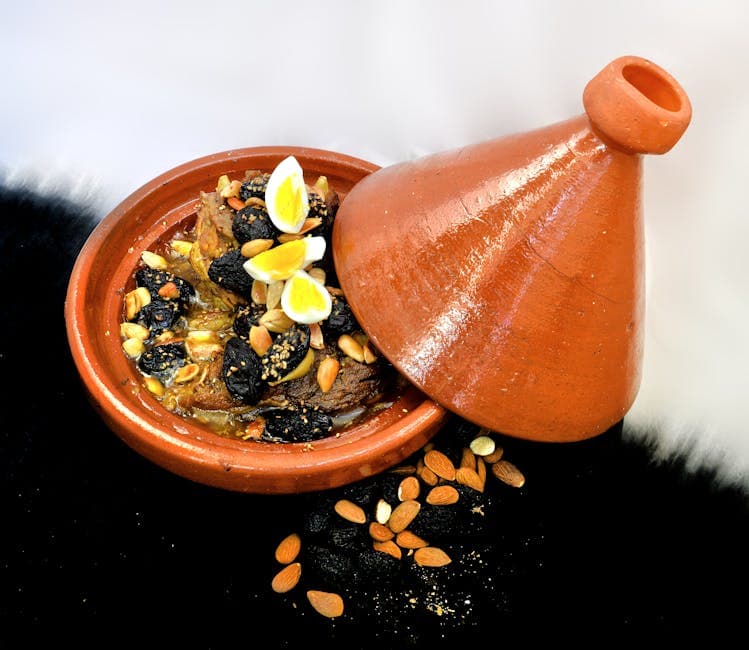
Bastilla Marroquí (Pastel de Pollo y Almendras)
El extraordinario pastel de celebración de Marruecos — capas de masa warqa crujiente rellena de pollo especiado o pichón, huevos y almendras dulces, espolvoreado con azúcar glas y canela. Una obra maestra de la cocina árabe-andaluza medieval.
Acerca de esta receta
Bastilla (también deletreado b'stilla o pastilla) es uno de los mayores platos de toda la cocina marroquí y uno de los más sorprendentes: un pastel dulce-salado donde el pollo especiado (originalmente pichón) se divide en capas con una delicada crema de huevo y una capa de almendra-canela crujiente dentro de masa warqa delgada como papel (o filo), luego espolvoreada con azúcar glas y canela después de hornear. El contraste de masa crujiente, pollo salado, almendras dulces y el calor floral de ras el hanout crea un perfil de sabor sin igual en la cocina europea. Bastilla se sirve en bodas, en celebraciones eid y para huéspedes honrados — nunca es un plato cotidiano. Adecuadamente hecha, requiere horas de trabajo paciente.
Ingredientes
Sirve 6
- 1 kgmuslos de pollo(con hueso)
- 2cebollas(ralladas)
- 1 manojoperejil y cilantro frescos(atados juntos)
- 1 cdtajengibre molido
- 1 cdtacanela molida
- 0.5 cdtahebras de azafrán(remojadas en 2 cucharadas de agua tibia)
- 1 cdtaras el hanout
- 4 cdamantequilla
- 200 mlagua o caldo de pollo
- 6huevos(batidos)
- 200 galmendras blanqueadas(tostadas y groseramente molidas)
- 3 cdaazúcar glas(más para espolvorear)
- 1 cdtaagua de flor de naranja
- 10 hojasmasa filo(o masa warqa)
- 80 gmantequilla(derretida, para pintar filo)
- 1 cdtacanela molida(para espolvorear)
Instrucciones
- 1
Guisar pollo
Coloca pollo en una olla ancha con cebolla rallada, atado de hierbas, jengibre, canela, azafrán, ras el hanout, mantequilla y agua. Sazona con sal y pimienta. Hierve a fuego lento 45 minutos hasta que el pollo esté muy tierno y el caldo reducido. Retira las hierbas.
- 2
Desmenuzar pollo
Retira el pollo, desmenúzalo finamente, desecha la piel y los huesos. Reservar.
- 3
Hacer capa de huevo
Devuelve los jugos de cocción a fuego medio. Vierte los huevos batidos y revuelve constantemente durante 5–7 minutos — cocinar los huevos lentamente en el caldo aromático crea un revuelto cremoso, casi tipo crema. Debería ser húmedo, no seco. Sazona y enfría.
No apresures los huevos — la cocción lenta en el caldo aromático es lo que da a la bastilla su sabor característico.
- 4
Hacer capa de almendra
Mezcla almendras molidas tostadas con azúcar glas, canela y agua de flor de naranja. Debería ser como una pasta gruesa.
- 5
Montar
Precalienta el horno a 190°C. Unta un molde redondo de 26cm. Coloca 4 hojas de filo superpuestas en la base, pinceladas con mantequilla, colgando sobre los bordes. Añade capa de pollo, luego capa de huevo, luego capa de almendra. Dobla las hojas de filo nuevamente sobre el relleno. Añade hojas de filo restantes, pinceladas con mantequilla, metidas debajo. Pinta la parte superior generosamente con mantequilla.
- 6
Hornear y terminar
Hornea 25–30 minutos hasta que esté dorado profundo y crujiente. Espolvorea generosamente con azúcar glas y dibuja un patrón de cruz de canela sobre la parte superior — la decoración tradicional.
¿Has preparado esta receta?
Valórala y ayuda a otros a encontrar las recetas que de verdad funcionan.
Inicia sesión con un toque y guardaremos la valoración que acabas de elegir.
Todo lo que necesitas para planificar tu semana — gratis
- Calendario de comidas
- Lista de compras
- Ideas de recetas con IA
Controla lo que comes
Fotografía tu comida para registrar calorías y macros, usa temporizadores de ayuno y controla tu agua en la app gratuita SnapCal.
Consejos profesionales
- →
La capa de huevo debería ser húmeda y cremosa, no seca — este es el error más común.
- →
Trabaja rápidamente con masa filo y mantén las hojas no utilizadas cubiertas con un paño húmedo para evitar que se sequen.
- →
Prueba y ajusta la sal al final — los sabores se concentran a medida que los líquidos se reducen, y una pizca final de sal marina mejora todo el plato.
- →
La mise en place se justifica a sí misma: pica, mide y premezcla todo antes de que el calor comience, especialmente para cualquier paso que se mueva rápido.
Variaciones
- •
Bastilla de mariscos: relleno de camarones, calamares y vermicelli — popular en ciudades costeras marroquíes
- •
Bastilla mini individual: haz 12 paquetes pequeños doblados como triángulos para una presentación más elegante
- •
Usa warka (masa marroquí) si está disponible — da un resultado más delicado y crujiente que el filo
- •
Vegetariano: cambia la proteína por champiñones king oyster asados, tofu ahumado o garbanzos cocidos — ajusta el sazón ligeramente hacia arriba para compensar.
Almacenamiento
Se disfruta mejor el día en que se hace. Las sobras se recalientan en el horno a 180°C durante 15 minutos para restaurar la crujencia. No usar microondas — el filo se vuelve blando.
Historia y origen
Bastilla descendió de la cocina de la corte árabe-andaluza medieval — el plato viajó a Marruecos cuando los moros fueron expulsados de España en 1492. La combinación de carne salada, especias dulces y masa (llamada al-bastella en antiguos documentos árabes) era el pico de sofisticación en las cocinas reales de Fez del siglo XV. El original de pichón reflejaba la caza real; el pollo se convirtió en la versión cotidiana.
Preguntas frecuentes
¿Es el azúcar glas en un pastel salado realmente tradicional?
Absolutamente — y funciona. El contraste dulce-salado es la característica que define la bastilla. El espolvoreado de azúcar glas y canela nunca es opcional. Si eres tentado a omitirlo, estás haciendo un plato diferente e inferior.
¿Puedo hacer esto con anticipación?
Sí — la mayoría de los componentes pueden prepararse hasta un día antes y refrigerarse por separado. Recalienta suavemente y monta justo antes de servir para mantener las texturas distintas.
¿Qué puedo sustituir si no tengo todos los ingredientes?
Mantente cerca del papel que juega cada ingrediente: cambia aromáticos por unos similares (chalota por cebolla, lima por limón) y mantén el equilibrio de grasa-ácido-sal intacto. Las mezclas de especias generalmente pueden aproximarse con lo que tienes en la despensa.
¿Cómo sé si es auténtico?
La autenticidad se encuentra en un espectro — lo que importa más es honrar la técnica y el equilibrio de sabores. Si el plato sabe armonioso y respeta cómo los cocineros en su región natal lo construirían, estás en terreno sólido.
Datos nutricionales
Por porción · 6 porciones totales
Resumen de tiempo
¿Tiene preguntas?
Pregúntele a nuestro asistente de cocina con IA cualquier cosa sobre esta receta: sustituciones, técnicas, escalado.
Chatea con AI Chef →Destacado en Guías
Esta receta aparece en las siguientes guías seleccionadas:
Más recetas de cocina marroquí
También Te Puede Gustar
Platos similares de otras cocinas del mundo.
Explorar por Ingrediente
Más recetas construidas alrededor de los mismos ingredientes principales.
Herramientas de Cocina Gratuitas
Calculadoras y conversores que acompañan a esta página — sin registro.
Calculadora para escalar recetas
Reduce a la mitad o duplica cada cantidad de esta receta sin hacer cuentas mentales.
Conversor de medidas
Convierte tazas, gramos, onzas y mililitros en ambos sentidos.
Conversor para freidora de aire
Convierte el tiempo y la temperatura del horno a ajustes de freidora de aire.
Conviértelo en un Plan
Prográmalo, haz la compra y controla lo que ya tienes.
Calendario de planificación de comidas
Coloca esta receta en un día y organiza la semana a su alrededor.
App de lista de la compra
Convierte esta lista de ingredientes en una lista de la compra agrupada por pasillo.
Importador de recetas
Guarda esta receta —y cualquier URL de receta— en una biblioteca ordenada.
Sigue Leyendo
Lecturas más largas que profundizan en las ideas detrás de este plato.
Comunidad
Únete a la conversación
Inicia sesión para dejar un comentario y guardar tus recetas favoritas