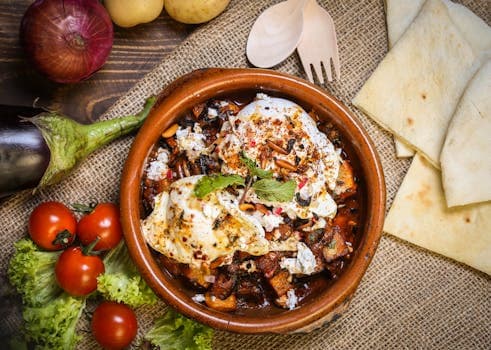
Ojja es la respuesta tunecina al shakshuka: huevos escalfados en una picante salsa de tomate con comino, condimentada con harissa y a menudo enriquecida con salchichas merguez o langostinos. A diferencia de la versión marroquí más sobria, la ojja tunecina está profundamente condimentada y condimentada agresivamente, fiel al audaz calor de la cocina tunecina. Es un plato popular para el brunch de fin de semana que se come con pan grueso para servir.
Sirve 4
Calentar aceite de oliva en una sartén amplia. Freír las rodajas de merguez hasta que se doren. Retirar y reservar.
Cocine la cebolla en la misma sartén a fuego medio hasta que esté suave. Agrega el ajo, el comino y el pimentón. Cocine 1 minuto.
Agrega los tomates y la harissa. Cocine a fuego lento durante 10 minutos hasta que la salsa espese.
Regrese el merguez a la sartén. Revuelva.
Haga 4 pocillos en la salsa. Rompe un huevo en cada pocillo. Tape y cocine de 5 a 7 minutos hasta que las claras estén cuajadas pero las yemas aún líquidas. Esparcir perejil. Servir desde la sartén con pan crujiente.
Todo lo que necesitas para planificar tu semana — gratis
Cocina con las manos libres
Consigue planes de comida con IA, modo de cocina paso a paso y tus recetas guardadas en la app gratuita Bento.
Ajuste la cantidad de harissa según su preferencia de calor.
Sirva inmediatamente desde la sartén; los huevos continúan cocinándose fuera del fuego.
Las gambas o el atún son excelentes alternativas al merguez.
Pruebe y ajuste la sal al final — los sabores se concentran cuando los líquidos se reducen, y un toque final de sal escamosa agudiza todo el plato.
Omita el merguez para obtener una versión vegetariana; en su lugar, agregue garbanzos.
Agregue un puñado de aceitunas para obtener una versión mediterránea más salada.
Vegetariano: reemplace la proteína con champiñones ostra rey asados, tofu ahumado o garbanzos cocidos — ajuste el condimento ligeramente hacia arriba para compensar.
Más picante: agregue un chile fresco finamente picado o una cucharadita de pimienta Alepo/Urfa molida a los aromáticos para un calor cálido y estratificado en lugar de un golpe agudo.
Es mejor comerlo fresco. La salsa sin huevo se conserva refrigerada por 3 días.
Ojja es uno de los platos más tradicionales de Túnez, con raíces que se remontan a siglos atrás en la cocina costera. La versión merguez es popular en el norte; La ojja de gambas es la favorita en la costa de Sfax.
Harissa es una pasta de chile rojo del norte de África hecha de chiles secos, ajo, alcaravea y aceite de oliva. La harissa tunecina tiende a ser más picante que las versiones marroquíes.
Sí — la mayoría de los componentes se pueden preparar hasta un día antes y refrigerar por separado. Recaliente suavemente y ensambla justo antes de servir para que las texturas se mantengan distintas.
Manténgase cerca del papel que juega cada ingrediente: cambie los aromáticos por otros similares (chalota por cebolla, lima por limón), y mantenga el equilibrio de grasa-ácido-sal intacto. Los mezcla de especias se pueden aproximar generalmente con lo que hay en la despensa.
La autenticidad se sitúa en un espectro — lo que importa más es honrar la técnica y el equilibrio de sabores. Si el plato tiene un sabor armonioso y respeta cómo los cocineros en su región de origen lo construirían, está en terreno firme.
Por porción · 4 porciones totales
Pregúntele a nuestro asistente de cocina con IA cualquier cosa sobre esta receta: sustituciones, técnicas, escalado.
Chatea con AI Chef →Únete a la conversación
Inicia sesión para dejar un comentario y guardar tus recetas favoritas
Todo lo que necesitas para planificar tu semana — gratis
¿Tienes comentarios o necesitas ayuda?
Leemos todos los correos y respondemos en 1–2 días hábiles.
© 2026 MyCookingCalendar. Todos los derechos reservados.