
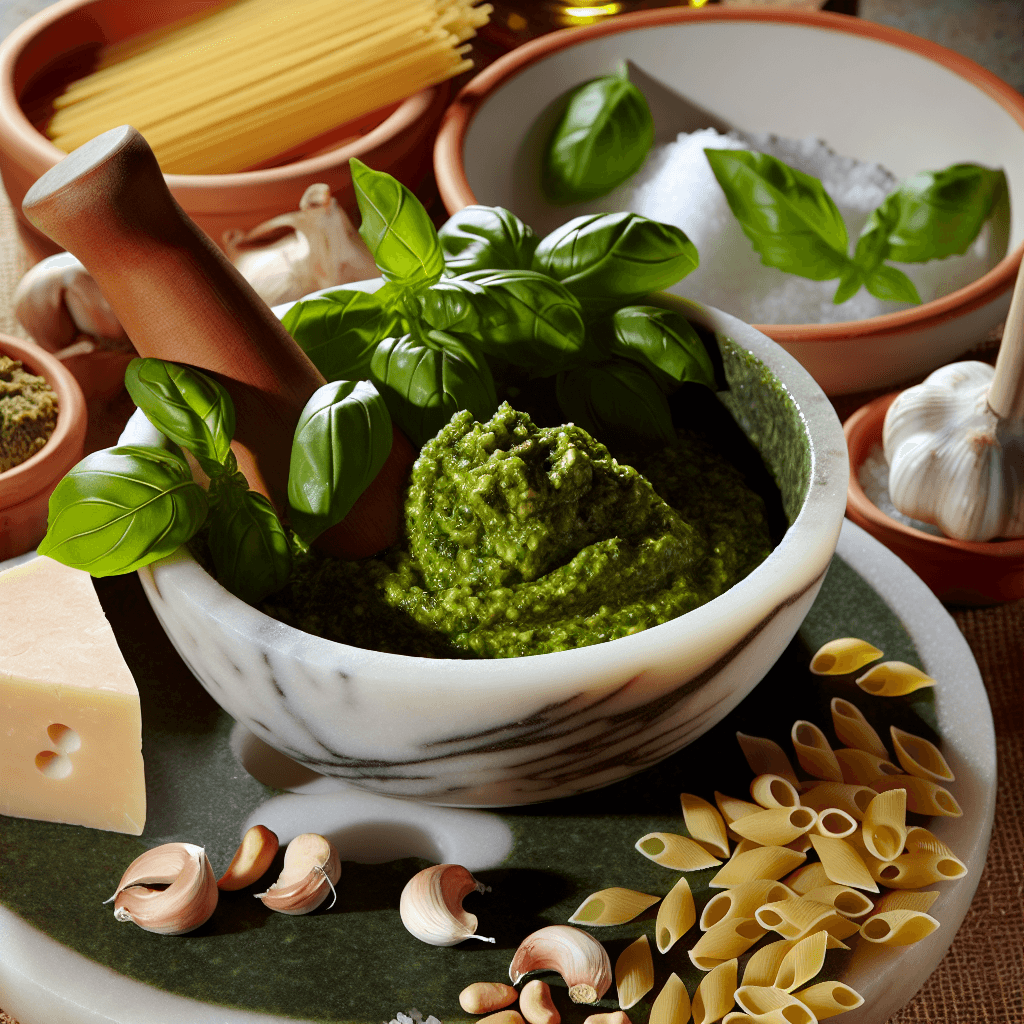
Pesto alla Genovese (Pesto de albahaca auténtico)
La salsa verde brillante de albahaca de Génova hecha a mano en un mortero: albahaca fresca, aceite de oliva ligur, piñones, Parmesano y Pecorino. Sin cocción.
Acerca de esta receta
El pesto alla Genovese es una de las salsas más copiadas y más adulteradas del mundo. La versión auténtica —hecha a mano con un mortero de mármol y una maja de madera— tiene una textura y un sabor distintos de cualquier cosa procesada en una batidora. El mortero desgarra la albahaca en lugar de triturarla, liberando aceites volátiles que la batidora destruye por el calor y la oxidación. La albahaca debe ser albahaca ligur joven de hoja pequeña (Ocimum basilicum var. Genovese DOP), aunque la buena albahaca de supermercado funciona bien. Los demás componentes esenciales son aceite de oliva virgen extra ligur (ligero y delicado, no picante), piñones, un diente de ajo joven (no fuerte), sal gruesa, Parmesano y Pecorino Sardo. El pesto se sirve con trofie (la pasta canónica), trenette o incorporado a la minestrone.
Ingredientes
Sirve 6
- 60 ghojas de albahaca fresca (bien apretadas)
- 100 mlaceite de oliva virgen extra (estilo ligur ligero)
- 30 gpiñones
- 40 gParmesano, recién rallado
- 20 gPecorino Sardo o Romano, recién rallado
- 1diente de ajo (pequeño)
- pinchsal marina gruesa
Instrucciones
- 1
Preparar los ingredientes
Lava la albahaca y sécala muy bien: la humedad diluye la salsa. Tuesta los piñones en una sartén seca 2 minutos hasta que estén ligeramente dorados. Enfría por completo.
- 2
Machacar el ajo y la sal
En un mortero, machaca el ajo con la sal gruesa hasta obtener una pasta suave.
- 3
Añadir los piñones
Añade los piñones y machaca hasta que estén mayormente deshechos, conservando algo de textura.
- 4
Añadir la albahaca por tandas
Añade las hojas de albahaca en pequeños puñados, machacando y presionando con un movimiento circular en lugar de golpear. Trabaja con paciencia: esto lleva 5–8 minutos a mano.
- 5
Añadir los quesos
Incorpora el Parmesano y el Pecorino. Mezcla bien.
- 6
Añadir el aceite
Incorpora el aceite de oliva poco a poco hasta obtener una salsa espesa y cremosa. Prueba y ajusta el sazonado.
- 7
Servir
Mézclalo con pasta recién cocida (añade una cucharada de agua de la pasta para aligerar). No calientes el pesto.
¿Has preparado esta receta?
Valórala y ayuda a otros a encontrar las recetas que de verdad funcionan.
Inicia sesión con un toque y guardaremos la valoración que acabas de elegir.
Todo lo que necesitas para planificar tu semana — gratis
- Calendario de comidas
- Lista de compras
- Ideas de recetas con IA
Cocina con las manos libres
Consigue planes de comida con IA, modo de cocina paso a paso y tus recetas guardadas en la app gratuita Bento.
Consejos profesionales
- →
Nunca calientes el pesto: se vuelve marrón y amargo. Mézclalo con la pasta caliente fuera del fuego.
- →
Añade una cucharada de agua de la pasta al mezclar con la pasta: emulsiona la salsa.
- →
Para conservar el color, presiona film transparente directamente sobre la superficie del pesto al guardarlo.
- →
Prueba y ajusta la sal al final: los sabores se concentran al reducirse los líquidos, y una pizca final de sal en escamas realza todo el plato.
Variaciones
- •
Pesto de batidora: tritura todos los ingredientes a pulsos cortos, manteniendo el robot de cocina frío en la nevera de antemano.
- •
Sustituye los piñones por nueces para una versión más económica y terrosa.
- •
Vegetariano: cambia la proteína por setas king oyster asadas, tofu ahumado o garbanzos cocidos; ajusta el sazonado ligeramente al alza para compensar.
- •
Más picante: añade un chile fresco finamente picado o una cucharadita de pimiento de Alepo/Urfa triturado a los aromáticos para un calor cálido y por capas en lugar de un golpe único y agudo.
Almacenamiento
Se conserva en la nevera bajo una capa de aceite de oliva hasta 5 días. Se congela bien hasta 3 meses.
Historia y origen
El pesto se originó en Génova, Liguria. Evolucionó a partir de salsas de hierbas anteriores estilo moretum de la antigua Roma. El nombre proviene del verbo italiano «pestare» (machacar). La Denominación de Origen Protegida (DOP) de la albahaca ligur protege el ingrediente usado en el pesto auténtico.
Preguntas frecuentes
¿Puedo sustituir los piñones por nueces?
Sí: las nueces producen un pesto algo más amargo y terroso. Las almendras o los anacardos también sirven.
¿Por qué mi pesto se pone negro?
Oxidación. Mantén el pesto cubierto de aceite de oliva, presiona film transparente sobre la superficie y úsalo rápido. Escaldar la albahaca 5 segundos antes de hacer el pesto también conserva el color.
¿Puedo prepararlo con antelación?
Sí: la mayoría de los componentes pueden prepararse hasta un día antes y refrigerarse por separado. Recalienta con suavidad y monta justo antes de servir para que las texturas se mantengan diferenciadas.
¿Qué puedo sustituir si no tengo todos los ingredientes?
Mantente cerca de la función que cumple cada ingrediente: cambia los aromáticos por otros similares (chalota por cebolla, lima por limón) y conserva intacto el equilibrio de grasa, acidez y sal. Las mezclas de especias suelen poder aproximarse con lo que haya en la despensa.
Datos nutricionales
Por porción · 6 porciones totales
Resumen de tiempo
¿Tiene preguntas?
Pregúntele a nuestro asistente de cocina con IA cualquier cosa sobre esta receta: sustituciones, técnicas, escalado.
Chatea con AI Chef →Destacado en Guías
Esta receta aparece en las siguientes guías seleccionadas:
Más recetas de cocina italiana
También Te Puede Gustar
Platos similares de otras cocinas del mundo.
Explorar por Ingrediente
Más recetas construidas alrededor de los mismos ingredientes principales.
Herramientas de Cocina Gratuitas
Calculadoras y conversores que acompañan a esta página — sin registro.
Conviértelo en un Plan
Prográmalo, haz la compra y controla lo que ya tienes.
Sigue Leyendo
Lecturas más largas que profundizan en las ideas detrás de este plato.
Comunidad
Únete a la conversación
Inicia sesión para dejar un comentario y guardar tus recetas favoritas