
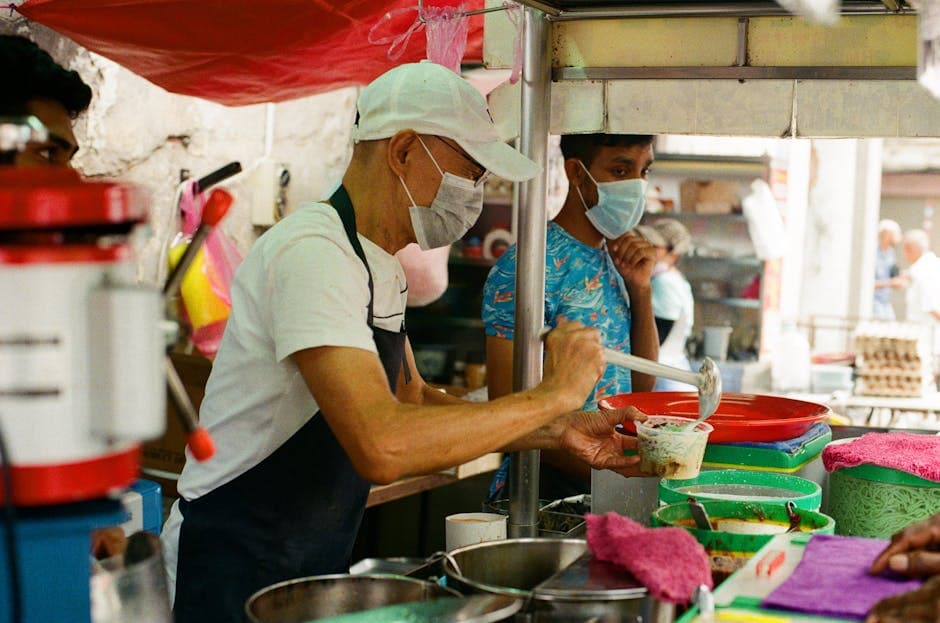
ペナン アサム ラクサ
ペナンの象徴的なサワーフィッシュラクサは、サバのフレークと新鮮なハーブが入ったタマリンドベースのライスヌードルスープです。
このレシピについて
ペナン アサム ラクサは、アジアで最もエキサイティングで特徴的なヌードル スープの 1 つです。タマリンドとサバで作られたピリッとした魚の風味のスープを、パイナップル、ミント、トーチ ジンジャーの花、キュウリ、エビのペーストなど、さまざまな付け合わせとともに太いビーフンの上に盛り付けます。 CNN の世界の食品トップ 50 の 1 つに選ばれ、ペナンのユニークなニョニャ (中国系マレー人) の食文化を代表しています。
材料
サービスします 4
- 500 gサバ(またはイワシ丸ごと)
- 1.2 リットル水
- 60 gタマリンドペースト
- 3乾燥唐辛子(びしょ濡れ)
- 3 本レモングラス(傷ついた)
- 4 枚ガランガル
- 1 小さじエビペースト(ベラカン)
- 400 g極太ビーフン(ラクサヌードル)
- 100 gパイナップル(細かくスライスされた)
- 1 小さな束フレッシュミント
- 0.5キュウリ(千切り)
- 1 小赤玉ねぎ(薄くスライスした)
- 2 大さじヘコ(エビのペースト)(提供する — オプション)
手順
- 1
魚を調理する
サバを水で15分煮る。魚を取り出し、冷ましてほぐし、皮と骨を取り除きます。在庫を確保します。
- 2
だし汁を作る
水に浸した乾燥唐辛子とエビペーストを混ぜてペーストにします。ペーストを大さじ1の油で3分間揚げます。魚のストック、レモングラス、ガランガル、タマリンドを加えます。 30分間煮ます。
- 3
季節のだし汁
味 - スープは酸っぱく、スパイシーで、わずかに塩辛いはずです。タマリンドと塩で調整してください。レモングラスとガランガルを濾します。
- 4
麺を調理する
太いビーフンを沸騰したお湯で柔らかくなるまで茹でます。水を切り、ボウルに分けます。
- 5
組み立てる
熱々のスープを麺の上にかける。サバのフレークをトッピングします。パイナップル、ミント、キュウリ、赤玉ねぎを飾ります。必要に応じて、ヘコ(エビのペースト)をスプーン一杯加えます。
作ってみましたか?
評価すると、本当に使えるレシピを他の人が見つけやすくなります。
ワンタップでログインすれば、いま選んだ評価をそのまま保存します。
1週間の献立づくりに必要なすべて — 無料
- 献立カレンダー
- 買い物リスト
- AIレシピ提案
食べたものを記録しよう
無料のSnapCalアプリで、食事を撮影してカロリーとPFCを記録し、断食タイマーや水分記録も使えます。
プロのヒント
- →
タマリンドのレベルは大胆に酸っぱくなければなりません - それに臆病にならないでください。
- →
ヘコー(濃厚なエビのペースト)は、料理を別のレベルに引き上げる付け合わせです。アジアの食料品店で見つけることができます。
- →
新鮮なトーチ ジンジャーの花 (ブンガ カンタン) は、アサム ラクサに象徴的な花の香りを与える伝統的な付け合わせです。
- →
最後に味見して塩を調整します。液体が減るにつれて風味が濃縮され、最後にフレーク状の塩をひとつまみ加えると料理全体がシャープになります。
バリエーション
- •
魚の成分のショートカットとしてサバ缶を使用します。
- •
追加トッピングとしてゆで卵を追加します。
- •
ベジタリアン:たんぱく質をローストしたエリンギ、燻製豆腐、または調理したひよこ豆に置き換えて、味付けを少し多めに調整して補ってください。
- •
よりスパイシー:細かく刻んだ新鮮なチリ、または砕いたアレッポ/ウルファペッパーを小さじ1杯加えて、単一の鋭い打撃の代わりに暖かく、層状の辛さを作り出します。
ストレージ
だし汁は冷蔵で3日間保存可能です。毎回新鮮に組み立てます。麺はスープの中で柔らかくなります。
歴史と起源
アサム ラクサはペナン発祥のニョニャ(プラナカン中華料理)です。ペナンで200年にわたる多文化料理の中で発展した中国とマレーのフュージョン料理を反映しています。
よくある質問
ヘコって何ですか?
調味料として使用される、濃厚で濃いめの風味豊かな発酵エビのペースト。テーブルでスープに混ぜていただきます。マレーシアや東南アジアの食料品店で見つけてください。
事前に作ってもいいですか?
はい、ほとんどの成分は前日までに準備し、個別に冷蔵できます。ゆっくりと再加熱し、食べる直前に組み立てると、食感がはっきりと残ります。
材料がすべて揃っていない場合は何を代用できますか?
それぞれの成分が果たす役割をしっかり把握し、香料を似たものと交換し(エシャロットをタマネギに、ライムをレモンに)、脂肪酸、酸、塩分のバランスを維持します。スパイスのブレンドは通常、食器棚にあるもので近似できます。
それが本物であることをどうやって知ることができますか?
本物であるかどうかはさまざまですが、それよりも重要なのは、技術と味のバランスを尊重することです。料理の味が調和していて、地元の料理人の作り方を尊重しているのであれば、あなたは盤石です。
栄養成分表
1回分あたり · 4 合計サービング数
時間の概要
ガイドに掲載されました
このレシピは、次の厳選ガイドで紹介されています。
他のマレーシアレシピ
こちらもおすすめ
世界の他の料理から、似た一皿。
食材から探す
同じ主要食材を使った他のレシピ。
無料のキッチンツール
このページと一緒に使える計算ツールと単位変換ツール(登録不要)。
献立に組み込む
カレンダーに入れて、買い物リストを作り、手持ちの食材を管理。
次に読む
この料理の背景を掘り下げた読み物。
コミュニティ
会話に参加する
サインインしてコメントを残し、お気に入りのレシピを保存してください