
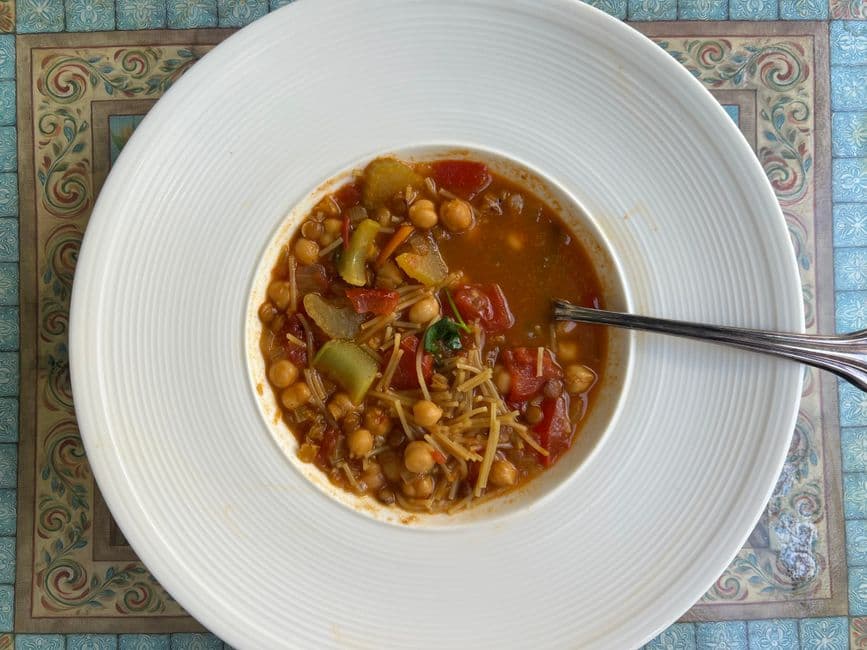
Lablabi — Tunisian Chickpea Soup
Bold Tunisian street-food soup of spiced chickpeas poured over torn bread with harissa, cumin, capers and a raw egg — Tunis' most iconic breakfast.
About This Recipe
Lablabi is one of the great street foods of North Africa: a deeply spiced chickpea broth poured over torn stale bread in a terracotta bowl, customised at the table with harissa, cumin, olive oil, capers, lemon, tuna and a raw egg that cooks in the hot broth. It is the working man's breakfast of Tunis — sold from steaming cauldrons in the medina from early morning — and one of the most nourishing, warming and flavourful bowls of food in the world for very little money. The genius of lablabi is in the customisation: each person builds their own bowl according to taste, adding harissa aggressively or gently, loading up on capers, cracking in an egg. No two bowls are identical.
Ingredients
Serves 4
- 2 tinschickpeas(with their liquid)
- 1 litrewater
- 6 clovesgarlic(crushed)
- 1 tablespoonharissa(plus more to serve)
- 2 teaspoonsground cumin(plus more to serve)
- 1 teaspoonsalt
- 4 tablespoonsolive oil
- 4 slicesstale bread(torn into pieces)
- 4eggs
- 4 tablespoonscapers
- 200 g tintuna in oil(drained)
- 1lemon(cut into wedges)
Instructions
- 1
Cook the broth
Combine chickpeas and their liquid with water, garlic, harissa, cumin and salt. Bring to a boil, then simmer for 20 minutes. Taste and adjust — it should be spiced and savoury.
- 2
Assemble the bowls
Divide torn bread pieces among deep bowls. Ladle the hot chickpea broth generously over the bread.
- 3
Add egg
Crack a raw egg directly into each bowl of hot broth. The heat of the soup will gently cook the egg to a soft, just-set consistency — about 2 minutes.
For safety, the broth must be very hot when you add the egg so it cooks through.
- 4
Serve with condiments
Bring the table to life: set out harissa, cumin, olive oil, capers, tuna and lemon wedges. Let each person season their own bowl. Eat with extra bread.
Did you make this?
Rate it and help other cooks find the recipes that actually work.
One tap to sign in, and we'll save the rating you just picked.
Everything you need to plan your week — free
- Meal calendar
- Grocery list
- AI recipe ideas
Track what you eat
Snap your meal to log calories and macros, run fasting timers and track water in the free SnapCal app.
Pro Tips
- →
Stale bread is better than fresh — it absorbs the broth without falling apart immediately.
- →
The raw egg is traditional and safe when the broth is genuinely hot — do not skip it.
- →
Quality harissa makes all the difference — use the best you can find.
- →
Taste and adjust salt at the very end — flavors concentrate as liquids reduce, and a final pinch of flaky salt sharpens the whole dish.
Variations
- •
Some versions add dried mint to the broth for a cooling note.
- •
Completely vegetarian if you omit the tuna — still extraordinary.
- •
Vegetarian: swap the protein for roasted king oyster mushrooms, smoked tofu or cooked chickpeas — adjust seasoning slightly upward to compensate.
- •
Spicier: add a finely chopped fresh chile or a teaspoon of crushed Aleppo/Urfa pepper to the aromatics for warm, layered heat instead of a single sharp hit.
Storage
The broth keeps refrigerated for 3 days. Assemble bowls fresh each time.
History & Origin
Lablabi is a centuries-old dish from Tunis that has evolved from a simple peasant breakfast into an iconic street food. It reflects North Africa's deep tradition of legume-based cooking and the resourcefulness of using stale bread as the base of a filling, economical meal. The dish is particularly associated with the working-class medina culture of Tunis and remains one of the most affordable and beloved breakfasts in the city.
Frequently Asked Questions
Is the raw egg safe to eat?
The egg is added to very hot broth and cooks gently in the residual heat. Use the freshest eggs you can find and ensure the broth is genuinely very hot before adding the egg. If you prefer, poach a separate egg and add it to the bowl.
Can I make this ahead of time?
Yes — most of the components can be prepared up to a day in advance and refrigerated separately. Reheat gently and assemble just before serving so textures stay distinct.
What can I substitute if I don't have all the ingredients?
Stay close to the role each ingredient plays: swap aromatics for similar ones (shallot for onion, lime for lemon), and keep the fat-acid-salt balance intact. Spice blends can usually be approximated with what's in the cupboard.
How do I know it's authentic?
Authenticity sits on a spectrum — what matters more is honoring the technique and balance of flavors. If the dish tastes harmonious and respects how cooks in its home region would build it, you're on solid ground.
Nutrition Facts
Per serving (500g / 17.6 oz) · 4 servings total
Time Summary
Have Questions?
Ask our AI cooking assistant anything about this recipe — substitutions, techniques, scaling.
Chat with AI Chef →More Tunisian Recipes
You Might Also Like
Similar dishes from other cuisines around the world.
Browse by Ingredient
More recipes built around the same core ingredients.
Free Kitchen Tools
Calculators and converters that pair with this page — no signup needed.
Put This Into a Plan
Schedule it, shop for it, and track what you already have.
Read Next
Longer reads that go deeper on the ideas behind this dish.
Community
Join the conversation
Sign in to leave a comment and save your favourite recipes