
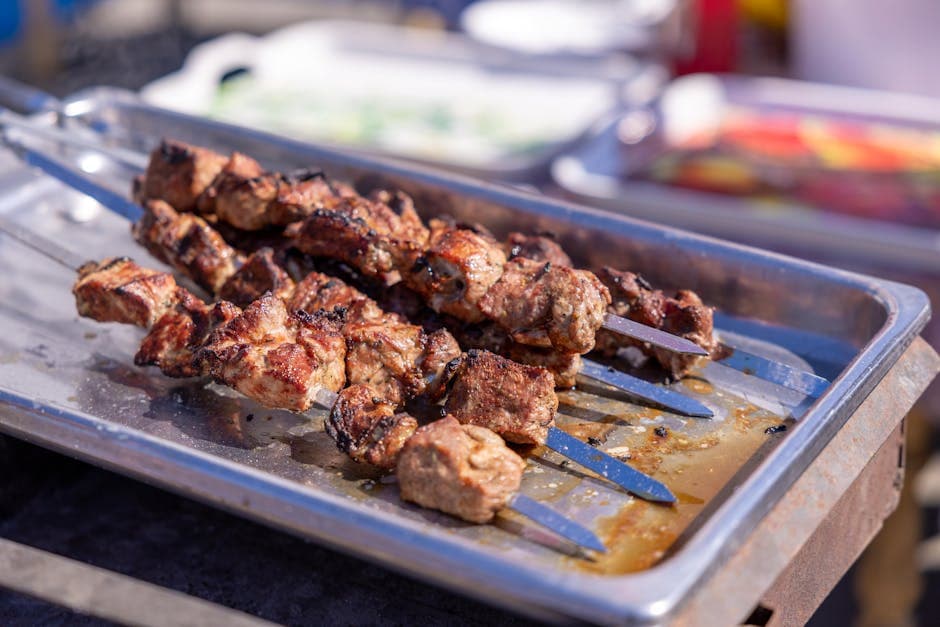
Mtsvadi (Georgian Pork Skewers)
Georgia's most popular outdoor cooking tradition — chunks of pork neck marinated simply in onion and pomegranate juice, grilled over vine wood coals until charred outside and juicy within.
About This Recipe
Mtsvadi (მწვადი) is Georgian barbecue and it is a serious affair. Unlike the marinaded, sauced, complex barbecues of other cultures, Georgian mtsvadi is defined by restraint: the best pork (neck is essential for its fat marbling), marinated in nothing but sliced onion and acidic juice (pomegranate, white wine or mineral water), then grilled over vine wood (tkemali vine branches are preferred) at high heat. No sauce on the meat during cooking — the goal is caramelised, slightly charred exterior and pink, juicy interior, with the flavour of the pork itself and a faint smokiness from the vine wood. It is served with Georgian sauces (tkemali plum sauce, adjika), pickled vegetables and bread.
Ingredients
Serves 4
- 1 kgpork neck(cut into 4cm cubes)
- 3onions(thinly sliced)
- 150 mlpomegranate juice(or dry white wine or sparkling mineral water)
- 1 tspsalt
- 1 tspblack pepper(coarsely ground)
- 1pomegranate(seeds to garnish)
- 1 handfulfresh cilantro and parsley(to garnish)
Instructions
- 1
Marinate
Combine pork neck, sliced onions, pomegranate juice, salt and pepper. Mix well, massaging the onion and juice into the meat. Marinate 2–6 hours refrigerated, or overnight.
Pork neck is non-negotiable — the fat content and marbling of the neck is what makes mtsvadi juicy. Shoulder or loin will be dry.
- 2
Thread and grill
Thread pork onto long metal skewers, alternating pieces with some of the marinated onion slices. Grill over very hot charcoal or wood embers (vine wood ideally) 15–18 min, turning every 3–4 min until charred at the edges and just cooked through.
- 3
Rest and serve
Rest 5 min. Slide off skewers onto a platter. Scatter pomegranate seeds and fresh herbs over the top. Serve with tkemali plum sauce, adjika and lavash bread.
Did you make this?
Rate it and help other cooks find the recipes that actually work.
One tap to sign in, and we'll save the rating you just picked.
Everything you need to plan your week — free
- Meal calendar
- Grocery list
- AI recipe ideas
Cook this hands-free
Get AI meal plans, step-by-step cooking mode, and your saved recipes in the free Bento app.
Pro Tips
- →
The simplicity is the point — do not add more spices. Georgian mtsvadi relies entirely on the quality of the pork and the heat of the fire.
- →
Get the coals very hot before adding skewers — you want a fast sear, not slow cooking.
- →
Taste and adjust salt at the very end — flavors concentrate as liquids reduce, and a final pinch of flaky salt sharpens the whole dish.
- →
Mise en place pays for itself: chop, measure and pre-mix everything before the heat goes on, especially for any step that moves fast.
Variations
- •
Lamb mtsvadi: use bone-in lamb shoulder pieces — a popular Georgian mountain variant
- •
Add whole pickled garlic cloves between the pork pieces on the skewer
- •
Beef mtsvadi: use ribeye cut into chunks — less traditional but popular in Tbilisi restaurants
- •
Vegetarian: swap the protein for roasted king oyster mushrooms, smoked tofu or cooked chickpeas — adjust seasoning slightly upward to compensate.
Storage
Best eaten immediately off the grill. Leftover cooked mtsvadi can be sliced and used in sandwiches with lavash.
History & Origin
Mtsvadi is one of the oldest cooking preparations in Georgian culture — grilling meat over an open fire is described in ancient Georgian chronicles. The association with vine wood is specific: Georgia is one of the world's oldest wine cultures (8,000 years), and vine prunings were the natural cooking fuel. Today mtsvadi is the centrepiece of Georgian outdoor gatherings (supras) and a symbol of Georgian hospitality.
Frequently Asked Questions
Why is pomegranate juice used in the marinade?
Pomegranate is deeply woven into Georgian culture — the pomegranate tree is a national symbol and appears in Georgian art and architecture. The juice is mildly acidic, which gently tenderises the pork, but its primary role is flavour: a subtle fruity-tart note that complements pork without overpowering it. White wine or sparkling mineral water are practical alternatives.
Can I make this ahead of time?
Yes — most of the components can be prepared up to a day in advance and refrigerated separately. Reheat gently and assemble just before serving so textures stay distinct.
What can I substitute if I don't have all the ingredients?
Stay close to the role each ingredient plays: swap aromatics for similar ones (shallot for onion, lime for lemon), and keep the fat-acid-salt balance intact. Spice blends can usually be approximated with what's in the cupboard.
How do I know it's authentic?
Authenticity sits on a spectrum — what matters more is honoring the technique and balance of flavors. If the dish tastes harmonious and respects how cooks in its home region would build it, you're on solid ground.
Nutrition Facts
Per serving · 4 servings total
Time Summary
Have Questions?
Ask our AI cooking assistant anything about this recipe — substitutions, techniques, scaling.
Chat with AI Chef →More Georgian Recipes
You Might Also Like
Similar dishes from other cuisines around the world.
Browse by Ingredient
More recipes built around the same core ingredients.
Free Kitchen Tools
Calculators and converters that pair with this page — no signup needed.
Put This Into a Plan
Schedule it, shop for it, and track what you already have.
Read Next
Longer reads that go deeper on the ideas behind this dish.
Community
Join the conversation
Sign in to leave a comment and save your favourite recipes