
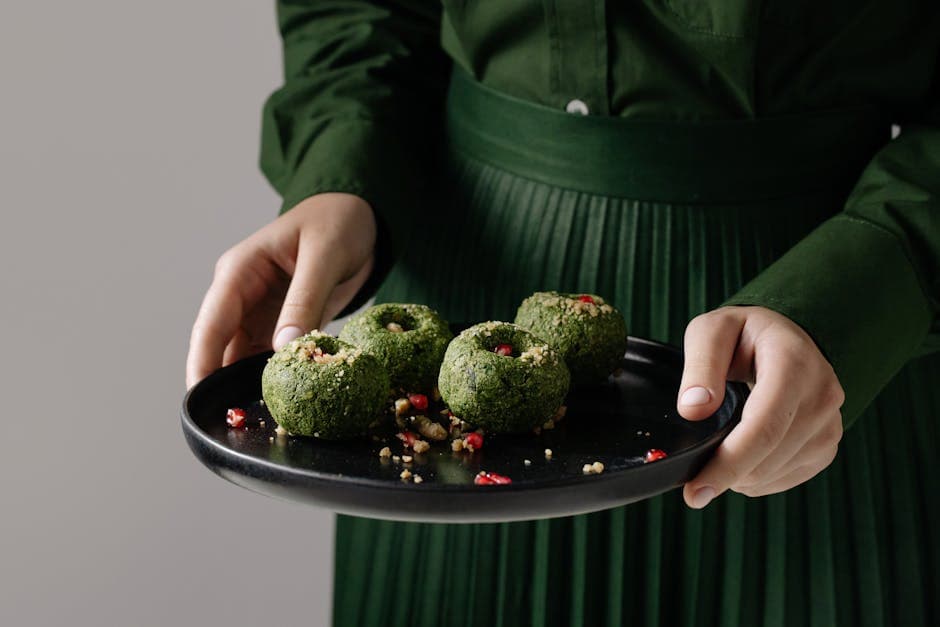
Pkhali
Georgian walnut and herb balls made from spinach, beetroot or green beans — a stunning mezze classic.
About This Recipe
Pkhali are vegetable and walnut paste balls that appear on every Georgian feast table, often in multiple colourful varieties arranged like jewels on a platter. Each variety uses a different vegetable — spinach, beetroot, green beans, cabbage — bound with a spiced walnut paste and rolled into balls, often topped with a pomegranate seed. They are eaten cold as a starter and represent Georgian cuisine's mastery of walnuts and herbs.
Ingredients
Serves 6
- 500 gspinach(or beetroot, blanched and squeezed dry)
- 150 gwalnuts(finely ground)
- 3 clovesgarlic
- 1 smallonion(finely grated)
- 1 tspground coriander
- 0.5 tspground fenugreek
- 0.5 tspchilli flakes
- 2 tbspwhite wine vinegar
- 1 small bunchfresh coriander(chopped)
- 1 small bunchfresh parsley(chopped)
- 30 gpomegranate seeds(to garnish)
Instructions
- 1
Prepare base
Blanch spinach 2 minutes, squeeze out all water and chop very finely.
- 2
Make walnut paste
Blend walnuts, garlic, onion, ground coriander, fenugreek, chilli and vinegar into a thick paste.
- 3
Combine
Mix the walnut paste with spinach and fresh herbs thoroughly. Season with salt.
- 4
Shape
Roll mixture into small balls the size of a walnut. Arrange on a platter.
- 5
Garnish and serve
Press a pomegranate seed into the top of each ball. Serve chilled or at room temperature.
Did you make this?
Rate it and help other cooks find the recipes that actually work.
One tap to sign in, and we'll save the rating you just picked.
Everything you need to plan your week — free
- Meal calendar
- Grocery list
- AI recipe ideas
Cook this hands-free
Get AI meal plans, step-by-step cooking mode, and your saved recipes in the free Bento app.
Pro Tips
- →
Squeeze the spinach extremely dry — excess moisture will make the balls fall apart.
- →
Make several colours at once (spinach, beetroot, green bean) for a beautiful platter.
- →
The mixture keeps well overnight in the fridge before rolling.
- →
Taste and adjust salt at the very end — flavors concentrate as liquids reduce, and a final pinch of flaky salt sharpens the whole dish.
Variations
- •
Use cooked beetroot for vibrant red balls.
- •
Try green beans or cabbage as the vegetable base.
- •
Vegetarian: swap the protein for roasted king oyster mushrooms, smoked tofu or cooked chickpeas — adjust seasoning slightly upward to compensate.
- •
Spicier: add a finely chopped fresh chile or a teaspoon of crushed Aleppo/Urfa pepper to the aromatics for warm, layered heat instead of a single sharp hit.
Storage
Refrigerate shaped balls for up to 2 days. Add pomegranate seeds just before serving.
History & Origin
Pkhali are a fundamental part of Georgian supra (feast) tradition. They demonstrate the Georgian mastery of walnut-based sauces, which permeate much of the country's cuisine.
Frequently Asked Questions
Where can I find ground fenugreek?
It is available in Middle Eastern or South Asian grocery stores, or you can grind fenugreek seeds yourself in a spice grinder.
Can I make this ahead of time?
Yes — most of the components can be prepared up to a day in advance and refrigerated separately. Reheat gently and assemble just before serving so textures stay distinct.
What can I substitute if I don't have all the ingredients?
Stay close to the role each ingredient plays: swap aromatics for similar ones (shallot for onion, lime for lemon), and keep the fat-acid-salt balance intact. Spice blends can usually be approximated with what's in the cupboard.
How do I know it's authentic?
Authenticity sits on a spectrum — what matters more is honoring the technique and balance of flavors. If the dish tastes harmonious and respects how cooks in its home region would build it, you're on solid ground.
Nutrition Facts
Per serving · 6 servings total
Time Summary
Have Questions?
Ask our AI cooking assistant anything about this recipe — substitutions, techniques, scaling.
Chat with AI Chef →More Georgian Recipes
You Might Also Like
Similar dishes from other cuisines around the world.
Shopska Salata (Bulgarian Shopska Salad)
bulgarian · 25 min
Kashk-e Bademjan (Persian Smoky Aubergine Dip with Kashk)
persian · 70 min
Papa a la Huancaína (Potatoes in Spicy Cheese Sauce)
peruvian · 35 min
Papa a la Huancaína Estilo Ecuador (Ecuadorian-Style Potatoes in Spiced Cheese Sauce)
ecuadorian · 40 min
Browse by Ingredient
More recipes built around the same core ingredients.
Free Kitchen Tools
Calculators and converters that pair with this page — no signup needed.
Put This Into a Plan
Schedule it, shop for it, and track what you already have.
Read Next
Longer reads that go deeper on the ideas behind this dish.
Community
Join the conversation
Sign in to leave a comment and save your favourite recipes