Skip to content
🍛
indonesianbreakfast

Nasi Lemak

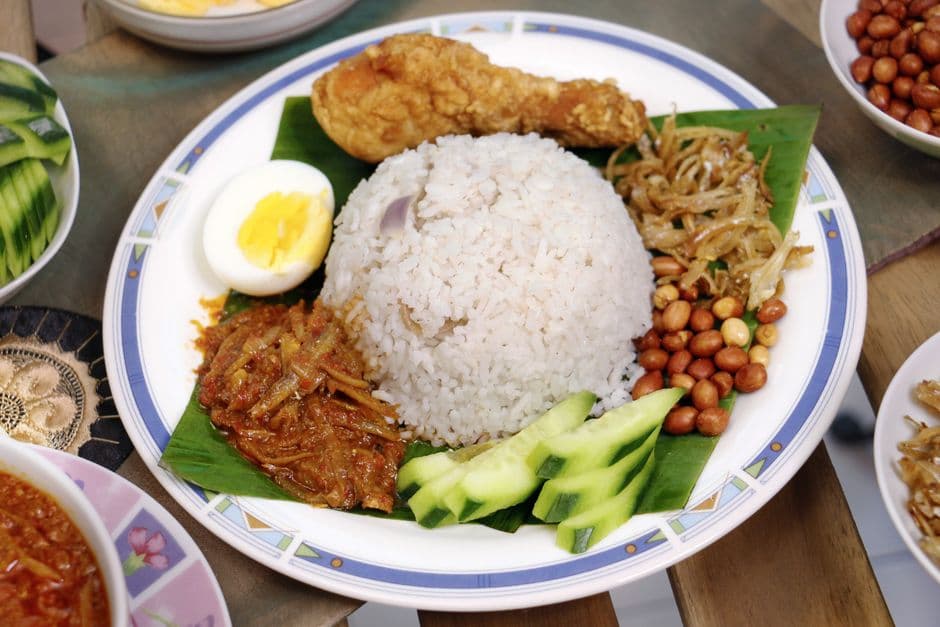
Malaysia's national dish — fragrant coconut rice served with crispy anchovies, peanuts, boiled egg, cucumber, and fiery sambal.

Prep
20 min
Cook
40 min
Servings
4
Difficulty
Medium
4.7(1,650 ratings)
#nasi lemak#coconut rice#malaysian#sambal#breakfast#southeast asian

About This Recipe

Nasi Lemak, which translates to 'rich rice' in Malay, is considered the national dish of Malaysia and is eaten at any time of day, especially breakfast. The dish centers on rice cooked in coconut milk with pandan leaves, giving it a distinctive creamy richness and floral aroma. It is traditionally wrapped in banana leaves and sold by roadside hawkers throughout Malaysia, Singapore, and Brunei. The condiments — sambal, crispy ikan bilis (dried anchovies), roasted peanuts, sliced cucumber, and hard-boiled eggs — provide contrasting textures and flavors that complete the dish.

Ingredients

Serves 4

  • 400 gjasmine or long grain rice(washed and drained)
  • 400 mlcoconut milk
  • 200 mlwater
  • 2 leavespandan leaves(tied in a knot)
  • 1 stalklemongrass(bruised)
  • 1 tspsalt
  • 100 gdried anchovies (ikan bilis)(rinsed and dried)
  • 100 groasted peanuts
  • 3 tbspneutral oil(for frying)
  • 4 largeeggs(hard-boiled, halved)
  • 1 mediumcucumber(thinly sliced)
  • 6 wholedried red chilies(for sambal)
  • 4 clovesgarlic(for sambal)
  • 1 mediumonion(for sambal, sliced)
  • 2 tbsptamarind paste(for sambal)
  • 1 tbspsugar(for sambal)

Instructions

  1. 1

    Cook the Coconut Rice

    Combine washed rice, coconut milk, water, pandan leaves, lemongrass, and salt in a saucepan. Bring to a boil, then reduce heat to the lowest setting, cover, and cook for 18 minutes. Remove from heat, discard pandan and lemongrass, and let steam covered for 5 minutes.

    Rinse the rice thoroughly until water runs clear to remove excess starch, ensuring fluffy individual grains.

  2. 2

    Fry the Anchovies

    Heat oil in a skillet over medium-high heat. Add dried anchovies in a single layer and fry for 3–4 minutes, stirring constantly, until golden and crispy. Drain on paper towels. Add roasted peanuts to the same pan and stir-fry for 1 minute until lightly toasted.

  3. 3

    Make the Sambal

    Blend soaked dried chilies, garlic, and half the onion into a paste. Fry the remaining sliced onion in 1 tablespoon oil until golden, then add the chili paste and cook over medium heat for 8–10 minutes, stirring frequently, until the oil separates and the sambal turns deep red. Add tamarind paste, sugar, and salt to taste.

  4. 4

    Boil the Eggs

    If not already done, place eggs in cold water, bring to a boil, then cook for 9 minutes. Transfer to cold water, peel, and halve. Hard-boiled eggs are traditional, but soft-boiled or fried eggs are popular modern variations.

  5. 5

    Plate and Serve

    Mound coconut rice on each plate or banana leaf. Arrange halved eggs, cucumber slices, fried anchovies, and peanuts alongside. Add a generous spoonful of sambal. Serve immediately while rice is warm.

Pro Tips

  • Fresh or frozen pandan leaves are essential for authentic fragrance — don't substitute vanilla.

  • Fry anchovies in small batches so they crisp evenly; overcrowding makes them steam instead of fry.

  • Sambal can be made 3–4 days ahead; it deepens in flavor as it sits.

  • For extra-fragrant rice, add a slice of ginger to the cooking liquid.

Variations

  • Nasi Lemak with Rendang: Add a portion of slow-cooked beef rendang for a more substantial meal.

  • Nasi Lemak with Fried Chicken: A hugely popular version with crispy fried chicken on the side.

  • Vegan Nasi Lemak: Substitute tofu for eggs and use a sambal made without shrimp paste (belacan).

Storage

Coconut rice is best eaten fresh but keeps in the fridge for 2 days. Reheat with a splash of water to restore moisture. Sambal keeps refrigerated for up to 5 days. Fried anchovies stay crispy in an airtight container for 2 days.

History & Origin

Nasi lemak has been a staple of Malay communities for centuries, mentioned in British colonial records as early as 1909. Originally wrapped in banana leaves and sold before dawn by roadside vendors, it fueled farmers and laborers heading to the fields. Today it is served everywhere from hawker stalls to five-star hotels and is officially recognized as a cultural heritage dish in Malaysia.

Frequently Asked Questions

What makes nasi lemak rice different from regular steamed rice?

Nasi lemak rice is cooked in coconut milk instead of plain water, which gives it a creamy richness and slightly sticky texture. The addition of pandan leaves infuses a distinctive sweet, grassy aroma. The result is far more fragrant and flavorful than ordinary steamed rice, making it the centerpiece rather than just a neutral base.

Can I make nasi lemak without dried anchovies?

Yes — while ikan bilis (dried anchovies) provide a classic salty crunch, you can substitute crispy fried shallots or toasted cashews for a similar textural element. For a fully vegetarian version, omit the anchovies and ensure your sambal is made without shrimp paste, using miso or soy sauce for umami depth instead.

Is nasi lemak very spicy?

The rice itself is mild and creamy. The heat entirely depends on the sambal, which can range from very mild to intensely hot. You can easily control the spice level by reducing the number of dried chilies or seeding them before blending. Serve the sambal on the side so diners can add as much or as little as they like.

Nutrition Facts

Per serving (450g / 15.9 oz) · 4 servings total

Calories620kcal
Protein24g
Carbohydrates72g
Fat28g
Fiber4g
Protein24g
Carbs72g
Fat28g

Time Summary

Prep time20 min
Cook time40 min
Total time60 min

Have Questions?

Ask our AI cooking assistant anything about this recipe — substitutions, techniques, scaling.

Chat with AI Chef →

Community

Join the conversation

Sign in to leave a comment and save your favourite recipes