
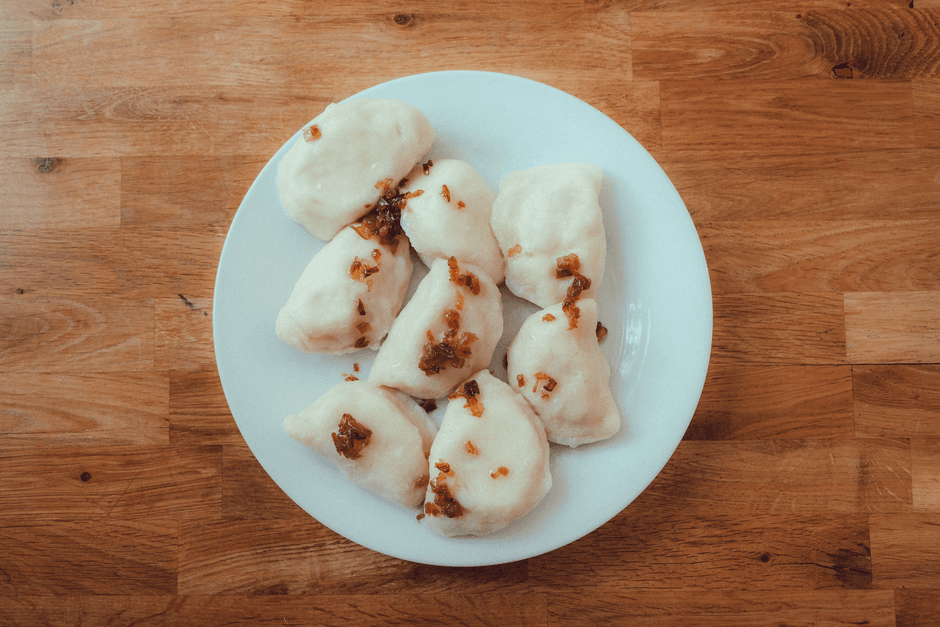
Pierogi Ruskie
Poland's most beloved dumplings: half-moon pasta filled with potato, cheddar and caramelised onion, boiled then fried in butter with crispy onion and sour cream.
About This Recipe
Pierogi ruskie are Poland's most iconic food: plump, half-moon shaped dumplings made from a simple egg dough, filled with a mixture of mashed potato, white cheese (twaróg) and caramelised onion. They are boiled until just tender, then typically fried in butter until lightly golden and served with more caramelised onion and a bowl of sour cream for dipping. Despite the name 'ruskie' (Ruthenian), these dumplings are quintessentially Polish and eaten across the country from childhood to old age. Making pierogi is traditionally a family activity — the dough-rolling, filling and crimping done together around the kitchen table. The result is one of the most comforting foods in Eastern European cuisine.
Ingredients
Serves 4
- 400 gplain flour
- 1egg
- 200 mlwarm water
- 0.5 teaspoonsalt
- 600 gfloury potatoes(boiled and mashed)
- 200 gtwaróg or cottage cheese(or ricotta, drained)
- 2 largeonions(1 for filling, 1 for serving)
- 2 tablespoonsbutter
- 1 teaspoonsalt(for filling)
- 1 teaspoonblack pepper
- 60 gbutter(for frying)
- 200 mlsour cream(to serve)
Instructions
- 1
Make the dough
Mix flour and salt. Beat egg into warm water, add to flour. Knead for 8 minutes until very smooth. Wrap and rest 30 minutes.
A rested dough is much easier to roll — do not skip the resting step.
- 2
Make the filling
Fry finely diced onion in butter until golden and sweet, about 10 minutes. Combine with mashed potato, cheese, salt and pepper. The filling should be smooth, well-seasoned and slightly sticky.
- 3
Fill and seal
Roll dough to 3mm thickness. Cut into circles using an 8cm cutter. Place a teaspoon of filling in the centre of each. Fold over and crimp firmly with a fork. Press the edges very securely — a leaking pierogi is a sad pierogi.
- 4
Boil then fry
Boil pierogi in salted water for 3–4 minutes until they float and the dough is cooked. Drain. Fry in batches in butter over medium-high heat until golden on both sides. Serve with caramelised onion and sour cream.
Did you make this?
Rate it and help other cooks find the recipes that actually work.
One tap to sign in, and we'll save the rating you just picked.
Everything you need to plan your week — free
- Meal calendar
- Grocery list
- AI recipe ideas
Cook this hands-free
Get AI meal plans, step-by-step cooking mode, and your saved recipes in the free Bento app.
Pro Tips
- →
The dough must be thin enough to cook through but thick enough not to tear — 3mm is ideal.
- →
Fully sealing the edges is critical — any gaps and the filling will escape during boiling.
- →
Fried leftover pierogi (the next day) are arguably better than fresh-boiled ones.
- →
Taste and adjust salt at the very end — flavors concentrate as liquids reduce, and a final pinch of flaky salt sharpens the whole dish.
Variations
- •
Pierogi z kapustą i grzybami: sauerkraut and mushroom filling — the Christmas version.
- •
Sweet pierogi (z jagodami): filled with blueberries and served with cream.
- •
Vegetarian: swap the protein for roasted king oyster mushrooms, smoked tofu or cooked chickpeas — adjust seasoning slightly upward to compensate.
- •
Spicier: add a finely chopped fresh chile or a teaspoon of crushed Aleppo/Urfa pepper to the aromatics for warm, layered heat instead of a single sharp hit.
Storage
Boiled pierogi keep refrigerated for 3 days. Fry in butter to reheat. Freeze well unboiled for up to 1 month.
History & Origin
Pierogi have been documented in Polish cuisine since the 13th century, with some food historians suggesting they were introduced from the East (possibly from China via Kyivan Rus). The name 'ruskie' refers to the Ruthenian region of historical Poland (modern Ukraine), where potato and cheese fillings were traditional. Today pierogi are Poland's most internationally recognised dish, with 8 October celebrated as National Pierogi Day in Poland.
Frequently Asked Questions
Can I use cheddar instead of twaróg?
Mild cheddar or ricotta are both good substitutes for twaróg. Cheddar adds a sharper flavour; ricotta is creamier but less tangy. The key is using a white cheese that can be mixed smoothly with the potato.
Can I make this ahead of time?
Yes — most of the components can be prepared up to a day in advance and refrigerated separately. Reheat gently and assemble just before serving so textures stay distinct.
What can I substitute if I don't have all the ingredients?
Stay close to the role each ingredient plays: swap aromatics for similar ones (shallot for onion, lime for lemon), and keep the fat-acid-salt balance intact. Spice blends can usually be approximated with what's in the cupboard.
How do I know it's authentic?
Authenticity sits on a spectrum — what matters more is honoring the technique and balance of flavors. If the dish tastes harmonious and respects how cooks in its home region would build it, you're on solid ground.
Nutrition Facts
Per serving (380g / 13.4 oz) · 4 servings total
Time Summary
Have Questions?
Ask our AI cooking assistant anything about this recipe — substitutions, techniques, scaling.
Chat with AI Chef →Featured in Guides
This recipe is featured in the following curated guides:
More Polish Recipes
You Might Also Like
Similar dishes from other cuisines around the world.
Browse by Ingredient
More recipes built around the same core ingredients.
Free Kitchen Tools
Calculators and converters that pair with this page — no signup needed.
Put This Into a Plan
Schedule it, shop for it, and track what you already have.
Read Next
Longer reads that go deeper on the ideas behind this dish.
Community
Join the conversation
Sign in to leave a comment and save your favourite recipes