
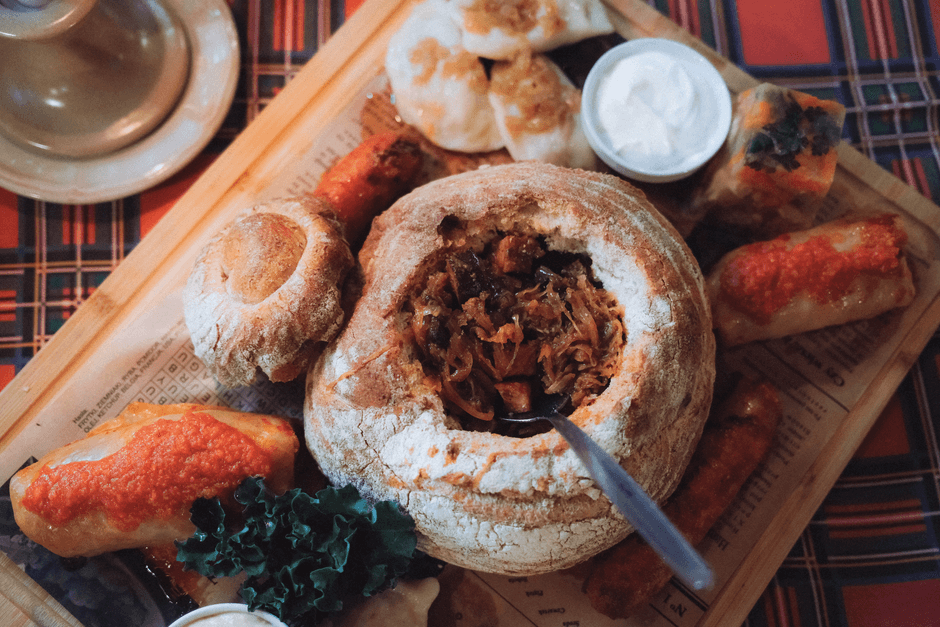
Bigos
Poland's national dish — a rich, smoky hunter's stew of sauerkraut, fresh cabbage and mixed meats slow-cooked until meltingly tender.
About This Recipe
Bigos is the soul of Polish home cooking, a deeply flavoured stew that improves with every reheating and is traditionally made in enormous quantities over several days. The dish combines sauerkraut and fresh white cabbage as its base, layered with a variety of meats — smoked kielbasa, pork shoulder, bacon and often leftover roasts — and enriched with dried mushrooms, tomato paste and a splash of red wine. The name translates as 'hunter's stew', reflecting its origins as a portable meal cooked over open fires during noble hunting parties in the forests of medieval Poland and Lithuania. Every Polish family has their own closely guarded bigos recipe, passed down through generations, and no two versions are identical. The stew is always served with dark rye bread and a shot of cold żubrówka vodka.
Ingredients
Serves 6
- 500 gsauerkraut(drained, roughly chopped)
- 400 gfresh white cabbage(shredded)
- 300 gsmoked kielbasa sausage(sliced into rounds)
- 250 gpork shoulder(cut into 2cm cubes)
- 150 gsmoked bacon lardons
- 30 gdried porcini mushrooms
- 2 tablespoonstomato paste
- 200 mldry red wine
- 2bay leaves
- 5allspice berries
- 1 teaspooncaraway seeds
- 1 largeonion(diced)
- 2 tablespoonsvegetable oil
- salt and black pepper(to taste)
Instructions
- 1
Rehydrate the mushrooms
Place the dried porcini mushrooms in a bowl and cover with 300 ml of hot water. Leave to soak for 20 minutes. Lift out the mushrooms and squeeze dry, then chop roughly. Strain the soaking liquid through a fine sieve and reserve — it is liquid gold for the stew.
- 2
Brown the meats
Heat the oil in a large heavy-bottomed pot or Dutch oven over medium-high heat. Add the bacon lardons and fry until the fat renders and they begin to crisp, about 4 minutes. Add the pork shoulder pieces, season well with salt and pepper, and brown on all sides, about 6 minutes. Remove both to a plate.
- 3
Soften the aromatics
In the same pot, fry the diced onion over medium heat until soft and golden, about 8 minutes. Add the tomato paste and stir-fry for 2 minutes until it darkens slightly. Add the caraway seeds and allspice berries and fry for 30 seconds.
- 4
Build the stew
Return the browned meats to the pot. Add the sauerkraut, fresh cabbage, chopped mushrooms, mushroom soaking liquid, red wine and bay leaves. Stir everything together and bring to a simmer. The liquid should just cover the ingredients; top up with water if necessary.
- 5
Add the kielbasa and simmer low and slow
Tuck the kielbasa slices into the stew. Reduce the heat to its lowest setting, cover the pot and cook gently for 1 hour 30 minutes, stirring every 20 minutes. The cabbage should be very soft and the flavours deeply melded.
- 6
Taste and serve
Remove the bay leaves and allspice berries. Taste and adjust the seasoning — bigos should be savoury, slightly sour from the sauerkraut, and deeply smoky. Serve in deep bowls with thick slices of dark rye bread. For the most authentic result, refrigerate overnight and reheat the next day.
Did you make this?
Rate it and help other cooks find the recipes that actually work.
One tap to sign in, and we'll save the rating you just picked.
Everything you need to plan your week — free
- Meal calendar
- Grocery list
- AI recipe ideas
Cook this hands-free
Get AI meal plans, step-by-step cooking mode, and your saved recipes in the free Bento app.
Pro Tips
- →
The best bigos is made over 2–3 days: cook, refrigerate, reheat, repeat. The flavour deepens enormously each time.
- →
Add a splash of beet kvass or a tablespoon of plum jam for extra depth if you have them.
- →
Do not skip the porcini mushroom soaking liquid — it provides an irreplaceable earthy backbone.
- →
Taste and adjust salt at the very end — flavors concentrate as liquids reduce, and a final pinch of flaky salt sharpens the whole dish.
Variations
- •
Add cubed venison or wild boar alongside the pork for a truly rustic hunter's version.
- •
A vegetarian bigos using only mushrooms and cabbage with a splash of soy sauce is surprisingly satisfying.
- •
Vegetarian: swap the protein for roasted king oyster mushrooms, smoked tofu or cooked chickpeas — adjust seasoning slightly upward to compensate.
- •
Spicier: add a finely chopped fresh chile or a teaspoon of crushed Aleppo/Urfa pepper to the aromatics for warm, layered heat instead of a single sharp hit.
Storage
Bigos keeps well in the fridge for up to 5 days and freezes excellently for 3 months. It always tastes better the next day.
History & Origin
Bigos has been documented in Polish literature since the 15th century. The Polish national epic 'Pan Tadeusz' by Adam Mickiewicz includes a famous rhapsodic description of bigos being cooked over a campfire.
Frequently Asked Questions
Can I use pre-packaged sauerkraut?
Yes — look for refrigerated sauerkraut from a jar or bag, which has a fresher flavour than the shelf-stable canned variety.
Can I make this ahead of time?
Yes — most of the components can be prepared up to a day in advance and refrigerated separately. Reheat gently and assemble just before serving so textures stay distinct.
What can I substitute if I don't have all the ingredients?
Stay close to the role each ingredient plays: swap aromatics for similar ones (shallot for onion, lime for lemon), and keep the fat-acid-salt balance intact. Spice blends can usually be approximated with what's in the cupboard.
How do I know it's authentic?
Authenticity sits on a spectrum — what matters more is honoring the technique and balance of flavors. If the dish tastes harmonious and respects how cooks in its home region would build it, you're on solid ground.
Nutrition Facts
Per serving · 6 servings total
Time Summary
Have Questions?
Ask our AI cooking assistant anything about this recipe — substitutions, techniques, scaling.
Chat with AI Chef →Featured in Guides
This recipe is featured in the following curated guides:
More Polish Recipes
You Might Also Like
Similar dishes from other cuisines around the world.
Browse by Ingredient
More recipes built around the same core ingredients.
Free Kitchen Tools
Calculators and converters that pair with this page — no signup needed.
Put This Into a Plan
Schedule it, shop for it, and track what you already have.
Read Next
Longer reads that go deeper on the ideas behind this dish.
Community
Join the conversation
Sign in to leave a comment and save your favourite recipes