
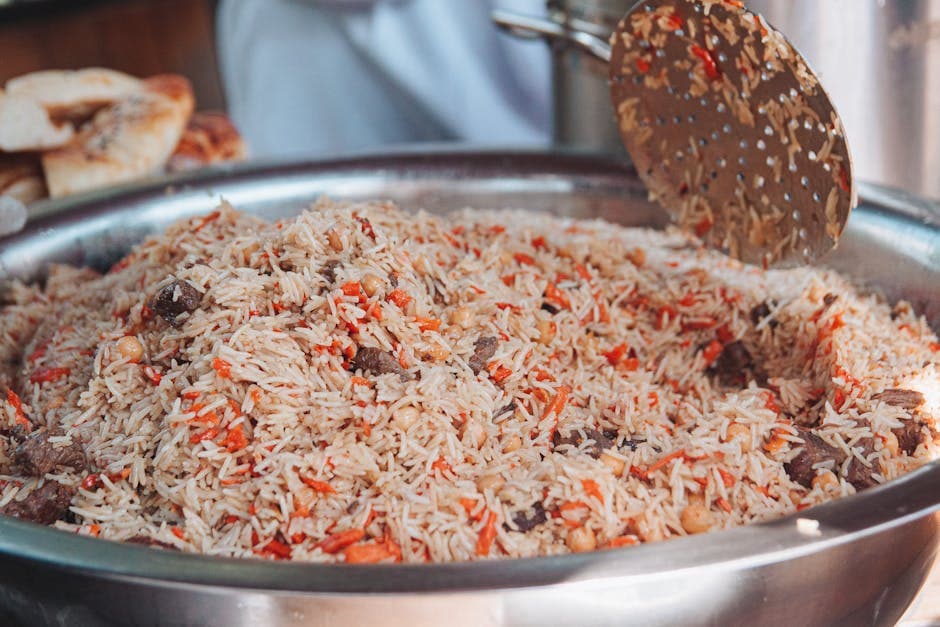
乌兹别克斯坦抓饭(羊肉抓饭)
中亚最美味的米饭——羊肉、胡萝卜和洋葱一起在大型铸铁喀山中煮熟,然后上面放上米饭,在肉汁中蒸熟。乌兹别克斯坦的国菜,每次庆祝活动都会吃。
关于这个食谱
乌兹别克 plov 是世界上最重要的米饭菜肴之一,也是乌兹别克斯坦的国菜 - 它被认为非常重要,以至于联合国教科文组织在 2016 年将其列入非物质文化遗产名录。每个乌兹别克城市都有自己的风格:撒马尔罕 plov 将肉和米饭分开分层; Fergana plov 使用更多脂肪和深色 Zirvak(肉汤);塔什干马铃薯添加了木瓜、鹰嘴豆和干伏牛花。共同点是 kazan(一种大型球形铸铁大锅)和 zirvak——深焦糖洋葱和胡萝卜底料,以提炼的羊肉脂肪制成,是每道 plov 的风味基础。在乌兹别克斯坦,为 1,000 名宾客的婚礼烹饪 plov 是一种社会艺术形式 — 特殊的 plov 大师 (oshpaz) 备受尊敬。
食材
服务 6
- 700 克带骨羊肩肉(切成4厘米的块)
- 500 克德夫齐拉赖斯(或印度香米,浸泡30分钟)
- 150 毫升棉籽或植物油(或提炼的羊脂)
- 4大洋葱(切成薄片,切成半月形)
- 4大胡萝卜(切成粗火柴棍——不磨碎)
- 1 整个大蒜头(外层去皮,保留完整)
- 700 毫升热水
- 2 茶匙小茴香种子
- 1 茶匙香菜籽(压碎的)
- 1 茶匙黑胡椒
- 0.5 茶匙姜黄
- 2 茶匙盐
- 50 克干小檗或葡萄干(可选但传统)
步骤
- 1
将油烧至非常热
在大锅或厚底锅中用尽可能高的火加热油,直至冒烟。油必须非常热——几乎达到烟点。
- 2
棕色羊肉
单层添加羊肉。 3 分钟内不要搅拌——让它完全烤焦。各面呈棕色,总共 8 分钟。取出并放在一边。
- 3
焦糖洋葱
将切好的洋葱加入热油中。在不搅拌的情况下用大火煮 5 分钟,然后搅拌并再煮 10 分钟,直到呈深金棕色——边缘几乎烧焦。
洋葱的深焦糖化赋予了乌兹别克 plov 特有的深颜色和风味——淡洋葱会产生苍白、平淡的 plov。
- 4
添加胡萝卜和 Zirvak
添加胡萝卜火柴棍。煮搅拌 8 分钟直至软化。加入小茴香、香菜、胡椒、姜黄和盐。返回羔羊。添加热水——zirvak 应该覆盖肉。煮 35 分钟。
- 5
加入大蒜和米饭
将整个大蒜头埋入 Zirvak 中。将浸泡好的米沥干,均匀地铺在整个表面上——不要搅拌。将剩余的热水倒在米饭上——它应该刚好没过米饭。如果使用的话,撒上小檗。
- 6
盖上蒸汽(dum)
煮沸。当米饭吸收了大部分水分后,将热量降至最低。用木勺在米饭上戳洞,一直到底部。用茶巾盖紧,然后盖上盖子。蒸25分钟。
- 7
发球
取下盖子。米饭应该完全分开,底部呈金黄色。倒置到一个大盘子上或从锅中盛出。将蒜头放在中间。搭配简单的番茄洋葱沙拉(achichuk)。
你做过这道菜吗?
给它评分,帮助其他人找到真正好用的食谱。
一键登录,我们会保存你刚刚选择的评分。
规划一周饮食所需的一切 — 免费
- 膳食日历
- 购物清单
- AI 食谱推荐
记录你的饮食
在免费的 SnapCal 应用中拍下餐食即可记录卡路里和宏量营养素,还能使用断食计时器和饮水记录。
专业提示
- →
在第一阶段中非常高的热量是至关重要的——在中火下无法实现焦糖化。
- →
Devzira 大米(一种乌兹别克红壳品种)是传统的选择,它比印度香米吸收更多的液体和风味,并且保持坚硬。在中亚杂货店有售。
- →
在最后品尝并调整盐——随着液体的减少,味道会集中,最后一小撮片状盐会使整道菜变得更锋利。
- →
就地准备是值得的:在加热之前切碎、测量和预混合所有东西,特别是对于任何快速移动的步骤。
变化
- •
鹰嘴豆 plov:加入 100 克浸泡过的鹰嘴豆和胡萝卜
- •
木瓜 plov:在大蒜旁边添加 1 个切成楔形的木瓜
- •
素食 plov:省略羊肉,使用额外的油和蔬菜汤 - 与杏干一起食用
- •
更辣:在芳香剂中添加切碎的新鲜辣椒或一茶匙压碎的阿勒颇/乌尔法胡椒,以获得温暖、分层的热量,而不是单一的强烈刺激。
存储
普洛夫比第一天略有进步。冷藏可保存3天。在宽锅中重新加热,加水,盖上盖子。
历史与起源
Plov(抓饭)是世界上最古老的稻米制品之一,早在 10 世纪中亚就有记载。传奇医师阿维森纳(Ibn Sina,980-1037)在他的医学著作中提到马铃薯是一种恢复性食物。乌兹别克马球在帖木儿帝国(14-16 世纪)时期形成了现在的形式,当时撒马尔罕是伊斯兰世界最伟大文明的中心。如今,在乌兹别克斯坦,烹饪马球被认为是一种神圣的艺术形式。
常见问题解答
为什么米饭从不搅拌到 Zirvak 中?
将大米搅拌到肉类和蔬菜基质中会破坏谷物并产生糊状的淀粉状物质。分层的方法——米饭放在zirvak的顶部,通过蒸汽和下面的蒸发吸收味道——使每粒谷物保持分离,并允许它从底部吸收肉汁,同时从上面蒸。这是plov技术的最大成就。
我可以提前做这个吗?
是的——大多数成分最多可以提前一天准备好并单独冷藏。轻轻重新加热并在食用前组装,以保持纹理清晰。
如果我没有所有原料,我可以用什么代替?
密切关注每种成分所扮演的角色:将芳香剂替换为类似的芳香剂(将葱替换为洋葱,将酸橙替换为柠檬),并保持脂肪酸盐平衡不变。香料混合物通常可以与橱柜中的香料近似。
我怎么知道它是正品?
真实性存在一定的范围——更重要的是尊重技术和口味的平衡。如果这道菜味道和谐并且尊重其家乡厨师的制作方式,那么您就已经踏实了。
营养成分
每份 · 6 总份量
时间总结
你可能也喜欢
来自世界其他菜系的相似菜肴。
按食材浏览
使用相同核心食材的更多食谱。
免费厨房工具
与本页搭配使用的计算器和单位换算工具,无需注册。
把它变成计划
加入日历、生成购物清单、掌握家里已有的食材。
接着读
深入探讨这道菜背后思路的长文。
社区
加入对话
登录发表评论并保存您最喜欢的食谱