
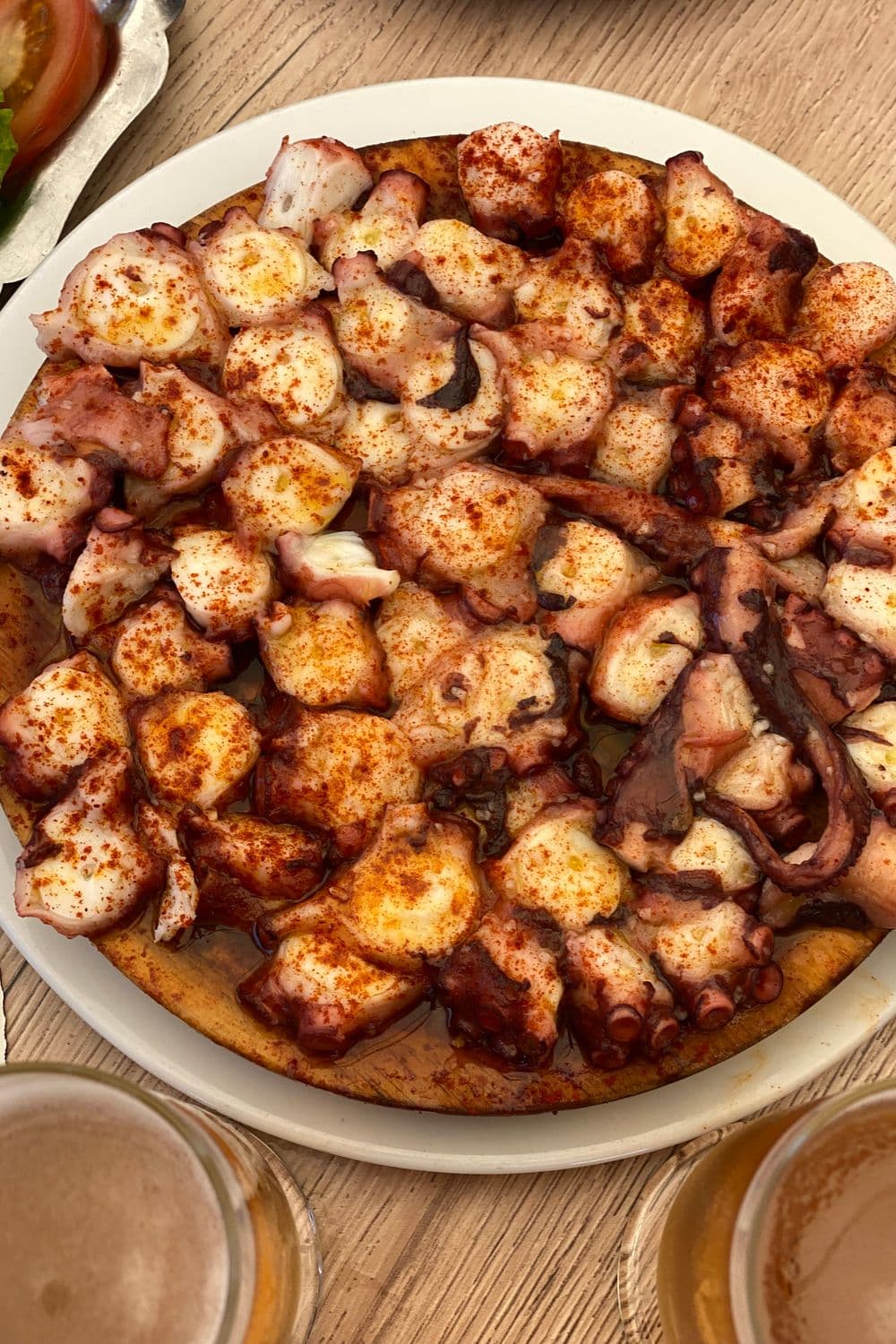
Spanischer Oktopus mit geräuchertem Paprika – Andrés-Inspiriert
Langsam gepochter Oktopus mit zerquetschten Kartoffeln, süßem geräuchertem Paprika und dem besten Olivenöl, das Sie sich leisten können.
⭐Inspired by José Andrés · 🇪🇸 SpainÜber dieses Rezept
Dieses Gericht ist von Chef José Andrés' lebenslanger Befürwortung der spanischen Small-Plate-Kultur in Amerika und seinen berühmten Jaleo-Restaurants inspiriert. Pulpo a la Gallega – Galizischer Oktopus – ist eine der definierenden Tapas Spaniens: einfach, abhängig von ausgezeichneten Zutaten, und verheerend, wenn gut gemacht. Der Trick ist Geduld: Oktopus muss langsam und sanft gekocht werden, dann fertig gestellt mit zerquetschten Kartoffeln, reichlichem geräuchertem Paprika (Pimentón) und einer großzügigen Menge fruchtigen spanischen Olivenöls. Dies ist unsere Interpretation der Galizischen Tradition, die Andrés seit 30+ Jahren amerikanischem Publikum gebracht hat.
Zutaten
Dient 4
- 1.5 kgOktopus(frisch oder aufgetaut aus gefroren, gereinigt)
- 1große Zwiebel(halbiert)
- 2Lorbeerblätter
- 1 ELschwarze Pfefferkörner
- 2Knoblauchzehen(zerquetscht)
- 600 gkleine wachsige Kartoffeln(wie Charlotte)
- 2 TLspanischer süßer geräucherter Paprika (Pimentón Dulce)
- 0.5 TLspanischer heißer geräucherter Paprika (Pimentón Picante)(optional)
- 60 mlextra natives Olivenöl(das beste, das Sie sich leisten können)
- Maldon Meersalz(nach Geschmack)
- 1Zitrone(Spalten zum Servieren)
Anleitung
- 1
Oktopus zartmachen
Wenn frischer Oktopus verwendet wird, über Nacht einfrieren – der Gefrier-Tau-Zyklus bricht Muskelfasern ab und stellt Zartheit sicher. Einen großen Topf Wasser mit der Zwiebel, Lorbeerblättern, Pfefferkörnern und Knoblauch zum Kochen bringen.
Galizische Tradition ist, den Oktopus 3 Mal in das kochende Wasser zu tauchen, bevor er vollständig untergetaucht wird – es "lockt" die Tentakel dramatisch.
- 2
Sanft pochieren
Den Oktopus in das kochende Wasser senken. Die Hitze auf einen kaum Simmer reduzieren (NICHT kochen) und 60–90 Minuten je nach Größe kochen – bis ein Messer leicht in den dicksten Teil einer Tentakel gleitet. Hitze ausschalten und 15 Minuten in dem Wasser ruhen lassen.
- 3
Kartoffeln kochen
Während der Oktopus ruht, die Kartoffeln ganz in reichlich gesalzenem Wasser 18–20 Minuten kochen, bis zart. Abtropfen lassen und 2 Minuten dampfen lassen.
- 4
Oktopus in Scheiben schneiden
Den Oktopus aus dem Kochwasser heben. Die Tentakel in 1,5 cm dicke Scheiben auf leichten Schrägschnitt schneiden und den Kopf in mundgerechte Stücke hacken. Den Schnabel (kleines hartes Stück in der Mitte) verwerfen.
- 5
Galizisch plattieren
Die Kartoffeln auf ein Holzbrett oder einen warmen Teller in Scheiben schneiden oder grob zerquetschen. Die Oktopus-Scheiben oben anordnen. Großzügig mit beiden Papikas und Maldon-Salz bestreuen. Reichlich mit Olivenöl beträufeln – seien Sie nicht schüchtern. Sofort mit Zitronenspalten servieren.
Hast du das gekocht?
Bewerte es und hilf anderen, die Rezepte zu finden, die wirklich funktionieren.
Einmal anmelden, und wir speichern die Bewertung, die du gerade gewählt hast.
Alles, was du für deine Wochenplanung brauchst — kostenlos
- Essensplaner
- Einkaufsliste
- KI-Rezeptideen
Freihändig kochen
Hol dir KI-Essenspläne, einen Schritt-für-Schritt-Kochmodus und deine gespeicherten Rezepte in der kostenlosen Bento-App.
Profi-Tipps
- →
Gefrorener Oktopus ist tatsächlich dem frischen überlegen – der Gefrier-Tau-Zyklus pre-zartmacht das Fleisch.
- →
Spanischer Pimentón (geräucherter Paprika) ist wesentlich – ungarischer Paprika ergibt nicht denselben Geschmack.
- →
Verwenden Sie das beste Olivenöl, das Sie haben – dieses Gericht ist im Wesentlichen sein Präsentation.
Variationen
- •
Pulpo a Feira: auf einem Holzbrett genau servieren, wie es auf galizischen Dorfmessen gemacht wird.
- •
Grilled Variation: nach dem Pochieren den Oktopus mit Olivenöl bestreichen und kurz auf einem heißen Grill ansengen für einen rauchigen Abschluss.
Lagerung
Am besten sofort essen. Gekochter Oktopus bleibt bis zu 2 Tage in dem Kochwasser im Kühlschrank und kann sanft wieder aufgewärmt werden.
Geschichte und Herkunft
Pulpo a la Gallega (oder Pulpo a Feira – "Messe-Stil-Oktopus") ist eines der definierenden Gerichte Galiciens im Nordwesten Spaniens, traditionell in massiven Kupfertöpfen auf Dorfmessen gekocht und auf Holztellern mit rauem Wein serviert. José Andrés hat dies und andere regionale spanische Gerichte durch seine Jaleo-Restaurants seit den 1990ern unterstützt.
Häufig gestellte Fragen
Warum frischen Oktopus einfrieren?
Der Gefrier-Tau-Zyklus bricht die Muskelfasern im Oktopus ab und zartmacht das Fleisch, ohne lange zu kochen. Es ist das Geheimnis hinter zartem galizischem Oktopus und wird allgemein in spanischen Hausküchen verwendet.
Was ist Pimentón?
Pimentón ist spanischer geräucherter Paprika, aus Paprika gemacht, die langsam über Eichenholz geraucht werden. Seine drei Sorten – Dulce (süß), Agridulce (bitter-süß) und Picante (scharf) – sind wesentlich für spanische Küche und können nicht direkt mit regelmäßigem Paprika ersetzt werden.
Warum besteht Andrés auf gefrorendem Oktopus?
Oktopus-Muskulatur ist natürlich zäh; der Gefrier-Tau-Zyklus reißt Zellwände ab und zartmacht das Fleisch ohne lange zu kochen. Spanische Hausköche verwenden diese Technik seit Jahrzehnten – das ist, warum galizischer Oktopus verlässlich zart ist.
Welcher Wein passt zu Pulpo?
Albariño aus Rías Baixas (Galizien) ist die Lehrbuch-Paarung – hell, zitrus-getrieben, mineralisch. Verdejo oder Godello funktionieren auch. Schwere Rotweine vermeiden; der geräucherte Paprika und das Olivenöl brauchen eine hebende Säure.
Kann ich dies auf dem Herd ohne Grill kochen?
Ja – das Gericht wird traditionell gekocht, nicht gegrillt. Der Grill-Abschluss ist optional und verleiht eine rauchige Note. Nur gekocht ist vollständig authentisch für die galizische Tradition.
Nährwertangaben
Pro Portion (320g) · 4 Portionen insgesamt
Zeitzusammenfassung
Haben Sie Fragen?
Fragen Sie unseren KI-Kochassistenten zu diesem Rezept – Ersetzungen, Techniken, Skalierung.
Chatten Sie mit AI Chef →Weitere Spanische Rezepte
Das könnte dir auch gefallen
Ähnliche Gerichte aus anderen Küchen der Welt.
Nach Zutat stöbern
Weitere Rezepte rund um dieselben Hauptzutaten.
Kostenlose Küchen-Tools
Rechner und Umrechner, die zu dieser Seite passen — ohne Anmeldung.
Daraus einen Plan machen
Einplanen, einkaufen und im Blick behalten, was schon da ist.
Weiterlesen
Ausführliche Artikel zu den Ideen hinter diesem Gericht.
Gemeinschaft
Beteiligen Sie sich an der Unterhaltung
Melden Sie sich an, um einen Kommentar zu hinterlassen und Ihre Lieblingsrezepte zu speichern