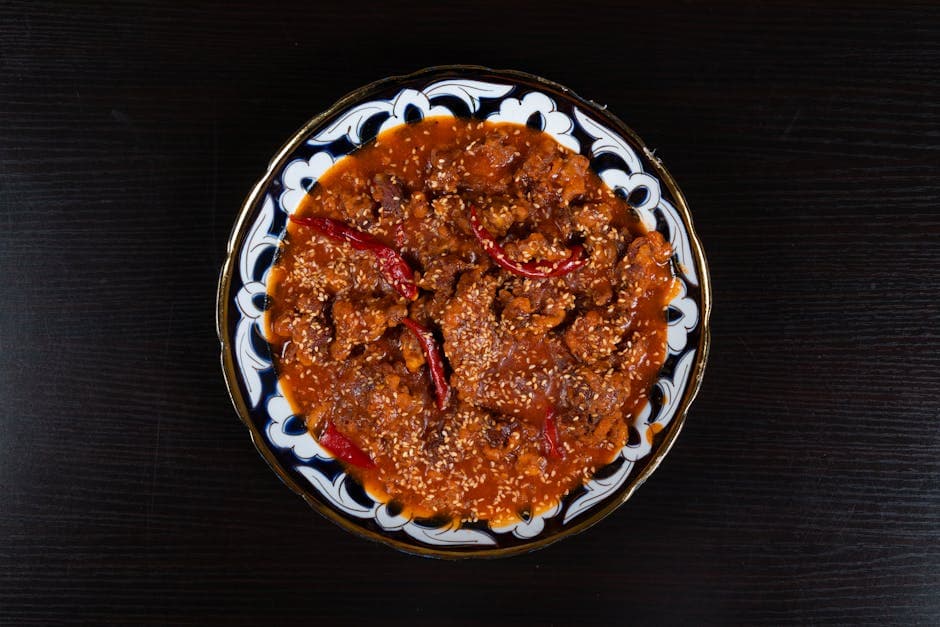
Beshbarmak는 키르기스어로 '다섯 손가락'을 의미합니다. 이 요리는 전통적으로 손으로 먹는 방식을 나타냅니다. 결혼식, 장례식, 주요 가족 모임에서 제공되는 키르기스스탄과 카자흐스탄의 가장 중요한 의례 요리입니다. 양 전체(또는 큰 부위)를 양파와 소금을 넣은 물에 몇 시간 동안 천천히 끓여서 풍부하고 깊은 맛의 육수와 부드러운 고기를 만듭니다. 넓고 납작한 네모난 국수(베쉬바르막이라고도 함)를 육수에 넣고 끓입니다. 플래터는 바닥에 국수를 놓고 풀드 고기를 얹은 다음 국물에서 탈지한 지방으로 부드러워진 양파 링 소스인 치크 위에 국자를 올려 구성됩니다. 서빙 순서는 의례적입니다. 가장 나이가 많거나 가장 존경받는 손님이 특정 부위(머리, 엉덩이 또는 기타 의미 있는 부위)를 받습니다. 맑은 국물(쇼르포) 한 그릇이 함께 제공됩니다.
서브 6
큰 냄비에 양고기를 넣고 찬물로 덮습니다. 끓여서 거품을 완전히 걷어냅니다. 반으로 자른 양파, 통후추, 월계수 잎, 소금을 추가합니다. 고기가 매우 부드러워지고 뼈에서 떨어질 때까지 약한 불로 2~2.5시간 동안 끓입니다. 고기를 제거하고 큰 조각으로 자릅니다. 국물을 예약하세요.
밀가루, 계란, 물, 소금을 섞어 단단한 반죽을 만드세요. 부드러워질 때까지 8분간 반죽하세요. 20분간 휴식을 취하세요. 매우 얇게(2mm) 말아 대략 8×5cm 크기의 거친 직사각형이나 정사각형으로 자릅니다.
두꺼운 국수는 반죽 맛이 나므로 최대한 얇게 말아주세요. 요리하면 부풀어 오를 것입니다.
국물 표면의 지방을 3큰술 걷어냅니다. 팬을 가열하고 얇게 썬 양파 링을 부드럽고 가볍게 황금색이 될 때까지 약 10분 동안 천천히 조리합니다. 따뜻한 육수 한 국자를 넣고 5분간 끓입니다. 소금과 후추로 간을 하세요.
걸러낸 국물을 끓입니다. 국수 조각을 국물에 넣어 부드러워질 때까지 4~5분간 조리합니다. 슬롯형 스푼으로 제거합니다.
크고 둥근 접시에 국수를 놓습니다. 뽑아낸 양고기 조각을 얹습니다. 모든 것에 양파 소스(chyk)를 숟가락으로 뿌립니다. 신선한 딜과 후추를 뿌립니다. 남은 국물(쇼르포)은 한 모금씩 그릇에 담아 함께 제공합니다.
길고 천천히 요리하는 것이 필수적입니다. 양고기는 완전히 부드러워야 하고 국물은 깊은 맛이 나야 합니다.
국수 반죽을 매우 얇게 펴십시오. 익히면 두께가 두 배로 늘어납니다.
양파 소스에 사용되는 탈지 지방은 전통적이며 독특한 풍부함을 더해줍니다.
마지막에 소금을 맛보고 조절하세요. 액체가 줄어들면서 풍미가 농축되고, 마지막에 얇은 소금을 한 꼬집 넣으면 전체 요리가 더욱 선명해집니다.
축하 행사에서는 말고기를 가장 전통적인 키르기스스탄 버전으로 사용하세요.
야채가 더 풍부한 버전을 원하면 당근과 순무를 국물에 추가하세요.
카자흐스탄에서는 동일한 요리가 다양한 국수 모양으로 만들어지며 때로는 양지머리가 포함되기도 합니다.
채식주의자: 단백질을 구운 새송이버섯, 훈제 두부 또는 익힌 병아리콩으로 교체하세요. 이를 보완하기 위해 양념을 약간 높이세요.
육수, 고기, 국수는 3일 동안 따로 보관합니다. 주문에 따라 신선하게 조립됩니다.
베쉬바르막은 키르기스스탄과 카자흐스탄 유목민 문화에서 가장 오래되고 가장 신성한 요리로, 광활한 중앙아시아 대초원에서 양을 기르는 목가적인 전통에 뿌리를 두고 있습니다. 의례적인 서빙 순서는 고대 키르기스 사회 구조를 반영합니다. 양의 머리는 가장 나이 많은 수컷에게, 엉덩이는 가장 귀한 손님에게, 귀는 어린이에게 주어 노인의 말을 들을 수 있도록 합니다. 다섯 개의 손가락이라는 이름 자체는 손으로 공동 식사를 하는 것이 평등과 친밀함의 상징이었던 문화를 반영합니다.
요리는 지역에 따라 매우 유사합니다. 카자흐 베쉬바르막에는 다양한 종류의 고기와 소시지(kazy, shuzhyk)가 포함되는 경우가 많은 반면, 키르기즈 버전은 더 단순하고 양고기에 초점을 맞춘 경향이 있습니다.
직사각형으로 자른 신선한 라자냐 시트가 잘 작동합니다. 말린 파스타는 피하세요. 손으로 말아 만든 국수 시트와 질감이 너무 다릅니다.
예. 대부분의 구성 요소는 최대 하루 전에 준비하여 별도로 냉장 보관할 수 있습니다. 부드럽게 재가열하고 서빙 직전에 조립하여 질감이 뚜렷하게 유지되도록 하세요.
각 성분이 수행하는 역할에 주의를 기울이십시오. 방향성 성분을 유사한 성분(샬롯에는 양파, 라임에는 레몬)으로 바꾸고 지방-염 균형을 그대로 유지하십시오. 향신료 혼합은 일반적으로 찬장에 있는 것과 비슷합니다.
서빙 당 · 6 총 제공량
대화에 참여하세요
댓글을 남기고 좋아하는 레시피를 저장하려면 로그인하세요.
피드백이나 도움이 필요하신가요?
모든 이메일을 읽고 1–2영업일 내에 답장합니다.
© 2026 MyCookingCalendar. 모든 권리 보유.