
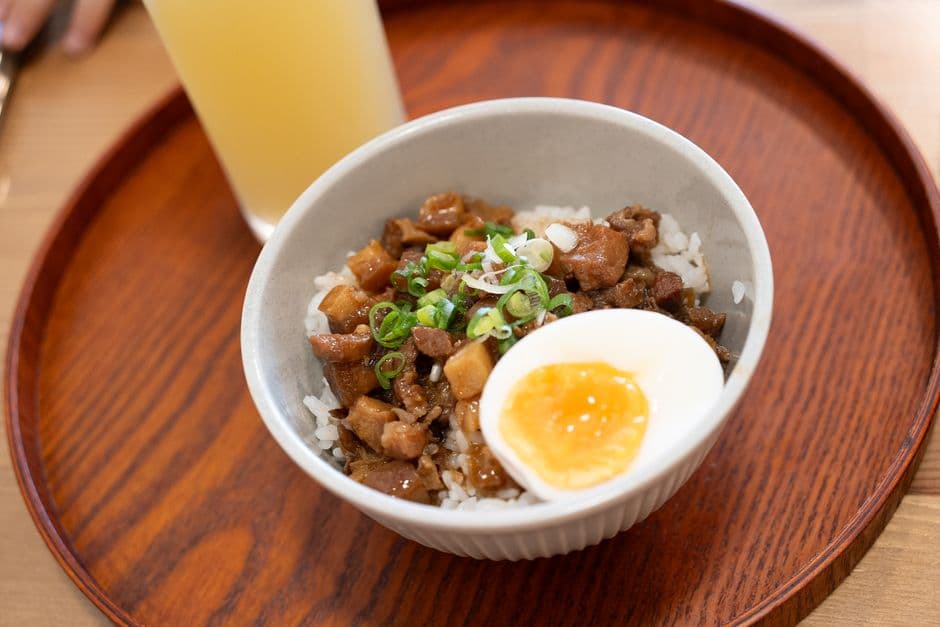
Lu Rou Fan — Taiwanese Braised Pork Rice
Meltingly tender soy-braised pork belly with five-spice, rice wine and crispy shallots over steamed rice — Taiwan's ultimate comfort food and the nation's most beloved bowl.
About This Recipe
Lu rou fan is Taiwan's national dish by popular consensus: finely chopped pork belly slow-braised in a rich sauce of soy sauce, Shaoxing rice wine, five-spice and sugar until the fat melts into a glossy, gelatinous gravy, served over steamed white rice with a braised egg and pickled vegetables on the side. The dish is found everywhere in Taiwan — from roadside stalls to school canteens to upscale restaurants — and each cook or restaurant has their own version, refined over years. The magic is in the fat: pork belly with a good proportion of fat is essential, as it melts during braising and creates the unctuous, glistening sauce that coats every grain of rice. Lu rou fan is eaten at any time of day, for any occasion.
Ingredients
Serves 4
- 600 gpork belly(skin-on, finely diced into 5mm pieces)
- 6 tablespoonssoy sauce
- 2 tablespoonsdark soy sauce
- 3 tablespoonsShaoxing rice wine
- 2 tablespoonssugar
- 1 teaspoonfive-spice powder
- 3 clovesgarlic(minced)
- 3 tablespoonscrispy fried shallots(shop-bought or homemade)
- 400 mlwater
- 4eggs(hard-boiled, peeled)
- 4 servingssteamed white rice
- 100 gpickled mustard greens or cucumber(to serve)
Instructions
- 1
Brown the pork
In a wok or heavy pot over medium-high heat, cook diced pork belly (no oil needed — the fat will render) for 8–10 minutes until golden and the fat has rendered. Drain excess fat, leaving about 2 tablespoons.
- 2
Build the braise
Add garlic and fry 1 minute. Add Shaoxing wine and stir. Add soy sauce, dark soy sauce, sugar, five-spice and water. Add fried shallots. Stir to combine.
- 3
Braise with eggs
Add peeled hard-boiled eggs to the pot. Bring to a boil, then reduce to a very gentle simmer. Cover and cook for 1 hour, stirring occasionally, until the pork is very tender and the sauce is glossy and thick.
The slower the simmer, the more the fat melts and the more gelatinous and glossy the sauce becomes.
- 4
Serve
Spoon pork and sauce generously over bowls of steamed rice. Halve an egg and place alongside. Add pickled vegetables. The sauce should pool into the rice.
Did you make this?
Rate it and help other cooks find the recipes that actually work.
One tap to sign in, and we'll save the rating you just picked.
Everything you need to plan your week — free
- Meal calendar
- Grocery list
- AI recipe ideas
Cook this hands-free
Get AI meal plans, step-by-step cooking mode, and your saved recipes in the free Bento app.
Pro Tips
- →
Finely diced pork belly is essential — not minced, not cubed, but small 5mm dice that gives the characteristic texture.
- →
Crispy fried shallots (available in Asian supermarkets in jars) add sweetness and depth that is hard to replicate.
- →
The dish improves dramatically the next day as the flavours meld — make it ahead.
- →
Taste and adjust salt at the very end — flavors concentrate as liquids reduce, and a final pinch of flaky salt sharpens the whole dish.
Variations
- •
Southern Taiwan style uses slightly more sugar for a sweeter profile.
- •
Some recipes add star anise and cinnamon alongside the five-spice.
- •
Vegetarian: swap the protein for roasted king oyster mushrooms, smoked tofu or cooked chickpeas — adjust seasoning slightly upward to compensate.
- •
Spicier: add a finely chopped fresh chile or a teaspoon of crushed Aleppo/Urfa pepper to the aromatics for warm, layered heat instead of a single sharp hit.
Storage
Refrigerate for up to 5 days — the flavour deepens over time. Reheat gently on the stove. Freezes well for up to 3 months.
History & Origin
Lu rou fan has roots in Fujian province China, brought to Taiwan by Fujianese immigrants over centuries. However, it evolved distinctly in Taiwan, particularly after 1949 when Mainlanders from across China settled on the island, contributing their own braising traditions. Today lu rou fan is considered quintessentially Taiwanese, even though its roots lie across the strait. It is one of the most widely agreed-upon candidates for Taiwan's national dish.
Frequently Asked Questions
Can I use boneless pork belly?
Yes — skin-on boneless belly works perfectly. The skin contains collagen that melts into the sauce and creates the glossy, sticky quality that defines great lu rou fan.
Can I make this ahead of time?
Yes — most of the components can be prepared up to a day in advance and refrigerated separately. Reheat gently and assemble just before serving so textures stay distinct.
What can I substitute if I don't have all the ingredients?
Stay close to the role each ingredient plays: swap aromatics for similar ones (shallot for onion, lime for lemon), and keep the fat-acid-salt balance intact. Spice blends can usually be approximated with what's in the cupboard.
How do I know it's authentic?
Authenticity sits on a spectrum — what matters more is honoring the technique and balance of flavors. If the dish tastes harmonious and respects how cooks in its home region would build it, you're on solid ground.
Nutrition Facts
Per serving (480g / 16.9 oz) · 4 servings total
Time Summary
Have Questions?
Ask our AI cooking assistant anything about this recipe — substitutions, techniques, scaling.
Chat with AI Chef →Featured in Guides
This recipe is featured in the following curated guides:
More Taiwanese Recipes
You Might Also Like
Similar dishes from other cuisines around the world.
Browse by Ingredient
More recipes built around the same core ingredients.
Free Kitchen Tools
Calculators and converters that pair with this page — no signup needed.
Put This Into a Plan
Schedule it, shop for it, and track what you already have.
Read Next
Longer reads that go deeper on the ideas behind this dish.
Community
Join the conversation
Sign in to leave a comment and save your favourite recipes