
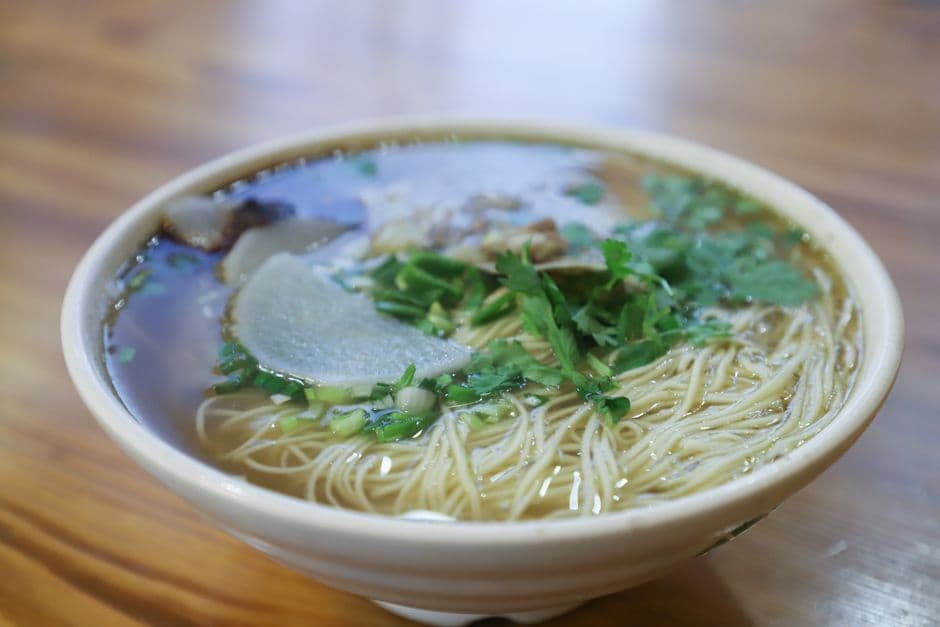
Oyster Vermicelli — Ô-á-mī-suànn
Thick rice vermicelli in a glossy sweet potato starch sauce with oysters, offal and coriander — Taipei's most iconic night market soup.
About This Recipe
Oyster vermicelli (蚵仔麵線, ô-á-mī-suànn in Taiwanese Hokkien) is one of the most iconic dishes of Taiwan's famous night markets: thick, burgundy-tinged rice noodles swimming in a starchy, lightly sour broth with fresh oysters and braised large intestine, finished with a drizzle of black vinegar and fresh coriander. The broth is thickened with sweet potato starch, giving it a distinctive glossy, slightly gelatinous texture that is unique to this dish. The combination of the briny oysters, slightly gamey intestine, the sweet-sour broth and the fresh herbal hit of coriander is a flavour experience that cannot be replicated anywhere outside Taiwan's night markets — or your kitchen.
Ingredients
Serves 4
- 200 gdried mī-suànn (thin wheat noodles)(or thin rice vermicelli)
- 200 gfresh oysters(small)
- 200 gbraised pork large intestine(sliced, optional)
- 60 gsweet potato starch(mixed with 120ml cold water)
- 1 litrechicken or pork stock
- 2 tablespoonssoy sauce
- 1 tablespoonoyster sauce
- 1 tablespoonsugar
- 2 tablespoonsblack vinegar (Zhenjiang)(plus more to serve)
- 2 stalksfresh coriander(to garnish)
- 1 tablespoongarlic oil(to finish)
Instructions
- 1
Cook the noodles
Soak or cook mī-suànn noodles according to package directions until just tender. Drain and divide among bowls.
- 2
Make the broth
Bring stock to a boil. Add soy sauce, oyster sauce, sugar and black vinegar. Taste and adjust.
- 3
Thicken and add oysters
Reduce heat to medium. Stir sweet potato starch mixture well, then pour slowly into the simmering broth while stirring constantly. Add oysters and intestine. Cook for 2–3 minutes until oysters are just cooked and broth is glossy.
Stir the starch mixture immediately before adding — it settles quickly. Add gradually to control consistency.
- 4
Serve
Ladle broth with oysters over the noodles. Drizzle with garlic oil. Top with fresh coriander. Serve with extra black vinegar for each person to adjust to taste.
Did you make this?
Rate it and help other cooks find the recipes that actually work.
One tap to sign in, and we'll save the rating you just picked.
Everything you need to plan your week — free
- Meal calendar
- Grocery list
- AI recipe ideas
Cook this hands-free
Get AI meal plans, step-by-step cooking mode, and your saved recipes in the free Bento app.
Pro Tips
- →
Sweet potato starch gives the characteristic silky-thick texture — do not substitute with cornflour, which gives a different consistency.
- →
Small, fresh oysters give the best flavour — frozen can be used but the texture will differ.
- →
The black vinegar is not optional — it provides the essential sour note that balances the broth.
- →
Taste and adjust salt at the very end — flavors concentrate as liquids reduce, and a final pinch of flaky salt sharpens the whole dish.
Variations
- •
Vegetarian version: omit oysters and intestine, add tofu and mushrooms.
- •
Some shops use only oysters without intestine.
- •
Spicier: add a finely chopped fresh chile or a teaspoon of crushed Aleppo/Urfa pepper to the aromatics for warm, layered heat instead of a single sharp hit.
- •
Lighter: reduce the fat by a third and finish with a squeeze of citrus or a splash of vinegar to keep brightness without losing body.
Storage
Broth keeps refrigerated for 3 days. Reheat and re-thicken with a little extra starch mixture. Cook noodles fresh.
History & Origin
Oyster vermicelli has roots in the fishing communities of Taiwan's coast, where fresh oysters were abundant and cheap. The dish became associated with the night market culture that developed in the 20th century, with the most famous shops in Tainan and Taipei building loyal followings over generations. It represents the broader Taiwanese talent for transforming humble street food into something irreplaceable.
Frequently Asked Questions
Where do I find mī-suànn noodles?
Taiwanese mī-suànn (蚵仔麵線) are thin wheat or rice noodles sold in Asian grocery stores. Thin rice vermicelli (bún, fine grade) is the closest substitute.
Can I make this ahead of time?
Yes — most of the components can be prepared up to a day in advance and refrigerated separately. Reheat gently and assemble just before serving so textures stay distinct.
What can I substitute if I don't have all the ingredients?
Stay close to the role each ingredient plays: swap aromatics for similar ones (shallot for onion, lime for lemon), and keep the fat-acid-salt balance intact. Spice blends can usually be approximated with what's in the cupboard.
How do I know it's authentic?
Authenticity sits on a spectrum — what matters more is honoring the technique and balance of flavors. If the dish tastes harmonious and respects how cooks in its home region would build it, you're on solid ground.
Nutrition Facts
Per serving (480g / 16.9 oz) · 4 servings total
Time Summary
Have Questions?
Ask our AI cooking assistant anything about this recipe — substitutions, techniques, scaling.
Chat with AI Chef →Featured in Guides
This recipe is featured in the following curated guides:
More Taiwanese Recipes
You Might Also Like
Similar dishes from other cuisines around the world.
Browse by Ingredient
More recipes built around the same core ingredients.
Free Kitchen Tools
Calculators and converters that pair with this page — no signup needed.
Put This Into a Plan
Schedule it, shop for it, and track what you already have.
Read Next
Longer reads that go deeper on the ideas behind this dish.
Community
Join the conversation
Sign in to leave a comment and save your favourite recipes