
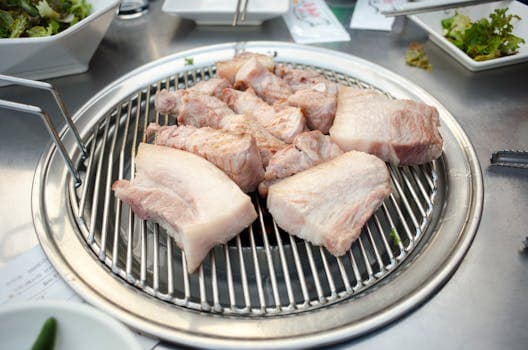
Samgyeopsal (Kore Izgara Domuz Göbeği)
Kore'nin en popüler barbeküsü, masa başında ızgarada kızartılmış ve ssamjang, sarımsak, kimchi ve perilla yapraklarıyla marulun içine sarılmış kalın kesilmiş domuz göbeğidir.
Bu Tarif Hakkında
Samgyeopsal (삼겹살, kelimenin tam anlamıyla 'üç katmanlı et'), masa üstü ızgarada ızgarada pişirilen kalın kesilmiş domuz göbeğidir ve ortak olarak yenir. Kore Barbekü restoranlarındaki en popüler yemektir ve Kore sosyal yeme alışkanlığının temel taşıdır. Pişirme interaktiftir; domuz göbeği dilimleri, yağ eriyene ve kenarları gevrekleşene kadar ızgarada pişirilir, ardından taze perilla veya marul yapraklarına, ssamjang (fermente fasulye ve biber ezmesi), çiğ sarımsak, kimchi, dilimlenmiş kırmızı biber ve taze soğanla sarılır. Zengin, yağlı domuz etinin taze marul, keskin sarımsak ve fermente çeşnilerle kontrastı son derece tatmin edicidir. Pirinç, birden fazla banchan (garnitür) ve soju ile yenir. Kökleri Kore mutfaklarının günlük yemek pişirme yöntemlerine dayanan Samgyeopsal (Kore Izgara Domuz Göbeği), teknik ve geleneği dengeler: 1 cm dilimlenmiş kalın kesilmiş domuz göbeği, yerel halkın nesiller boyunca rafine ettiği geleneksel oranlardan yararlanılarak özenle işlenir. Yemek, pişerken mutfağı dolduran aromalar, ısırıktan sonra kendini gösteren katmanlı dokular ve kısayollardan ziyade sabırlı baharatlardan gelen lezzet derinliği gibi şaşmaz bir duyusal imza taşıyor. İster hafta içi bir akşam yemeği olarak ister bir kutlama masasının en önemli parçası olarak servis edilsin, yerel ürünlerin, baharat alışkanlıklarının ve pişirme kaplarının nihai sonucu şekillendirdiği bölgesel bir kileri yansıtır. Bu yemeği yapan ev aşçıları, temel yöntem anlaşıldıktan sonra bunun ne kadar bağışlayıcı olduğunu ve birkaç küçük seçeneğin (1 cm dilimlenmiş kalın kesilmiş domuz göbeğinin tazeliği, ekleme sırası, sondaki dinlenme süresi) iyi bir versiyonu unutulmaz bir versiyondan nasıl ayırdığını sıklıkla not eder. Bu tarif, bu seçimleri gözden geçirerek yemeğin kendi topraklarında sahip olduğu karakterle gelmesini sağlar.
Malzemeler
Porsiyonlar 4
- 800 gkalın kesilmiş domuz yağı, 1 cm dilimlenmiş
- 2 headsmarul yaprakları (tereyağı veya yeşil yaprak)
- handfultaze perilla (kkaennip) yaprakları
- 4 yemek kaşığıssamjang (daldırma sosu)
- 6ince dilimlenmiş sarımsak dişleri
- 2dilimlenmiş taze yeşil biber
- 200 gkimçi
- 3taze soğan, dilimlenmiş
- 2 yemek kaşığısusam yağı
- 1 yemek kaşığıtuz ve karabiber
- servis için pişmiş pirinç
Yapılışı
- 1
Baharatları hazırlayın
Marul, perilla yaprakları, ssamjang, dilimlenmiş sarımsak, biber ve kimchiyi masanın üzerine yerleştirin. Daldırma için küçük bir tabakta susam yağını tuz ve karabiberle karıştırın.
- 2
Domuz göbeği ızgara
Bir ızgara tavasını, dökme demir tavayı veya masa üstü ızgarayı yüksek ateşte ısıtın. Domuz göbeği dilimlerini her tarafı 3-4 dakika, çıtır yağla iyice altın rengi oluncaya kadar pişirin. Isırık büyüklüğünde parçalar halinde kesmek için makas kullanın.
- 3
Ssam yapın (sarar)
Marul yaprağına bir parça domuz karnı koyun. Bir parça ssamjang, bir dilim sarımsak, bir parça kimchi ve bir perilla yaprağı ekleyin. Katlayın ve tek lokmada yiyin.
Bunu pişirdin mi?
Puanla ve diğer kullanıcıların gerçekten işe yarayan tarifleri bulmasına yardım et.
Tek dokunuşla giriş yap, az önce seçtiğin puanı biz kaydedelim.
Haftanı planlamak için gereken her şey — ücretsiz
- Yemek takvimi
- Market listesi
- Yapay zeka tarif önerileri
Ne yediğini takip et
Öğününün fotoğrafını çekerek kalori ve makroları kaydet, aralıklı oruç zamanlayıcısı kullan ve su takibi yap — ücretsiz SnapCal uygulamasında.
Profesyonel İpuçları
- →
Izgarada pişen domuz karnını kesmek için makas (maşalı) kullanın; bu geleneksel yoldur.
- →
Ssam sarmadaki kombinasyon her şeydir; ssamjang'ı atlamayın.
- →
Domuz etinin yanında sarımsak dilimlerini ızgarada pişirin; tatlı ve yumuşak olurlar.
- →
Bulabildiğiniz en taze, kalın kesilmiş domuz göbeği, 1 cm dilimlenmiş, yemeğin lezzet dayanağıdır.
- →
İlerledikçe katmanlar halinde baharatlayın; her aşamada tatmak, düz veya aşırı tuzlu bir nihai sonucu önler.
Varyasyonlar
- •
Daeji bulgogi: Baharatlı bir versiyon için ızgarada pişirmeden önce domuz etini gochujang, soya, sarımsak ve susamla marine edin.
- •
Makchang: Kore barbeküsünde popüler olan maceracı sakatat versiyonunun yerine domuz kalın bağırsağını kullanın.
- •
Vejetaryen: etsiz bir versiyon için ana proteini mantar, paneer, tofu veya doyurucu fasulye ile değiştirin.
- •
Daha baharatlı: Daha sıcak bir profil için aromatiklerle birlikte taze biber, biber salçası veya bir tutam kırmızı biber ekleyin.
- •
Daha hafif: Yağı üçte bir oranında azaltın ve yerine et suyu kullanın; lezzet bozulmadan kalır ancak yemek daha az zengin hisseder.
Depolama
En iyi şekilde pişirilip taze yenir. Çiğ domuz göbeği 2 gün boyunca buzdolabında saklanabilir. Hava geçirmez bir kapta 3-4 güne kadar buzdolabında saklayın. Gevşetmek için su veya et suyu serperek ocakta kısık ateşte hafifçe yeniden ısıtın veya kurumadan ısınması için %60 güçte kapalı mikrodalgada ısıtın. Porsiyonlu kaplarda 2 aya kadar iyice donar; tekrar ısıtmadan önce buzdolabında bir gece bekletin. Süt ürünleri veya kızartılmış yiyeceklerle yapılan yemekler dondurulduktan sonra dokuları değişebilir; gevrek bir garnitürle yenileyin.
Tarih ve Köken
Sosyal bir kurum olarak Kore Barbeküsü, etin demir ızgaralarda ateşte kızartıldığı Goguryeo dönemine (MÖ 37 – MS 668) kadar uzanır. Ortak masa üstü ızgara formatı 20. yüzyılda Seul'de ticarileşti ve Kore Dalgası (Hallyu) ile küresel olarak yayıldı.
Sıkça Sorulan Sorular
Samgyeopsal'ı (Kore Izgara Domuz Göbeği) önceden yapabilir miyim?
Evet — çoğu bileşen buzdolabında bir veya iki gün dayanabilir. Tekrar hayata döndürmek için bir miktar sıvıyla hafifçe yeniden ısıtın.
1 cm dilimlenmiş kalın kesilmiş domuz göbeğinin yerine ne koyabilirim?
Kalın kesilmiş, 1 cm dilimlenmiş domuz göbeği bulmak zorsa, en yakın alternatifler onun dokusunu ve su içeriğini paylaşır. İkameler genellikle kendilerine ait daha az karakter taşıdıkları için baharatı biraz ayarlayın.
Bu tarif Kore mutfağına özgü mü?
En yaygın kabul gören ev yemeği şablonunu takip eder. Bölgesel varyantlar mevcuttur ve ana olanları varyasyonlar bölümünde not ediyoruz.
Benim versiyonum neden yavan çıktı?
Genellikle baharatın yetersiz olması veya aromatik aşamanın hızlandırılması. Lezzeti katmanlar halinde oluşturun, ilerledikçe tadın ve yemeği aydınlatmak için bir miktar asit veya tuzla bitirin.
Besin Değerleri
Porsiyon başına · 4 toplam porsiyon
Zaman Özeti
Sorularınız mı var?
Yapay zekalı pişirme asistanımıza bu tarifle ilgili her şeyi sorun (değiştirmeler, teknikler, ölçeklendirme).
AI Chef ile sohbet et →Kılavuzlarda Öne Çıkanlar
Bu tarif aşağıdaki seçilmiş kılavuzlarda yer almaktadır:
Daha Fazla Kore Tarifi
Bunları da Beğenebilirsiniz
Dünyanın diğer mutfaklarından benzer yemekler.
Malzemeye Göre Keşfet
Aynı temel malzemelerle hazırlanan diğer tarifler.
Ücretsiz Mutfak Araçları
Bu sayfayla birlikte kullanabileceğiniz hesaplayıcılar ve çeviriciler — kayıt gerekmez.
Bunu Bir Plana Dönüştür
Takvime ekle, alışveriş listesi çıkar, elindekileri takip et.
Yemek Planlama Takvimi
Bu tarifi bir güne yerleştirin ve haftayı onun etrafında kurun.
Market Listesi Uygulaması
Bu malzeme listesini reyonlara göre birleştirilmiş bir alışveriş listesine dönüştürün.
Yapay Zekâ Beslenme Uzmanı
Bu yemek için malzeme değişimleri, makrolar ve porsiyonları sade bir dille sorun.
Sıradaki Okuma
Bu yemeğin arkasındaki fikirleri derinleştiren uzun yazılar.
Topluluk
Sohbete katılın
Yorum bırakmak ve favori tariflerinizi kaydetmek için oturum açın