
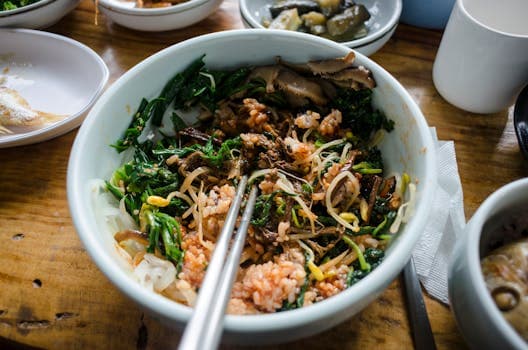
بيبيمباب (وعاء الأرز المختلط الكوري)
وعاء الأرز المختلط الشهير في كوريا - أرز دافئ مغطى بالخضروات المتبلة ولحم البقر البلغوجي والبيض المقلي وصلصة جوتشوجانج النابضة بالحياة، الممزوجة على الطاولة.
حول هذه الوصفة
يعد بيبيمباب (حرفيًا "الأرز المختلط") أحد أكثر الأطباق الكورية المحبوبة والمتعددة الاستخدامات. وعاء من الأرز الدافئ المطهو على البخار مغطى بترتيب رائع من النامول المتبل بشكل فردي (الخضراوات المسلوقة أو المقلية)، شرائح رقيقة من البولجوجي أو اللحم البقري النيئ، وبيضة مقلية وملعقة سخية من جوتشوجانج (معجون الفلفل الأحمر المخمر). يتم خلط كل شيء بقوة على الطاولة قبل تناول الطعام، مما يخلق مزيجًا متناغمًا من النكهات والقوام. تعتبر نسخة دولسوت، التي يتم تقديمها في وعاء حجري ساخن تعمل على تقطيع الطبقة السفلية من الأرز إلى قشرة ذهبية (نورونججي)، هي الشكل النهائي. البيبيمباب قابل للتكيف إلى ما لا نهاية - تتغير الطبقة حسب الموسم والمنطقة - ولكن مزيج المذاق والتوابل والجوز والطازجة في وعاء واحد يظل ثابتًا. يوازن البيبيمباب (وعاء الأرز المختلط الكوري) المتجذر في الطبخ اليومي للمطابخ الكورية، بين التقنية والتقاليد: يتم التعامل مع الأرز قصير الحبة المطبوخ بعناية، بالاعتماد على النسب العريقة التي قام السكان المحليون بتحسينها عبر الأجيال. يحمل الطبق توقيعًا حسيًا لا لبس فيه - الروائح التي تملأ المطبخ أثناء الطهي، والقوام متعدد الطبقات الذي يكشف عن نفسه لدغة بعد قضمة، وعمق النكهة الذي يأتي من التتبيل الصبور بدلاً من الاختصارات. سواء تم تقديمه كعشاء خلال عطلة نهاية الأسبوع أو كقطعة مركزية على طاولة احتفالية، فهو يعكس مخزنًا إقليميًا حيث تشكل المنتجات المحلية وعادات التوابل وأواني الطهي النتيجة النهائية. غالبًا ما يلاحظ الطهاة المنزليون الذين يصنعون هذا الطبق مدى تسامحه بمجرد فهم الطريقة الأساسية، وكيف أن بعض الاختيارات الصغيرة - نضارة الأرز قصير الحبة، المطبوخ، ترتيب الإضافات، وقت الراحة في النهاية - تفصل بين النسخة الجيدة والنسخة التي لا تنسى. تتنقل هذه الوصفة عبر هذه الاختيارات حتى يصل الطبق بالطابع الذي يتمتع به على أرضه.
المكونات
يخدم 4
- 600 غأرز قصير الحبة، مطبوخ
- 300 غشريحة لحم البقر أو اللحم المفروم (أو حذفها للنباتيين)
- 200 غالسبانخ
- 200 غبراعم الفاصوليا
- 1جزرة مقطعة جوليان
- 1الكوسا (الكوسة)، جوليان
- 150 غ- فطر شيتاكي، مقطع إلى شرائح
- 4البيض
- 3 ملعقة كبيرةزيت السمسم
- 3 ملعقة كبيرةصلصة الصويا
- 3 فصوصالثوم المفروم
- 4 ملعقة كبيرةغوتشوجانغ (معجون الفلفل الحار الكوري)
- 1 ملعقة كبيرةخل الأرز
- 1 ملعقة صغيرةسكر
- 2 ملعقة كبيرةبذور السمسم
- 4 ملعقة كبيرةزيت نباتي
- حسب الذوقملح
التعليمات
- 1
تحضير صلصة جوتشوجانج
اخلطي جوتشوجانج مع ملعقة كبيرة من زيت السمسم وخل الأرز والسكر وملعقة كبيرة من صلصة الصويا. ضع جانبا.
- 2
يتبل ويطهى لحم البقر
يُمزج اللحم البقري مع ملعقة كبيرة من صلصة الصويا وملعقة صغيرة من زيت السمسم والثوم وقليل من السكر. يُقلى في مقلاة ساخنة حتى ينضج لمدة 3-4 دقائق. ضع جانبا.
- 3
طهي الخضار بشكل منفصل
اطبخي كل خضار على حدة: اسلقي السبانخ وبراعم الفاصوليا في الماء المغلي، ثم تبلي كل واحدة بزيت السمسم والملح والثوم. اقلي الجزر والكوسة والفطر بشكل منفصل مع القليل من زيت الصويا والسمسم.
- 4
يقلى البيض
اقلي البيض مع وضع الجانب المشمس للأعلى في القليل من الزيت. يجب أن يكون صفار البيض سائلاً قليلاً.
- 5
تجميع الأوعية
يقسم الأرز الساخن بين 4 أطباق. رتبي كل الخضار ولحم البقر والبيضة المقلية في أقسام منفصلة فوق الأرز.
- 6
خدمة
أضف ملعقة من صلصة gochujang إلى كل وعاء. رذاذ مع زيت السمسم ونثر بذور السمسم. تخلط بقوة قبل الأكل.
هل جرّبت هذه الوصفة؟
قيّمها وساعد الآخرين في العثور على الوصفات التي تنجح فعلاً.
سجّل الدخول بنقرة واحدة وسنحفظ التقييم الذي اخترته للتو.
كل ما تحتاجه لتخطيط أسبوعك — مجانًا
- تقويم الوجبات
- قائمة التسوق
- أفكار وصفات بالذكاء الاصطناعي
تابع ما تأكله
صوّر وجبتك لتسجيل السعرات والعناصر الغذائية، واستخدم مؤقتات الصيام وتتبع شرب الماء في تطبيق SnapCal المجاني.
نصائح للمحترفين
- →
قم بطهي كل خضروات على حدة - فخلطها ينتج عنه طين بدلًا من طبقات النكهة المميزة التي يتطلبها البيبيمباب.
- →
يجب أن يكون الأرز دافئًا وليس ساخنًا. الأرز البارد يجعل الخضار تبرد بسرعة كبيرة.
- →
امزج كل شيء معًا تمامًا قبل تناول الطعام - البيبيمباب ليس طبقًا مركبًا، بل هو طبق مختلط.
- →
احصل على الأرز قصير الحبة الطازج المطبوخ الذي يمكنك العثور عليه - فهو مرتكز نكهة الطبق.
- →
الموسم في طبقات كما تذهب. التذوق في كل مرحلة يمنع النتيجة النهائية المسطحة أو المملحة بشكل مفرط.
الاختلافات
- •
دولسوت بيبيمباب: سخني وعاء حجري (دولسوت) حتى يصبح ساخناً جداً، ثم أضيفي زيت السمسم، ثم الأرز والطبقة العلوية. يتحول الجزء السفلي من الأرز إلى نورونججي (قشرة الأرز المحروقة).
- •
البيبيمباب النباتي: احذف لحم البقر وأضف التوفو أو الفطر الإضافي.
- •
نباتي: استبدل البروتين الرئيسي بالفطر أو البانير أو التوفو أو الفاصولياء اللذيذة للحصول على نسخة خالية من اللحوم.
- •
أكثر توابلًا: أضف الفلفل الحار الطازج أو معجون الفلفل الحار أو قليل من الفلفل الحار مع الروائح العطرية للحصول على مظهر أكثر دفئًا.
- •
أخف: قلل الدهون بمقدار الثلث واستخدم المرق بدلاً منها - تبقى النكهة سليمة ولكن يبدو الطبق أقل ثراءً.
تخزين
تُحفظ الخضار والصلصة المتبلة في الثلاجة لمدة 3 أيام. تجميع الأوعية الطازجة.
التاريخ والأصل
يعود تاريخ البيبيمباب إلى عهد أسرة جوسون (القرنين الرابع عشر والتاسع عشر) على الأقل. يُعتقد أنها نشأت كوسيلة لاستخدام بقايا البانشان (الأطباق الجانبية) مع الأرز. يرتبط الطبق ارتباطًا وثيقًا بمدينة جيونجو، التي تدعي النسخة الأكثر تقليدية.
الأسئلة المتداولة
هل يمكنني تحضير بيبيمباب (وعاء الأرز المختلط الكوري) في وقت مبكر؟
نعم - تبقى معظم المكونات جيدًا في الثلاجة لمدة يوم أو يومين. أعيدي تسخينه بلطف باستخدام القليل من السائل لإعادته إلى الحياة.
ما الذي يمكنني استبداله بالأرز قصير الحبة المطبوخ؟
إذا كان من الصعب العثور على الأرز قصير الحبة المطبوخ، فإن أقرب البدائل تشترك في قوامه ومحتواه المائي. اضبط التوابل قليلاً نظرًا لأن البدائل غالبًا ما تحمل طابعًا أقل خاصة بها.
هل هذه الوصفة أصلية للطبخ الكوري؟
إنه يتبع قالب الطبخ المنزلي الأكثر قبولًا على نطاق واسع. توجد المتغيرات الإقليمية ونلاحظ المتغيرات الرئيسية في قسم الاختلافات.
لماذا أصبحت نسختي لطيفة؟
عادة ما يكون هناك نقص في التتبيل أو التسرع في المرحلة العطرية. قم ببناء النكهة في طبقات، وتذوقها أثناء التقدم، وانتهي بلمسة من الحمض أو الملح لإضفاء البهجة على الطبق.
حقائق التغذية
لكل وجبة · 4 حصص إجمالية
ملخص الوقت
هل لديك أسئلة؟
اسأل مساعد الطبخ الذي يعمل بالذكاء الاصطناعي لدينا أي شيء عن هذه الوصفة - البدائل والتقنيات والقياس.
الدردشة مع AI Chef →ظهرت في الأدلة
هذه الوصفة واردة في الأدلة المنسقة التالية:
المزيد من وصفات كوري
قد يعجبك أيضًا
أطباق مشابهة من مطابخ أخرى حول العالم.
تصفّح حسب المكوّن
وصفات أخرى مبنية على المكوّنات الأساسية نفسها.
أدوات مطبخ مجانية
حاسبات ومحوّلات تكمّل هذه الصفحة — دون الحاجة إلى تسجيل.
حوّلها إلى خطة
جدولها، تسوّق لها، وتابع ما لديك بالفعل.
اقرأ بعد ذلك
مقالات أطول تتعمّق في الأفكار وراء هذا الطبق.
مجتمع
انضم إلى المحادثة
قم بتسجيل الدخول لترك تعليق وحفظ وصفاتك المفضلة