
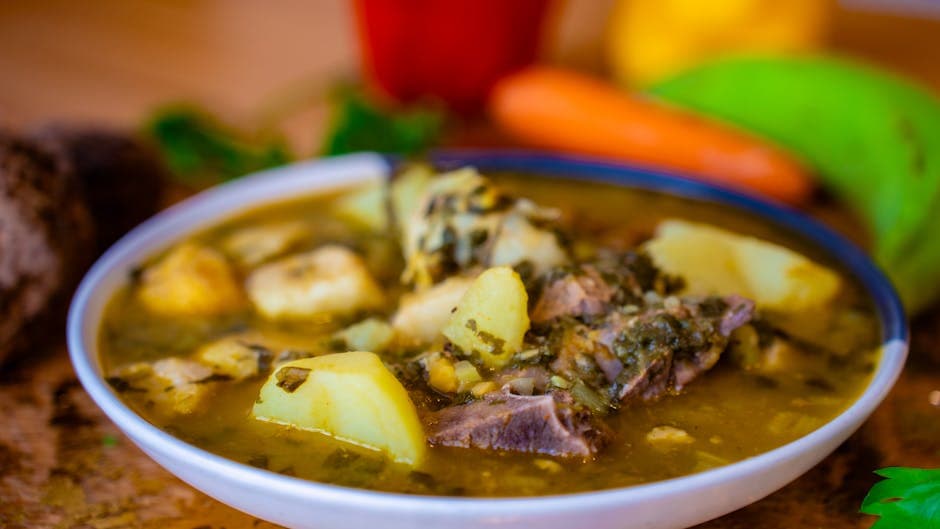
كونتومير يخنة
يخنة أوراق القلقاس الغاني المطبوخ مع السمك المدخن وزيت النخيل وبذور الإيجوسي - ترابية وغنية ومليئة بنكهات غرب أفريقيا الجريئة، ويتم تناولها مع فوفو أو البطاطا المسلوقة.
حول هذه الوصفة
يعد يخنة كونتومير مصدرًا قويًا للنكهة والتغذية، فهو مصنوع من أوراق القلقاس التي تعد من أكثر الخضروات الغنية بالحديد المتوفرة في غرب أفريقيا. تتمتع الأوراق بنكهة معدنية ترابية قليلاً تتناسب جيدًا مع دخان الأسماك المجففة وثراء زيت النخيل الأحمر. إيجوسي (بذور البطيخ المطحونة) يثخن الحساء ويضفي نكهة فريدة من نوعها. غالبًا ما يتم إعداد الطبق للتجمعات العائلية ويعتبر احتفالاً بالتراث الزراعي الغاني.
المكونات
يخدم 4
- 400 غأوراق القلقاس (كونتوماير)(أو السبانخ كبديل، مفرومة فرماً ناعماً)
- 200 غالسمك المدخن(إزالة العظام، متقشرة)
- 3 ملعقة كبيرةزيت النخيل الأحمر
- 3 ملعقة كبيرةإيجوسي (بذور البطيخ المطحونة)(أو مطحون بذور اليقطين)
- 2 متوسطالبصل(المفروم)
- 2 كاملفلفل سكوتش بونيه
- 1 ملعقة صغيرةملح
- 2 hardboiledالبيض(النصف)
التعليمات
- 1
اغلي الأوراق
تُسلق أوراق القلقاس في الماء المغلي لمدة 10 دقائق. استنزاف والضغط الجاف.
- 2
اقلي القاعدة
تسخين زيت النخيل. يقلى البصل حتى ينضج. يُضاف غطاء سكوتش ممزوج ويُطهى لمدة 5 دقائق.
- 3
أضف ايجوسي
أضيفي بذور الإيجوسي المطحونة واقليها لمدة 5 دقائق حتى تفوح رائحتها.
- 4
الجمع
أضف الأوراق المقشرة والسمك المدخن. يقلب جيدا ويطهى لمدة 15 دقيقة. الموسم مع الملح.
- 5
إنهاء
أضف البيض المسلوق وقم بتسخينه. يقدم مع اليام المسلوق أو الفوفو أو الأرز.
هل جرّبت هذه الوصفة؟
قيّمها وساعد الآخرين في العثور على الوصفات التي تنجح فعلاً.
سجّل الدخول بنقرة واحدة وسنحفظ التقييم الذي اخترته للتو.
كل ما تحتاجه لتخطيط أسبوعك — مجانًا
- تقويم الوجبات
- قائمة التسوق
- أفكار وصفات بالذكاء الاصطناعي
تابع ما تأكله
صوّر وجبتك لتسجيل السعرات والعناصر الغذائية، واستخدم مؤقتات الصيام وتتبع شرب الماء في تطبيق SnapCal المجاني.
نصائح للمحترفين
- →
يجب طهي أوراق القلقاس جيدًا، ولا تأكلها نيئة أبدًا
- →
زيت النخيل الأحمر يعطي اللون والنكهة الأصيلة
- →
تذوق واضبط الملح في النهاية - تتركز النكهات مع تقليل السوائل، كما أن رشة أخيرة من الملح القشري تزيد من حدة الطبق بأكمله.
- →
Mise en place يدفع ثمنه بنفسه: قم بتقطيع وقياس وخلط كل شيء مسبقًا قبل أن تستمر الحرارة، خاصة بالنسبة لأي خطوة تتحرك بسرعة.
الاختلافات
- •
استخدمي السبانخ أو السلق في حالة عدم توفر أوراق القلقاس
- •
أضف السرطان أو الروبيان للحصول على بروتين إضافي
- •
نباتي: استبدل البروتين بفطر المحار المحمص أو التوفو المدخن أو الحمص المطبوخ - اضبط التتبيل قليلاً لأعلى للتعويض.
- •
أكثر توابلًا: أضف الفلفل الحار الطازج المفروم جيدًا أو ملعقة صغيرة من فلفل حلب / أورفا المطحون إلى العطريات للحصول على حرارة دافئة متعددة الطبقات بدلاً من ضربة واحدة حادة.
تخزين
يحفظ مبردًا لمدة يومين. من الأفضل أن تؤكل طازجة لأن الخضر يمكن أن تصبح باهتة عند إعادة التسخين.
التاريخ والأصل
يعود تاريخ زراعة القلقاس في غرب أفريقيا إلى آلاف السنين. يمثل يخنة كونتومير تقاليد الطهي الأكانية في حزام الغابات في غانا.
الأسئلة المتداولة
ماذا يعني "كونتومير"؟
إنه اسم توي (الغاني) لأوراق القلقاس/الكوكويام.
هل يمكنني القيام بذلك في وقت مبكر؟
نعم، يمكن تحضير معظم المكونات قبل يوم واحد وتبريدها بشكل منفصل. يُعاد تسخينه بلطف ويُجمّع قبل التقديم مباشرةً حتى يظل القوام مميزًا.
ما الذي يمكنني استبداله إذا لم يكن لدي جميع المكونات؟
ابق على مقربة من الدور الذي يلعبه كل مكون: استبدل المواد العطرية بأخرى مماثلة (الكراث بالبصل، والليمون الحامض بالليمون)، وحافظ على توازن الدهون والأحماض والملح سليمًا. يمكن عادة تقريب خلطات التوابل مع ما هو موجود في الخزانة.
كيف أعرف أنها أصلية؟
الأصالة تقع على نطاق واسع - ما يهم أكثر هو احترام التقنية وتوازن النكهات. إذا كان مذاق الطبق متناغمًا ويحترم الطريقة التي سيصنعها بها الطهاة في منطقته الأصلية، فأنت على أرض صلبة.
حقائق التغذية
لكل وجبة · 4 حصص إجمالية
ملخص الوقت
هل لديك أسئلة؟
اسأل مساعد الطبخ الذي يعمل بالذكاء الاصطناعي لدينا أي شيء عن هذه الوصفة - البدائل والتقنيات والقياس.
الدردشة مع AI Chef →المزيد من وصفات غاني
قد يعجبك أيضًا
أطباق مشابهة من مطابخ أخرى حول العالم.
تصفّح حسب المكوّن
وصفات أخرى مبنية على المكوّنات الأساسية نفسها.
أدوات مطبخ مجانية
حاسبات ومحوّلات تكمّل هذه الصفحة — دون الحاجة إلى تسجيل.
حوّلها إلى خطة
جدولها، تسوّق لها، وتابع ما لديك بالفعل.
اقرأ بعد ذلك
مقالات أطول تتعمّق في الأفكار وراء هذا الطبق.
مجتمع
انضم إلى المحادثة
قم بتسجيل الدخول لترك تعليق وحفظ وصفاتك المفضلة