
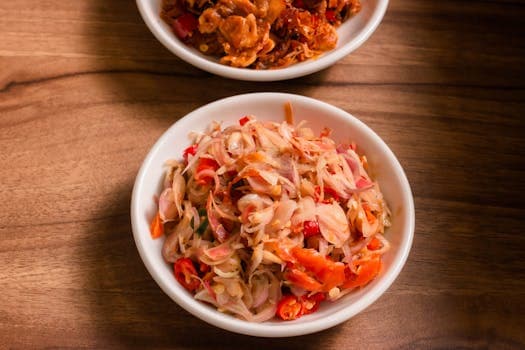
Sambal Matah Balinés — Inspirado en Wongso
Condimento crudo de chalota, hierba limón y chile con hojas de lima kaffir y aceite de coco tostado — el acompañamiento más aromático de la mesa balinesa.
⭐Inspired by William Wongso · 🇮🇩 IndonesiaAcerca de esta receta
Este plato está inspirado en la defensa de William Wongso por las cocinas regionales indonesias — en particular las cocinas de Bali. El sambal matah ('sambal crudo') es una de las contribuciones definitorias de Bali a la cocina indonesia — un condimento fresco y crudo de chalotas finamente laminadas, hierba limón, hojas de lima kaffir y chiles, aderezado con aceite de coco caliente y lima. A diferencia de la mayoría de los sambales indonesios, nunca se cocina; el calor proviene del aceite que se vierte sobre los ingredientes crudos.
Ingredientes
Sirve 6
- 12chalotas asiáticas pequeñas(o 4 chalotas medianas, cortadas en rodajas muy finas)
- 3 talloshierba limón(solo la parte blanca tierna, cortada en rodajas muy finas)
- 8hojas de lima kaffir(sin tallos, cortadas en chiffonade muy fina)
- 8chiles pájaro tailandeses(cortados en rodajas finas; ajustar al gusto)
- 4 dientesajo(cortado en rodajas muy finas)
- 1 cdtapasta de camarones (terasi)(tostada brevemente)
- 1lima(exprimida (calamansi si está disponible))
- 0.5 cdtasal marina fina
- 60 mlaceite de coco(o aceite neutro)
- 0.5 cdtaazúcar de palma(opcional, rallada finamente)
Instrucciones
- 1
Cortar todo en rodajas MUY finas
Todos los ingredientes deben cortarse en papel — la textura es el plato. Usar un cuchillo afilado. Chalotas en aros, hierba limón en rodajas como cabellos, hojas de lima en chiffonade, ajo y chiles en rodajas finas.
Invertir tiempo en el corte — la calidad del sambal matah es 90% trabajo de cuchillo.
- 2
Tostar la pasta de camarones
Envolver el terasi en papel de aluminio. Tostar en una sartén seca durante 60 segundos por lado hasta que sea aromático. Desmenuzar. (Este paso lo hace seguro para el consumo y desarrolla el sabor.)
- 3
Combinar los ingredientes crudos
En un tazón, combinar las chalotas, la hierba limón, las hojas de lima, los chiles, el ajo, el terasi tostado y la sal. Masajear suavemente durante 30 segundos.
- 4
Calentar el aceite
Calentar el aceite de coco en una sartén pequeña hasta casi humear — aproximadamente 180°C.
- 5
El vertido
Verter el aceite caliente SOBRE los ingredientes crudos. Deben chisporrotear agresivamente. Revolver suavemente. El aceite caliente 'cocina' los ingredientes crudos ligeramente mientras preserva su carácter fresco.
Este es el momento que define el sambal — no precocinar los ingredientes.
- 6
Terminar con lima
Fuera del fuego, incorporar el jugo de lima y el azúcar de palma (si se usa). Probar — debe ser brillante, picante, fragante, ligeramente dulce. Ajustar.
- 7
Servir a temperatura ambiente
Servir en un pequeño tazón junto a pescado a la parrilla, arroz o cualquier plato indonesio. Una cucharada por porción es suficiente.
¿Has preparado esta receta?
Valórala y ayuda a otros a encontrar las recetas que de verdad funcionan.
Inicia sesión con un toque y guardaremos la valoración que acabas de elegir.
Todo lo que necesitas para planificar tu semana — gratis
- Calendario de comidas
- Lista de compras
- Ideas de recetas con IA
Cocina con las manos libres
Consigue planes de comida con IA, modo de cocina paso a paso y tus recetas guardadas en la app gratuita Bento.
Consejos profesionales
- →
El trabajo con el cuchillo ES el plato — cortar todo en rodajas muy finas.
- →
No omitir el tostado del terasi — la pasta de camarones cruda tiene un sabor áspero.
- →
Es mejor prepararlo fresco — el sambal matah pierde su fragancia después de pocas horas.
Variaciones
- •
Sambal Matah de Salmón: servir sobre salmón sellado al estilo de fusión Wongso.
- •
Con más coco: aumentar el aceite de coco a 100ml y añadir 30g de coco rallado tostado.
- •
Sin ajo: omitir el ajo para una variación más delicada popular en la regencia de Karangasem.
Almacenamiento
Es mejor comerlo el mismo día. Se refrigera por 24 horas; pierde fragancia rápidamente.
Historia y origen
El sambal matah es originario de Bali, donde es un condimento diario de mesa. A diferencia de la mayoría de los sambales indonesios (que se cocinan o machacan), el matah es únicamente crudo y fresco. William Wongso ha defendido las cocinas regionales de Bali a través de su trabajo como Embajador Cultural Indonesio y su libro de cocina 'Flavors of Indonesia.'
Preguntas frecuentes
¿Por qué el sambal matah no se cocina?
Matah significa literalmente 'crudo' en balinés. A diferencia del sambal merah o el sambal kacang (que se cocinan o machacan), el matah se basa en la frescura de las chalotas crudas, la hierba limón y las hierbas. El vertido de aceite caliente los 'marchita' ligeramente sin cocerlos realmente, preservando el carácter brillante y vivo del plato.
¿Qué es el terasi?
El terasi es pasta de camarones indonesia — camarones salados y fermentados prensados en bloques. Fundamental para la elaboración de sambal indonesio. Debe tostarse antes de usar (para hacerlo seguro y desarrollar el sabor). Se vende en bloques envueltos en plástico en tiendas indonesias y asiáticas.
¿Qué tan picante es?
Genuinamente picante — el sambal matah balinés usa 8-12 chiles pájaro por porción. Reducir a 3-4 chiles para un nivel de picante moderado. Los chiles pueden desemillarse para menos picante.
¿Con qué platos combina bien?
El sambal matah se sirve tradicionalmente junto a ikan bakar (pescado a la parrilla), nasi campur (plato de arroz mixto) o cualquier plato balinés de arroz. También funciona como cobertura para arroz blanco al vapor como plato único.
Datos nutricionales
Por porción (50g) · 6 porciones totales
Resumen de tiempo
¿Tiene preguntas?
Pregúntele a nuestro asistente de cocina con IA cualquier cosa sobre esta receta: sustituciones, técnicas, escalado.
Chatea con AI Chef →Destacado en Guías
Esta receta aparece en las siguientes guías seleccionadas:
Más recetas de cocina indonesia
También Te Puede Gustar
Platos similares de otras cocinas del mundo.
Explorar por Ingrediente
Más recetas construidas alrededor de los mismos ingredientes principales.
Herramientas de Cocina Gratuitas
Calculadoras y conversores que acompañan a esta página — sin registro.
Conviértelo en un Plan
Prográmalo, haz la compra y controla lo que ya tienes.
Sigue Leyendo
Lecturas más largas que profundizan en las ideas detrás de este plato.
Comunidad
Únete a la conversación
Inicia sesión para dejar un comentario y guardar tus recetas favoritas