
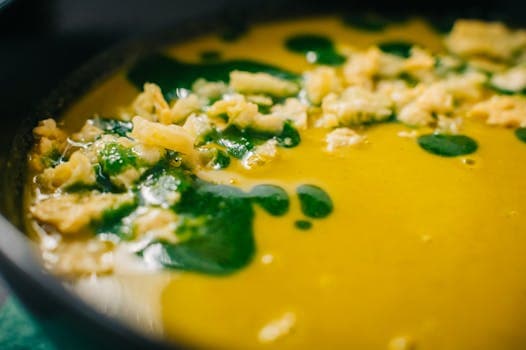
Egusi Soup (Nigerian Melon Seed Soup)
La sopa más consumida en Nigeria: semillas de melón molidas fritas en aceite de palma con pescado seco, cangrejos de río y verduras de hojas verdes, formando un guiso rico e intensamente sabroso servido sobre ñame machacado o fufu.
Acerca de esta receta
La sopa Egusi es posiblemente el plato más importante de la cocina nigeriana y se come en prácticamente todos los 250 grupos étnicos del país en diferentes formas regionales. Egusi son las semillas molidas de un melón de África occidental (Cucumeropsis mannii); proporcionan una base rica, a nuez y ligeramente amarga que es totalmente única. Las semillas se mezclan con agua hasta formar una pasta y luego se fríen en aceite de palma hasta que forman "bolas fritas" espesas y quebradizas. El pescado seco ahumado (eja eja), el cangrejo molido (el condimento esencial de África occidental) y las verduras de hojas verdes (hoja amarga, hoja de calabaza o espinacas) completan el plato. Ninguna celebración nigeriana (boda, ceremonia de nombramiento, fiesta de entierro) está completa sin una olla de sopa egusi.
Ingredientes
Sirve 6
- 300 gegusi molido (semillas de melón)
- 500 gcarne de pollo o cabra con hueso
- 100 gpescado seco ahumado(remojado en agua caliente 20 min, desmenuzado)
- 150 mlred palm oil
- 3 cdaground crayfish(o 2 cucharadas de camarones secos)
- 3tomates(blended)
- 2pimientos rojos(blended)
- 1pimienta escocesa(blended)
- 1cebolla(mitad licuada, mitad cortada en cubitos)
- 200 ghoja amarga, hoja de calabaza (ugu) o espinaca(lavado y cortado en rodajas)
- 2cubitos de caldo (Maggi o similar)
- 300 mlcaldo de agua o carne
- 2 cdtasal
Instrucciones
- 1
Cocinar la carne
Sazone el pollo o el cabrito con cebolla, pastilla de caldo, sal y pimienta. Cocine en su propio jugo 15 min, luego agregue un poco de agua y cocine a fuego lento 20 min hasta que estén tiernos. Reserva el caldo.
- 2
Freír la base de tomate
Calienta el aceite de palma en una olla grande a fuego medio. Agregue la mezcla de tomate, pimiento y cebolla. Freír de 15 a 20 minutos, revolviendo con frecuencia, hasta que la mezcla esté oscura, reducida y el aceite flote encima.
- 3
Freír el egusi
Mezclar egusi molido con un poco de agua hasta obtener una pasta espesa. Eche cucharadas en la base de tomate con aceite de palma caliente. Freír sin revolver durante 3 minutos hasta que la parte inferior esté firme, luego revuelva para desmenuzar. Freír 5 minutos más hasta que estén doradas.
"Freír" el egusi es lo que le da a la sopa su característica profundidad de nuez: revolverla demasiado pronto crea una pasta suave en lugar de la tradicional textura quebradiza.
- 4
Añadir caldo y pescado.
Agrega el caldo de carne y el agua. Agregue la carne cocida, el bacalao desmenuzado, el cangrejo molido y el resto del caldo. Cocine a fuego lento 10 min.
- 5
Agrega verduras y termina.
Agregue las verduras de hojas verdes en rodajas. Revuelva y cocine a fuego lento durante 5 min. Probar y rectificar de sal. La sopa debe quedar espesa y rica, no aguada.
¿Has preparado esta receta?
Valórala y ayuda a otros a encontrar las recetas que de verdad funcionan.
Inicia sesión con un toque y guardaremos la valoración que acabas de elegir.
Todo lo que necesitas para planificar tu semana — gratis
- Calendario de comidas
- Lista de compras
- Ideas de recetas con IA
Cocina con las manos libres
Consigue planes de comida con IA, modo de cocina paso a paso y tus recetas guardadas en la app gratuita Bento.
Consejos profesionales
- →
El aceite de palma no es opcional: proporciona el color, el sabor y el perfil nutricional distintivos de la sopa egusi. El aceite vegetal produce un sustituto pálido y de sabor plano.
- →
El cangrejo de río molido (polvo de camarón seco) es la base esencial de umami de África occidental; no se lo salte.
- →
Pruebe y ajuste la sal al final: los sabores se concentran a medida que los líquidos se reducen y una pizca final de sal en escamas agudiza todo el plato.
- →
La mise en place se amortiza sola: pique, mida y premezcle todo antes de que comience el fuego, especialmente para cualquier paso que avance rápido.
Variaciones
- •
Ofe Onugbu (sopa de hojas amargas igbo): utiliza hojas amargas como única verdura y no contiene tomates en la base.
- •
Egusi vegetariano: omita la carne y el pescado, duplique el número de cangrejos de río para obtener umami, aún muy sabroso
- •
Ede-egusi: agregue trozos de cocoyam para espesar más y agregar almidón
- •
Más picante: agregue un chile fresco finamente picado o una cucharadita de pimienta de Alepo/Urfa triturada a los aromáticos para obtener un picante cálido y en capas en lugar de un solo golpe fuerte.
Almacenamiento
Se conserva refrigerado 4 días. Se congela muy bien durante 3 meses. Vuelva a calentar suavemente: el egusi puede pegarse al fondo.
Historia y origen
El cultivo de Egusi está documentado en África occidental desde hace más de 3.000 años. El alto contenido de aceite y proteínas de la semilla la hacía invaluable para las comunidades agrícolas de todo el Sahel y las zonas forestales. Cada grupo étnico nigeriano (yoruba, igbo, hausa, efik) tiene su propia tradición de sopa egusi. El plato cruzó el Atlántico con la trata de esclavos y se encuentra en toda la diáspora africana en el Caribe y América.
Preguntas frecuentes
¿Dónde puedo comprar egusi (semillas de melón molidas)?
El egusi se vende en cualquier tienda de comestibles de África occidental o de África, normalmente en bolsas etiquetadas como "egusi molido" o "semillas de egusi". También se encuentra en algunas tiendas de comestibles del Caribe. Los minoristas en línea lo almacenan ampliamente. No hay sustituto: el sabor del egusi molido es único y no se puede replicar con semillas de calabaza o girasol.
¿Puedo hacer esto con anticipación?
Sí, la mayoría de los componentes se pueden preparar hasta con un día de anticipación y refrigerar por separado. Vuelva a calentar suavemente y ensamble justo antes de servir para que las texturas se mantengan distintas.
¿Qué puedo sustituir si no tengo todos los ingredientes?
Manténgase atento al papel que desempeña cada ingrediente: cambie los aromáticos por otros similares (chalote por cebolla, lima por limón) y mantenga intacto el equilibrio entre grasa, ácido y sal. Las mezclas de especias generalmente se pueden aproximar a lo que hay en la alacena.
¿Cómo sé que es auténtico?
La autenticidad se encuentra en un espectro; lo que más importa es honrar la técnica y el equilibrio de sabores. Si el plato tiene un sabor armonioso y respeta cómo lo prepararían los cocineros de su región de origen, está en tierra firme.
Datos nutricionales
Por porción · 6 porciones totales
Resumen de tiempo
¿Tiene preguntas?
Pregúntele a nuestro asistente de cocina con IA cualquier cosa sobre esta receta: sustituciones, técnicas, escalado.
Chatea con AI Chef →Más recetas de cocina nigeriana
También Te Puede Gustar
Platos similares de otras cocinas del mundo.
Explorar por Ingrediente
Más recetas construidas alrededor de los mismos ingredientes principales.
Herramientas de Cocina Gratuitas
Calculadoras y conversores que acompañan a esta página — sin registro.
Conviértelo en un Plan
Prográmalo, haz la compra y controla lo que ya tienes.
Sigue Leyendo
Lecturas más largas que profundizan en las ideas detrás de este plato.
Comunidad
Únete a la conversación
Inicia sesión para dejar un comentario y guardar tus recetas favoritas