
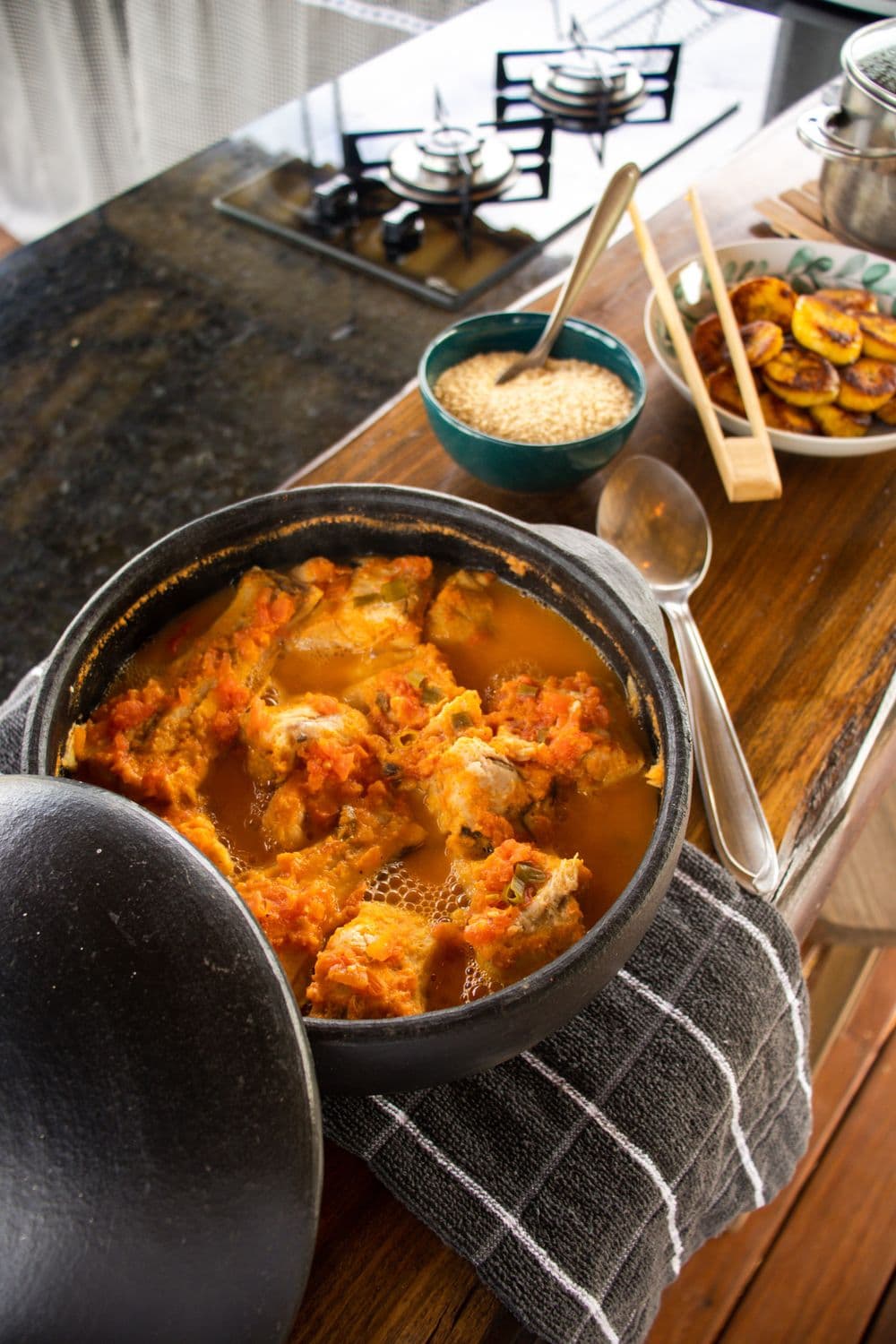
Amazonian Fish Stew with Tucupi — Atala-Inspired
White fish gently poached in tucupi (fermented manioc broth) with jambu, lime and cilantro — Brazil's deepest cultural cuisine.
⭐Inspired by Alex Atala · 🇧🇷 BrazilAbout This Recipe
This dish is inspired by Chef Alex Atala's lifelong devotion to Amazonian ingredients and Brazil's astonishing biodiversity. Tucupi — a bright yellow, fermented broth made from wild manioc (cassava) root — is the foundational liquid of Amazonian cuisine, and Atala has done more than any chef to introduce it to global fine dining at his São Paulo flagship D.O.M. Combined with jambu (an electric herb that briefly numbs the tongue), white fish, lime and coriander, it produces a soup that tastes like nothing else in world cuisine. We've adapted the recipe so non-Brazilian cooks can approach it with available ingredients while honouring the Amazonian tradition Atala has championed.
Ingredients
Serves 4
- 600 gwhite fish fillets(such as tambaqui, sea bream or sea bass, skin off)
- 750 mltucupi(or substitute: 600ml chicken stock + 150ml lime juice + 1 tsp turmeric (see notes))
- 30 gjambu leaves(or substitute: watercress + tongue-tingling Sichuan peppercorns ground over the top at end)
- 1white onion(thinly sliced)
- 4 clovesgarlic(minced)
- 1small fresh red chili(thinly sliced)
- 2 tbspneutral oil
- 0.5 bunchfresh coriander(leaves and tender stems)
- 2limes(1 juiced + 1 in wedges)
- 1 tbspfish sauce(or to taste)
- salt(to taste)
- 100 gtapioca pearls(cooked, for the bottom of the bowl, optional)
Instructions
- 1
Prepare the tucupi base
If using genuine tucupi: bring it to a simmer in a pot with the onion and garlic. If using the substitute: simmer the chicken stock with the turmeric for 10 minutes, then off the heat add the lime juice — this approximates tucupi's fermented citrus character.
Genuine tucupi must be simmered for at least 30 minutes — raw tucupi is mildly toxic from the cyanide in fresh manioc. Simmering eliminates this.
- 2
Build the broth
Heat the oil in a deep pan and gently sauté the onion, garlic and chili for 5 minutes until soft but not browned. Add the simmered tucupi (or substitute). Bring to a gentle simmer and cook 15 minutes to meld the flavours. Season with fish sauce and salt — taste; the broth should be aromatic, slightly sour and savoury.
- 3
Cook the fish
Cut the fish into large chunks. Slide them into the simmering broth and poach for 4–6 minutes until the flesh is just opaque and flakes easily with a fork. Do not boil — the broth should never bubble vigorously.
- 4
Add the jambu
Stir in the jambu leaves (or watercress substitute) in the last 60 seconds — they should just wilt. If using the watercress substitute, finish each bowl with a few cracks of Sichuan peppercorn for that signature 'electric' tongue tingle.
- 5
Plate and serve
Place a small mound of cooked tapioca pearls (if using) at the bottom of each warm bowl. Ladle the broth and fish over the top. Scatter generously with fresh coriander leaves. Serve immediately with lime wedges. Drink any leftover broth straight from the bowl.
Did you make this?
Rate it and help other cooks find the recipes that actually work.
One tap to sign in, and we'll save the rating you just picked.
Everything you need to plan your week — free
- Meal calendar
- Grocery list
- AI recipe ideas
Cook this hands-free
Get AI meal plans, step-by-step cooking mode, and your saved recipes in the free Bento app.
Pro Tips
- →
Genuine tucupi is the soul of this dish — Brazilian and South American specialty stores carry it frozen.
- →
Jambu leaves create a unique tingling sensation — the substitute approximation uses Sichuan peppercorns for similar effect.
- →
Don't boil the broth — gentle poaching keeps the fish tender.
Variations
- •
Tacacá: the soup version traditionally served by Amazonian street vendors — add dried shrimp and serve in a hollow gourd.
- •
Pato no Tucupi: substitute roasted duck legs for fish — a classic Pará dish.
Storage
Best eaten immediately. Tucupi base alone keeps for 3 days refrigerated.
History & Origin
Tucupi is the foundational broth of Brazilian Amazonian cuisine, made from the fermented juice of wild manioc root — a process indigenous Amazonian peoples developed over thousands of years to detoxify the cassava plant. Alex Atala's D.O.M. in São Paulo has done more than any restaurant to introduce tucupi, jambu and other Amazonian ingredients to global fine dining since the early 2000s.
Frequently Asked Questions
What is tucupi?
Tucupi is a bright yellow, fermented broth made from the juice of wild manioc (cassava) root. It must be simmered for at least 30 minutes to eliminate the cyanide naturally present in raw manioc. It is the foundational liquid of Brazilian Amazonian cuisine and impossible to substitute exactly — use the lime-and-stock approximation if you cannot source it.
What does jambu taste like?
Jambu (Acmella oleracea, also called toothache plant) has an unusual property: chewing the leaves produces a tingling, almost electric sensation on the tongue and lips, due to the natural compound spilanthol. It's an essential element of Amazonian cuisine. Sichuan peppercorns approximate the sensation, though not the herbal flavour.
Why does Atala focus on Amazonian ingredients?
Brazil contains roughly 60% of the Amazon rainforest and an estimated 20% of the world's plant species. Atala has spent his career arguing that Brazil's biodiversity makes it potentially the world's most ingredient-rich cuisine — but most of these ingredients have never appeared in a fine-dining menu before his work.
Where can I buy tucupi?
Brazilian, Peruvian and South American specialty stores carry tucupi frozen in plastic bottles. Online specialty importers ship internationally. The substitute (chicken stock + lime + turmeric) approximates the colour and acidity but cannot replicate tucupi's fermented depth.
Is tucupi safe to drink?
Only after at least 30 minutes of simmering. Fresh manioc juice contains naturally occurring cyanide compounds; simmering eliminates them and is non-negotiable for safety. Indigenous Amazonian peoples developed this detoxification process over thousands of years.
Nutrition Facts
Per serving (350g / 12.3 oz) · 4 servings total
Time Summary
Have Questions?
Ask our AI cooking assistant anything about this recipe — substitutions, techniques, scaling.
Chat with AI Chef →More Brazilian Recipes
You Might Also Like
Similar dishes from other cuisines around the world.
Browse by Ingredient
More recipes built around the same core ingredients.
Free Kitchen Tools
Calculators and converters that pair with this page — no signup needed.
Put This Into a Plan
Schedule it, shop for it, and track what you already have.
Read Next
Longer reads that go deeper on the ideas behind this dish.
Community
Join the conversation
Sign in to leave a comment and save your favourite recipes