
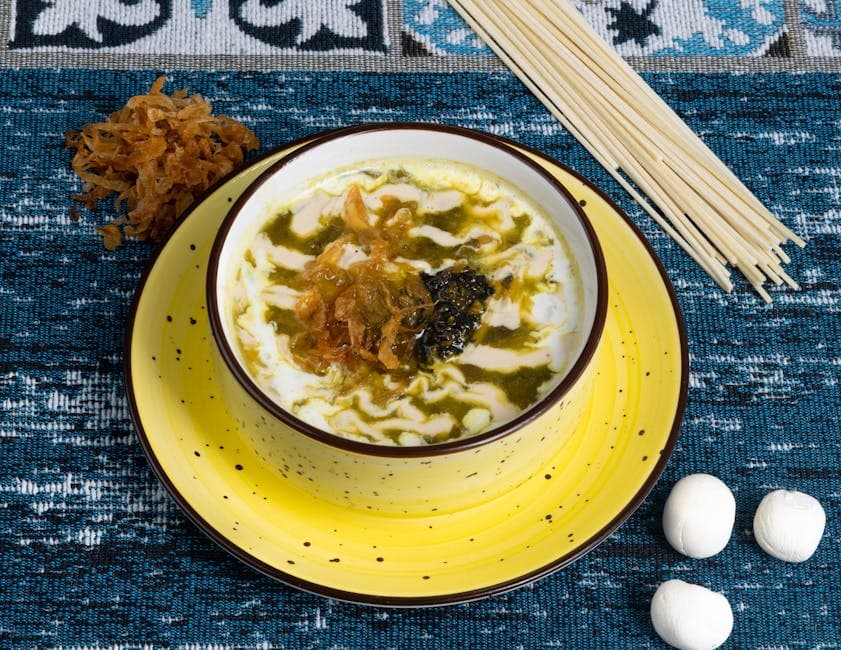
Ash-e Jo
Persian barley soup with lamb, vegetables, and herbs — warming winter medicine.
About This Recipe
Ash-e Jo belongs to the great Persian family of ash — thick, slow-simmered soups dense with grains, legumes, and herbs that occupy a category between soup and stew. Here pearl barley is the star, cooked with lamb, chickpeas, leeks, and spinach until the grain releases its starch and turns the broth silky and substantial, then finished with the holy trinity of ash garnishes: tangy kashk, crispy fried onions, and dried mint bloomed in hot oil. Iranians regard it as edible medicine — the pot that appears when someone is ill, when winter bites, or when the body simply needs restoring. Each spoonful is creamy, herbal, sour, and deeply comforting at once.
Ingredients
Serves 6
- 1 cuppearl barley, rinsed
- 300 glamb, cubed
- 1 canchickpeas (400g), drained
- 2 leekssliced
- 2 cupsspinach
- 1 largeonion, diced
- 1 tspturmeric
- 1 tspdried fenugreek
- 1.5 literswater
- 1/4 cupkashk or sour cream
- 1 tspsalt
- fried onions and dried mint for topping
Instructions
- 1
Cook base
Sauté the diced onion in oil over medium heat until golden and sweet, about 8 minutes. Add the lamb cubes and turmeric and brown the meat on all sides, letting the turmeric toast in the fat to release its earthy aroma into the base of the soup.
- 2
Simmer
Add the rinsed barley, chickpeas, leeks, fenugreek, and water. Bring to a boil, skim any foam, then reduce to a gentle simmer and cook covered for about 60 minutes, stirring occasionally, until the barley is fully tender and has released its starch, thickening the broth to a creamy body.
Stir along the bottom every 15 minutes — barley starch loves to settle and catch.
- 3
Finish
Stir in the spinach and simmer 10 minutes more until wilted and integrated. Take the pot off the heat and stir in most of the kashk, then season with salt — taste first, since kashk is salty. The ash should be thick enough that a spoon briefly stands in it.
Always add kashk off the heat; boiling can make it grainy and mute its tang.
- 4
Serve
Sizzle the dried mint in a tablespoon of hot oil for just a few seconds until fragrant. Ladle the ash into bowls and crown each with crispy fried onions, a generous swirl of the reserved kashk, and a drizzle of the mint oil — the contrast of garnishes against the creamy soup is the dish.
Did you make this?
Rate it and help other cooks find the recipes that actually work.
One tap to sign in, and we'll save the rating you just picked.
Everything you need to plan your week — free
- Meal calendar
- Grocery list
- AI recipe ideas
Track what you eat
Snap your meal to log calories and macros, run fasting timers and track water in the free SnapCal app.
Pro Tips
- →
Barley expands enormously and keeps drinking liquid — add hot water as needed to maintain a spoonable consistency.
- →
Stir the kashk in off the heat so it stays smooth and tangy.
- →
Don't skip the three-part garnish — fried onions, kashk, and mint oil are what make an ash an ash.
- →
Scrape the pot bottom regularly during simmering; settled barley starch scorches easily.
- →
A squeeze of lime at the table brightens the whole bowl if you find it too rich.
Variations
- •
Make it vegetarian by omitting the lamb and simmering in vegetable broth — still deeply satisfying.
- •
Add 1–2 pierced dried limes (limu omani) to the simmer for a tangy, aromatic depth.
- •
Stir in chopped parsley and coriander with the spinach for a greener, more herbal ash.
- •
Blend half the soup before adding spinach for the ultra-creamy texture some Tehran restaurants favor.
Storage
Refrigerate up to 5 days; the soup thickens dramatically as the barley keeps absorbing liquid, so loosen with water when reheating. It freezes well for 2 months — add the kashk, onion, and mint garnishes fresh each time.
History & Origin
Barley is one of the oldest cultivated grains of the Iranian plateau, grown there for some ten thousand years, and thick barley pottages appear in Persian medical and culinary texts as restorative food. Ash holds such a central place in the culture that the Persian word for cook, ashpaz, literally means 'ash-maker', and pots of ash are traditionally shared with neighbors as charity (nazri) during winter and religious occasions. Ash-e jo remains the soup Iranians cook for the convalescing.
Frequently Asked Questions
Can I use quick-cooking barley?
Yes — quick or pearled instant barley cooks in about 30 minutes, so add the leeks later and shorten the simmer accordingly. The trade-off is slightly less starchy body, since long-simmered pearl barley is what gives ash-e jo its signature creaminess. Compensate by simmering uncovered a little longer at the end.
What is kashk and what can replace it?
Kashk is fermented, concentrated whey with an intense salty-sour tang, sold as a thick liquid at Persian grocers and essential to the ash family. Sour cream or full-fat Greek yogurt whisked with a squeeze of lemon are workable substitutes, though milder. Always stir it in off the heat to keep it smooth.
What's the difference between ash-e jo and ash-e reshteh?
Both are thick Persian ash soups with the same kashk-onion-mint garnish, but ash-e jo is built on barley and often lamb, with a creamy, porridge-like body, while ash-e reshteh centers on reshteh noodles, beans, and a much larger mass of herbs. Reshteh is the Nowruz soup; jo is the winter restorative.
How thick should ash be?
Considerably thicker than Western soups — closer to a loose risotto or porridge. A spoon should stand briefly upright before slowly tipping. If yours is thin, simmer uncovered to reduce; if stodgy, loosen with hot water. The barley continues thickening off the heat, so err slightly loose at serving.
Nutrition Facts
Per serving (450g / 15.9 oz) · 6 servings total
Time Summary
Have Questions?
Ask our AI cooking assistant anything about this recipe — substitutions, techniques, scaling.
Chat with AI Chef →Featured in Guides
This recipe is featured in the following curated guides:
More Persian Recipes
You Might Also Like
Similar dishes from other cuisines around the world.
Browse by Ingredient
More recipes built around the same core ingredients.
Free Kitchen Tools
Calculators and converters that pair with this page — no signup needed.
Put This Into a Plan
Schedule it, shop for it, and track what you already have.
Read Next
Longer reads that go deeper on the ideas behind this dish.
Community
Join the conversation
Sign in to leave a comment and save your favourite recipes