
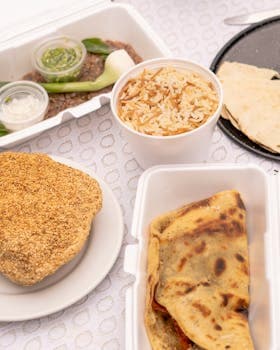
Awarma
Lebanese preserved lamb confit cooked in its own fat — an ancient mountain larder staple.
About This Recipe
Awarma is the taste of the Lebanese mountains in winter — small pieces of lamb simmered slowly in rendered fat until meltingly tender, then sealed under that same fat in jars, where it keeps for months. Born of necessity in villages cut off by snow, it survives today because it is simply delicious: a spoonful hitting a hot pan releases concentrated lamb richness that transforms fried eggs, hummus, kishk porridge, or a pot of beans. Making it at home is closer to a project than a recipe — patient fat rendering, a long low simmer, and scrupulous jarring — but the reward is a larder ingredient with no real substitute, used by the spoonful as a seasoning rather than a serving.
Ingredients
Serves 8
- 1 kgbone-in lamb shoulder or leg, cubed
- 400 glamb fat (tail fat or regular)
- 1 tspsalt
- 1/2 tspallspice
- 1/2 tspcinnamon
Instructions
- 1
Render fat
Dice the lamb fat small and melt it in a heavy pot over low heat, stirring occasionally, for 20–30 minutes until fully liquid with crisp golden cracklings floating in it. Keep the heat gentle — browned, overheated fat tastes acrid and shortens the preserve's life. Skim out and reserve the cracklings.
Tail fat (liyyeh) is traditional and renders the cleanest, most aromatic fat; ask a halal or Middle Eastern butcher.
- 2
Slow cook lamb
Cut the lamb into small, even 1–2 cm pieces, removing bones, and add them to the warm rendered fat with the salt. Cook at the barest simmer — lazy bubbles, never a boil — for 60–90 minutes, stirring now and then, until the meat is completely tender and any released moisture has cooked off. Season with allspice and cinnamon in the final 10 minutes.
All water must evaporate before jarring; moisture trapped under the fat is what causes spoilage.
- 3
Store
Ladle the hot meat into warm, sterilized glass jars, then pour the strained fat over to submerge every piece by at least 1 cm — the fat cap is the seal and the preservative. Tap the jars to release air pockets, let the fat set, then close the lids and refrigerate.
- 4
Use
Use awarma by the spoonful as a flavor base: melt a tablespoon in a hot pan and crack eggs into it for the iconic awarma w bayd, spoon it sizzling over hummus, or stir it into kishk, lentils, or sautéed vegetables. One spoonful seasons a whole dish — it is an ingredient, not a portion.
Did you make this?
Rate it and help other cooks find the recipes that actually work.
One tap to sign in, and we'll save the rating you just picked.
Everything you need to plan your week — free
- Meal calendar
- Grocery list
- AI recipe ideas
Track what you eat
Snap your meal to log calories and macros, run fasting timers and track water in the free SnapCal app.
Pro Tips
- →
Complete submersion under fat is the entire preservation principle — top up with extra melted fat if any meat pokes through.
- →
Use a clean, dry spoon every single time you dip into the jar; introduced moisture or crumbs invite spoilage.
- →
Cook the lamb until every trace of water has evaporated — the fat should be clear and quiet, not spitting, before jarring.
- →
Treat it like a concentrated seasoning: a tablespoon does for a pan of eggs what bacon fat does, and more.
- →
Modern food safety favors the fridge over the traditional cellar — when in doubt about any jar's smell or appearance, discard it.
Variations
- •
Seven-spice awarma: season with Lebanese baharat instead of plain allspice and cinnamon for a more aromatic jar.
- •
Beef awarma: use beef chuck with beef fat or tallow where lamb is unavailable — different character, same technique.
- •
Awarma w bayd: the classic breakfast — eggs fried directly in a sizzling spoonful, eaten with pita from the pan.
- •
Hummus bil awarma: top warm hummus with hot awarma and toasted pine nuts for the famous restaurant mezze.
Storage
Refrigerated with the meat fully submerged under its fat cap, awarma keeps up to 3 months; it can also be frozen in portions for 6 months. Traditional cool-cellar storage lasted whole winters, but refrigeration is the safer modern choice — always use a clean, dry spoon.
History & Origin
Awarma (qawarma) descends from the wider qawurma family of fat-preserved meats found across the former Ottoman world, and in Mount Lebanon it became a defining winter tradition: families would fatten a sheep through summer and autumn, then preserve its meat in jars at the season's communal slaughter. Long after refrigeration removed the necessity, the flavor kept the practice alive, and awarma remains a prized artisanal product of Lebanese mountain villages and a nostalgic taste of village breakfasts.
Frequently Asked Questions
Is awarma the same as confit?
Functionally yes — both preserve meat by cooking and sealing it in fat, the same principle behind French duck confit. The differences are cultural: awarma uses lamb in its own rendered fat (classically tail fat), is cut small and seasoned with warm Lebanese spices, and is used as a spoonable flavoring ingredient rather than served as a whole piece.
How long does awarma really keep?
Traditionally, jars sealed under a thick fat cap lasted an entire winter in cold mountain cellars. In a modern kitchen, treat 3 months refrigerated as the sensible limit, or freeze portions for up to 6 months. The non-negotiables: meat fully submerged, no water left in the cook, clean spoons only, and discard any jar that smells off or shows mold.
Where do I find lamb tail fat?
Halal butchers and Middle Eastern markets are your best sources — ask for liyyeh or sheep tail fat, sometimes available frozen. If you cannot get it, ordinary lamb fat trimmings from the butcher render perfectly well, and beef tallow or even duck fat work as pragmatic substitutes, each shifting the flavor slightly away from the classic.
What are the classic ways to eat awarma?
The undisputed king is awarma w bayd — eggs fried in a sizzling spoonful for breakfast, scooped with pita. Beyond that: spooned hot over hummus, stirred into kishk (the fermented yogurt-bulgur porridge it historically partnered all winter), melted into lentils, moujaddara, or green beans, or simply crisped and eaten with raw onion and bread.
Nutrition Facts
Per serving (120g / 4.2 oz) · 8 servings total
Time Summary
Have Questions?
Ask our AI cooking assistant anything about this recipe — substitutions, techniques, scaling.
Chat with AI Chef →More Lebanese Recipes
You Might Also Like
Similar dishes from other cuisines around the world.
Browse by Ingredient
More recipes built around the same core ingredients.
Free Kitchen Tools
Calculators and converters that pair with this page — no signup needed.
Put This Into a Plan
Schedule it, shop for it, and track what you already have.
Read Next
Longer reads that go deeper on the ideas behind this dish.
Community
Join the conversation
Sign in to leave a comment and save your favourite recipes