
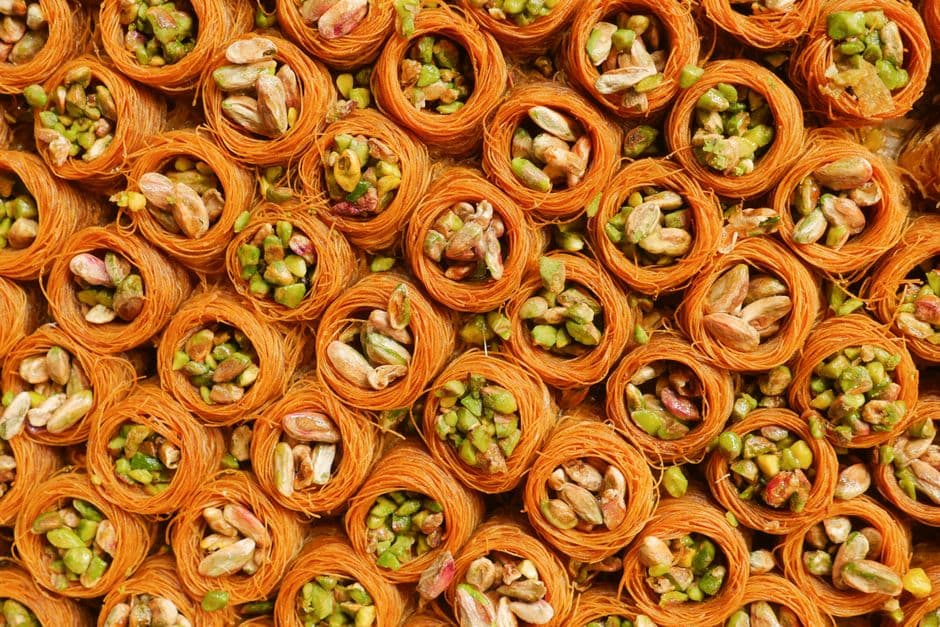
Baklava Bosanska
Distinctive Bosnian baklava with delicate diamond-cut layers of phyllo, crushed walnuts, and a clear sugar syrup — lighter than its Greek or Turkish cousins.
About This Recipe
Bosnian baklava is a distinct regional style within the wider family of Ottoman-derived phyllo sweets. What sets it apart is its restraint: the syrup is thinner and less sweet than Turkish or Greek versions, the walnut filling is finely crushed without cinnamon, and the cuts are precise diamonds that create elegant individual portions. It is traditionally made for Eid, weddings, and the arrival of guests, and a tray of homemade baklava is the highest expression of Bosnian hospitality. Sarajevo's old bazaar, Baščaršija, is famous for its baklava shops.
Ingredients
Serves 24
- 500 gfilo pastry sheets
- 200 gbutter, melted
- 300 gwalnuts, finely crushed
- 2 tbspcaster sugar (for filling)
- 300 gcaster sugar (for syrup)
- 300 mlwater
- 1 tbsplemon juice
Instructions
- 1
Make syrup
Combine sugar and water in a saucepan. Bring to a boil, add lemon juice, and simmer for 10 minutes until slightly thickened but still very pourable. Cool completely.
- 2
Layer phyllo
Brush a rectangular baking tray generously with butter. Layer 10 filo sheets, brushing each with melted butter. Spread walnut and sugar mixture evenly. Continue layering remaining filo sheets, brushing each with butter.
- 3
Cut
Before baking, cut through all layers in a diamond or rectangular pattern using a sharp knife. This is critical — cutting after baking shatters the pastry.
- 4
Bake
Bake at 175 °C for 30–35 minutes until uniformly golden. Do not let it darken.
- 5
Soak with syrup
Remove from oven. Immediately pour the cold syrup over the hot baklava. The temperature contrast ensures the syrup is absorbed cleanly. Rest for at least 2 hours before serving.
Did you make this?
Rate it and help other cooks find the recipes that actually work.
One tap to sign in, and we'll save the rating you just picked.
Everything you need to plan your week — free
- Meal calendar
- Grocery list
- AI recipe ideas
Track what you eat
Snap your meal to log calories and macros, run fasting timers and track water in the free SnapCal app.
Pro Tips
- →
Always pour cold syrup over hot baklava — this prevents sogginess.
- →
Cut before baking for clean, intact portions.
- →
Bosnian baklava should be soaked but not swimming — use restraint with the syrup.
- →
Weigh dry ingredients on a scale instead of using cups — grams are the difference between a tender and a tough crumb.
Variations
- •
Ružice — Bosnian rose-shaped baklava rolls as an elegant alternative.
- •
Hurmasice — date-shaped semolina cookies soaked in syrup, a related Bosnian sweet.
- •
Vegetarian: swap the protein for roasted king oyster mushrooms, smoked tofu or cooked chickpeas — adjust seasoning slightly upward to compensate.
- •
Spicier: add a finely chopped fresh chile or a teaspoon of crushed Aleppo/Urfa pepper to the aromatics for warm, layered heat instead of a single sharp hit.
Storage
Store uncovered at room temperature for up to 5 days. Do not refrigerate — this ruins the texture.
History & Origin
Baklava came to Bosnia with the Ottoman Empire in the 15th century. Over centuries Bosnian bakers developed a subtler, less sweet version reflecting local taste preferences.
Frequently Asked Questions
Why is Bosnian baklava less sweet than Turkish?
Bosnian taste preferences evolved differently under Ottoman rule. The local style uses a thinner, less sugary syrup and lets the walnut flavor take center stage.
Can I use pistachios instead of walnuts?
You can, but walnuts are traditional in Bosnia. Pistachios are more associated with Turkish and Middle Eastern styles.
Can I make this ahead of time?
Yes — most of the components can be prepared up to a day in advance and refrigerated separately. Reheat gently and assemble just before serving so textures stay distinct.
What can I substitute if I don't have all the ingredients?
Stay close to the role each ingredient plays: swap aromatics for similar ones (shallot for onion, lime for lemon), and keep the fat-acid-salt balance intact. Spice blends can usually be approximated with what's in the cupboard.
Nutrition Facts
Per serving (60g / 2.1 oz) · 24 servings total
Time Summary
Have Questions?
Ask our AI cooking assistant anything about this recipe — substitutions, techniques, scaling.
Chat with AI Chef →Featured in Guides
This recipe is featured in the following curated guides:
More Bosnian Recipes
You Might Also Like
Similar dishes from other cuisines around the world.
Free Kitchen Tools
Calculators and converters that pair with this page — no signup needed.
Put This Into a Plan
Schedule it, shop for it, and track what you already have.
Read Next
Longer reads that go deeper on the ideas behind this dish.
Community
Join the conversation
Sign in to leave a comment and save your favourite recipes