
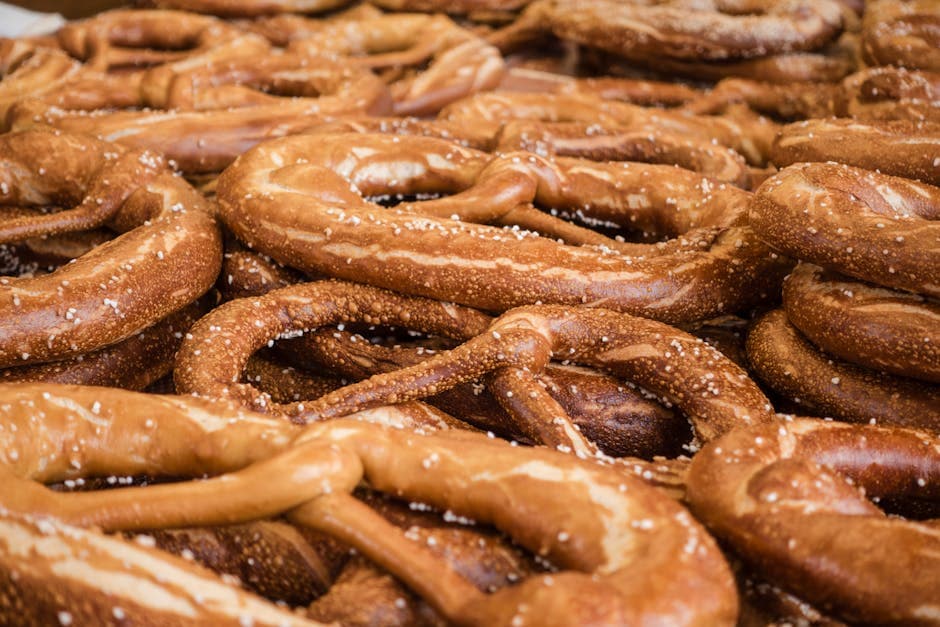
Bayerische Brezel
Authentic Bavarian soft pretzels with a deep mahogany crust from a lye dip and a coarse salt crust — the definitive German snack.
About This Recipe
The Bavarian Brezel is unlike any pretzel sold outside Germany — dense, chewy, deeply brown from the alkaline dip that creates the signature crust, and generously crusted with coarse salt. Made with a simple dough, the transformation happens when the shaped pretzels are briefly immersed in a dilute lye (or baking soda) solution that triggers the Maillard reaction and creates the incomparable crust.
Ingredients
Serves 8
- 500 gbread flour
- 7 ginstant yeast
- 1 tspsalt
- 1 tspsugar
- 280 mlwarm water
- 20 gbutter(softened)
- 1 litrewater(for dipping bath)
- 60 gbaking soda(for dipping bath (food-safe lye is authentic))
- 2 tbspcoarse sea salt flakes
Instructions
- 1
Make dough
Combine flour, yeast, salt, sugar and butter. Add warm water gradually. Knead 8 minutes until smooth and elastic. Rest covered 30 minutes.
- 2
Shape
Divide dough into 8 pieces. Roll each into a long rope (60 cm). Form a U-shape, cross the ends twice and press onto the bottom of the U to form the pretzel shape.
- 3
Rest
Place on lined baking sheets. Refrigerate uncovered 30 minutes to dry the surface — this helps the dip adhere.
- 4
Dip
Bring 1 litre water to a simmer. Add baking soda (it will foam). Dip each pretzel 30 seconds per side. Return to baking sheet.
- 5
Salt and bake
Score the fat bottom of each pretzel with a knife. Scatter generously with coarse salt. Bake at 220°C for 12–15 minutes until deep mahogany brown.
Did you make this?
Rate it and help other cooks find the recipes that actually work.
One tap to sign in, and we'll save the rating you just picked.
Everything you need to plan your week — free
- Meal calendar
- Grocery list
- AI recipe ideas
Cook this hands-free
Get AI meal plans, step-by-step cooking mode, and your saved recipes in the free Bento app.
Pro Tips
- →
Don't rush the dip — 30 seconds per side in the alkaline bath is essential for colour and crust.
- →
Refrigerating after shaping is important — it helps the dough hold its shape during dipping.
- →
Score the fat bottom — this is where the pretzel opens and creates the characteristic pale stripe.
- →
Taste and adjust salt at the very end — flavors concentrate as liquids reduce, and a final pinch of flaky salt sharpens the whole dish.
Variations
- •
Brush with butter immediately from the oven for a richer version.
- •
Fill a slit in the belly with obatzda (Bavarian cheese spread) for an Oktoberfest classic.
- •
Vegetarian: swap the protein for roasted king oyster mushrooms, smoked tofu or cooked chickpeas — adjust seasoning slightly upward to compensate.
- •
Spicier: add a finely chopped fresh chile or a teaspoon of crushed Aleppo/Urfa pepper to the aromatics for warm, layered heat instead of a single sharp hit.
Storage
Best eaten the day of baking. Store in a paper bag — never plastic, which makes the crust soft.
History & Origin
The pretzel's distinctive shape is thought to represent folded arms in prayer, and its origins are debated between German and Italian monks. Bavarian pretzels have been made since at least the 7th century and are now a global symbol of German food.
Frequently Asked Questions
Is baking soda the same as lye?
No — food-grade lye (sodium hydroxide) gives the deepest colour and most authentic result but requires careful handling. Baking soda is a safer approximation that gives excellent results for home baking.
Can I make this ahead of time?
Yes — most of the components can be prepared up to a day in advance and refrigerated separately. Reheat gently and assemble just before serving so textures stay distinct.
What can I substitute if I don't have all the ingredients?
Stay close to the role each ingredient plays: swap aromatics for similar ones (shallot for onion, lime for lemon), and keep the fat-acid-salt balance intact. Spice blends can usually be approximated with what's in the cupboard.
How do I know it's authentic?
Authenticity sits on a spectrum — what matters more is honoring the technique and balance of flavors. If the dish tastes harmonious and respects how cooks in its home region would build it, you're on solid ground.
Nutrition Facts
Per serving · 8 servings total
Time Summary
Have Questions?
Ask our AI cooking assistant anything about this recipe — substitutions, techniques, scaling.
Chat with AI Chef →Featured in Guides
This recipe is featured in the following curated guides:
More German Recipes
You Might Also Like
Similar dishes from other cuisines around the world.
Free Kitchen Tools
Calculators and converters that pair with this page — no signup needed.
Put This Into a Plan
Schedule it, shop for it, and track what you already have.
Read Next
Longer reads that go deeper on the ideas behind this dish.
Community
Join the conversation
Sign in to leave a comment and save your favourite recipes