
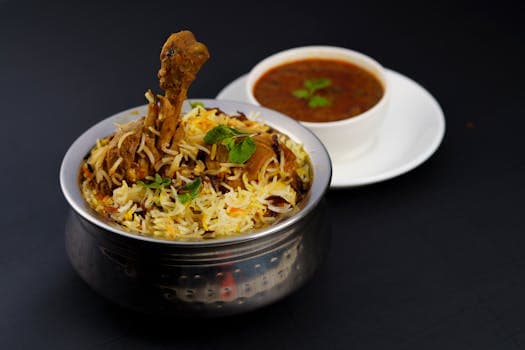
Hyderabadi Biryani
Royal layered rice with marinated chicken, saffron, and aromatic spices — fragrant, festive, complex.
About This Recipe
Hyderabadi biryani is the crown jewel of Indian rice cookery — and this kacchi-style version is the real test of a cook: raw marinated chicken layered beneath parboiled basmati, crowned with saffron milk, crisp fried onions (birista), mint, and cilantro, then sealed and slow-steamed so meat and rice finish cooking together in each other's vapors. The technique, called dum, traps every aromatic inside the pot; nothing escapes but anticipation. Success hinges on details — rice boiled to exactly 70% doneness, a marinade wet enough to steam the meat but not flood the rice, and an honest seal on the lid. Opened at the table, a proper Hyderabadi biryani releases a perfume of saffron, browned onion, and spice that no other rice dish matches.
Ingredients
Serves 6
- 500 gbasmati rice
- 1 kgchicken, bone-in pieces
- 1 cupplain yogurt
- 2 tbspginger-garlic paste
- 2 tspbiryani masala
- 1 tspgaram masala
- 1 tspturmeric
- 1 tspred chili powder
- 2 tbsplemon juice
- 2 tspsalt
- 3 largeonions, thinly sliced
- 1/2 cupghee
- 1 cupmilk
- 1 pinchsaffron threads
- 1/4 cupfresh mint leaves
- 1/4 cupfresh cilantro, chopped
- 5 podsgreen cardamom
- 1 stickcinnamon
- 5cloves
- 2bay leaves
Instructions
- 1
Soak rice
Wash the basmati in several changes of water until it runs clear, then soak in cold water for 30 minutes. Washing removes surface starch that would glue the grains; soaking lets them elongate fully and cook evenly during the brief parboil.
- 2
Marinate chicken
Massage the chicken with yogurt, ginger-garlic paste, biryani masala, garam masala, turmeric, chili powder, lemon juice, and 1 tsp salt, working the marinade into every crevice. Marinate at least 2 hours, or overnight refrigerated — the yogurt both tenderizes and becomes the gravy that steams the rice.
- 3
Fry onions
Fry the thinly sliced onions in the ghee over medium heat, stirring constantly toward the end, until uniformly deep golden brown and crisp — these are birista, biryani's signature garnish and flavor backbone. Drain on paper towels; they crisp further as they cool. Reserve the fragrant ghee.
Pull the onions a shade lighter than you want — they keep darkening off the heat, and burnt birista turns the whole dish bitter.
- 4
Bloom saffron
Warm the milk until steaming, crumble in the saffron threads, and let it infuse for at least 10 minutes until the milk turns deep amber. Blooming in warm liquid extracts far more color and aroma than scattering dry threads ever could.
- 5
Cook chicken
In a heavy-bottomed pot with the reserved onion ghee, cook the marinated chicken with the cardamom, cinnamon, cloves, and bay leaves over medium heat for about 15 minutes, until the marinade thickens into a clinging gravy and the chicken is partially cooked. This layer becomes the biryani's base.
The gravy should be thick and clinging, not soupy — excess liquid at this stage is the leading cause of mushy biryani.
- 6
Parboil rice
Bring 8 cups of water to a rolling boil with a few whole spices and 1 tsp salt — the water should taste seasoned like pasta water. Add the drained rice and boil just 5–7 minutes, until grains are 70% done: tender outside with a firm white core when pinched. Drain immediately.
The 70% rule is everything; the rice finishes cooking in the dum steam, and fully boiled rice will collapse into mush.
- 7
Layer biryani
Spread half the parboiled rice over the chicken in an even layer. Drizzle with half the saffron milk and scatter half the fried onions, mint, and cilantro. Repeat with the remaining rice and toppings, finishing with a final drizzle of saffron milk for the classic streaked golden-and-white grains.
- 8
Dum cook
Seal the pot tightly — foil pressed under a heavy lid, or the traditional rope of dough around the rim — and cook on the lowest possible heat for 25 minutes. Do not lift the lid; the trapped steam is simultaneously finishing the rice, cooking the chicken, and perfuming everything.
If you fear scorching, set the pot on a flat tava or griddle over the flame to diffuse the heat — standard practice in Hyderabadi kitchens.
- 9
Rest and serve
Rest the sealed pot off the heat for 10 minutes so the steam settles and grains firm up. Open at the table for the full aromatic effect, fluff gently from the edges with a flat spoon to keep grains intact, and serve with mirchi ka salan and cooling raita.
Did you make this?
Rate it and help other cooks find the recipes that actually work.
One tap to sign in, and we'll save the rating you just picked.
Everything you need to plan your week — free
- Meal calendar
- Grocery list
- AI recipe ideas
Cook this hands-free
Get AI meal plans, step-by-step cooking mode, and your saved recipes in the free Bento app.
Pro Tips
- →
Don't skip or shortcut the dum — the sealed slow-steam is what fuses the layers into biryani rather than spiced rice with chicken.
- →
Every grain should be separate and elongated; wash, soak, and parboil the basmati with care.
- →
Aged basmati (look for 'aged' on the label) cooks up longer, more fragrant, and less sticky than new-crop rice.
- →
Make extra birista — half of it tends to disappear into the cook before layering.
- →
Resist opening the pot during dum; every peek releases the steam doing the cooking.
Variations
- •
Mutton biryani: use bone-in lamb or goat, marinate overnight with raw papaya paste to tenderize, and extend the dum to 45 minutes.
- •
Vegetable biryani: layer mixed vegetables and fried paneer cooked in the same marinade in place of chicken.
- •
Egg biryani: nestle fried-spiced hard-boiled eggs into the layers for a quicker festive version.
- •
Pakki style: fully cook the chicken curry first and layer with the rice for a more forgiving method that's harder to get wrong.
Storage
Refrigerate up to 4 days — many swear biryani peaks on day two once the saffron and spices settle into the grains. Reheat covered with a sprinkle of water, in the microwave or a low oven, to revive the steam. Freezes acceptably for a month.
History & Origin
Hyderabadi biryani arose in the kitchens of the Nizams of Hyderabad, where Mughlai court cooking fused with the chilies, tamarind, and herbs of the Deccan to create something distinct from northern biryanis. The city's signature kacchi method — raw marinated meat dum-cooked beneath the rice — is considered the most demanding biryani technique in India. Today the dish is Hyderabad's culinary identity, served at weddings, festivals, and legendary restaurants across the old city.
Frequently Asked Questions
Why does my biryani come out mushy?
Almost always one of three errors: the rice was parboiled past 70% (it must retain a firm white core before layering), the chicken layer carried too much liquid (the marinade gravy should be thick, not soupy), or the dum heat was too high, boiling rather than steaming the pot. Fix those three checkpoints and each grain will stand separate.
What's the difference between kacchi and pakki biryani?
Kacchi ('raw') biryani — Hyderabad's signature — layers raw marinated meat under parboiled rice so both finish together during dum, producing unmatched depth but demanding precise timing. Pakki ('cooked') biryani layers fully cooked meat curry with the rice, making it far more forgiving for home cooks. This recipe partially cooks the chicken first, a practical middle path toward kacchi flavor with pakki reliability.
Can I make biryani without saffron?
You can, though you'll lose its honeyed aroma and golden streaks — saffron is genuinely central to the Hyderabadi style, and a pinch goes far. As a budget workaround, steep a little turmeric in the warm milk for color, or use a drop of kewra (pandanus) water or rose water for floral fragrance, both traditional biryani aromatics in their own right.
What do I serve with Hyderabadi biryani?
The canonical pair is mirchi ka salan — a tangy, nutty curry of chilies in peanut-sesame-tamarind sauce — and dahi ka raita, cooled yogurt with onion and cucumber. The salan adds heat and tang, the raita extinguishes it; biryani plays the aromatic middle. Sliced onion, lemon wedges, and a boiled egg complete a proper Hyderabadi plate.
Nutrition Facts
Per serving (500g / 17.6 oz) · 6 servings total
Time Summary
Have Questions?
Ask our AI cooking assistant anything about this recipe — substitutions, techniques, scaling.
Chat with AI Chef →Featured in Guides
This recipe is featured in the following curated guides:
More Indian Recipes
You Might Also Like
Similar dishes from other cuisines around the world.
Browse by Ingredient
More recipes built around the same core ingredients.
Free Kitchen Tools
Calculators and converters that pair with this page — no signup needed.
Put This Into a Plan
Schedule it, shop for it, and track what you already have.
Read Next
Longer reads that go deeper on the ideas behind this dish.
Community
Join the conversation
Sign in to leave a comment and save your favourite recipes