
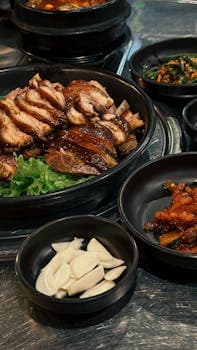
Bo Ssäm Pork Shoulder — David Chang-Inspired
Slow-roasted brown sugar-cured pork shoulder with crackling crust, served with lettuce wraps, kimchi and ssamjang — Momofuku's signature centrepiece.
⭐Inspired by David Chang · 🇨🇦 CanadaAbout This Recipe
This recipe is inspired by Chef David Chang's iconic bo ssäm at Momofuku Ssäm Bar in New York — possibly the most famous single dish from his entire group. Korean bo ssäm traditionally uses boiled pork; Chang's revolutionary 2008 menu version cures and slow-roasts the shoulder, finishes it under high heat for a sugar-glazed crust, then serves it whole at the table with lettuce, kimchi, ssamjang (Korean spicy paste) and oysters. The result is a centrepiece dish that sits between Korean ssäm tradition and modern Asian-American fine dining.
Ingredients
Serves 8
- 2.5 kgboneless pork shoulder(skin on, fat cap intact)
- 200 gbrown sugar(for the cure)
- 60 gkosher salt(for the cure)
- 60 gbrown sugar(for the glaze)
- 1 tbspMaldon sea salt(for the glaze)
- 3 tbspgochujang
- 2 tbspdoenjang (Korean soybean paste)(or white miso)
- 2 tbsphoney
- 2 tbsprice vinegar
- 2 clovesgarlic(minced)
- 1 tsptoasted sesame oil
- 2 headsbutter lettuce
- 300 gwell-fermented kimchi
- 3 cupscooked short-grain rice
- 12fresh oysters on the half-shell(optional but classic)
- 1 bunchspring onions(thinly sliced)
Instructions
- 1
Cure overnight (Day 1)
Mix the brown sugar and kosher salt for the cure. Pat the pork shoulder dry. Rub the cure over every surface, pressing in firmly. Place fat-side up in a baking dish. Cover and refrigerate AT LEAST 12 hours, up to 24.
- 2
Slow roast (Day 2)
Preheat oven to 150°C / 300°F. Pour off any liquid and discard. Place the pork on a rack in a roasting pan. Roast uncovered for 5–6 hours, basting with pan juices every hour. The internal temperature should reach 90–93°C (it's not about safe temperature, it's about collagen breakdown).
- 3
Make the ssamjang
Whisk gochujang, doenjang, honey, rice vinegar, garlic and sesame oil. Let stand 30 minutes for the flavours to meld.
- 4
The glaze finish
Increase oven to 250°C / 480°F. Mix the second batch of brown sugar with Maldon salt. Pat the pork's top surface dry. Press the glaze onto the surface in an even crust. Roast at high heat for 10–15 minutes until the glaze caramelises into a deep mahogany crust — watch carefully so it doesn't burn.
- 5
Rest and assemble
Rest the pork 15 minutes. Bring it to the table whole. Have all the components ready: lettuce leaves, kimchi, rice, oysters, ssamjang, spring onions.
- 6
Eat ssäm-style
Each diner builds their own wrap: lettuce leaf, spoonful of rice, a strip of pork pulled directly from the shoulder, dab of ssamjang, kimchi, an oyster if using, scattering of spring onions. Wrap into a packet. Eat in one bite. Repeat.
Did you make this?
Rate it and help other cooks find the recipes that actually work.
One tap to sign in, and we'll save the rating you just picked.
Everything you need to plan your week — free
- Meal calendar
- Grocery list
- AI recipe ideas
Cook this hands-free
Get AI meal plans, step-by-step cooking mode, and your saved recipes in the free Bento app.
Pro Tips
- →
A 12-hour cure is the minimum; 24 hours produces deeper flavour.
- →
Don't skip the high-heat glaze finish — it's the visual signature of the dish.
- →
Real Korean kimchi is essential — supermarket sweet kimchi won't work.
Variations
- •
Spicy Pork Shoulder: rub with gochugaru paste before slow-roasting.
- •
Smaller Format: use a 1.2kg shoulder, cure 12 hours, roast 3 hours total.
Storage
Leftovers refrigerate 4 days. Excellent in fried rice or sandwiches.
History & Origin
Bo ssäm is a traditional Korean dish — boiled pork wrapped in lettuce with kimchi and ssamjang. David Chang's 2008 reinterpretation at Momofuku Ssäm Bar — slow-roasted, sugar-glazed, served whole at the table — became one of the most influential restaurant dishes of the late 2000s and is still on Momofuku's menu today.
Frequently Asked Questions
What is ssamjang?
Ssamjang is the dipping sauce that accompanies ssäm — a blend of gochujang (Korean chili paste), doenjang (soybean paste), garlic, sesame oil and seasonings. It is found at every Korean barbecue table and is essential to the wrap experience.
Why is the pork sugar-cured?
The brown sugar cure both seasons the meat from the inside out and creates the conditions for the final mahogany crust. The high-heat glaze finish caramelises the outer layer of sugar into the dish's signature crackling-but-soft crust.
What is bo ssäm?
A traditional Korean dish — boiled pork wrapped in lettuce leaves with kimchi, ssamjang and rice. David Chang's 2008 Momofuku Ssäm Bar reinterpretation — slow-roasted shoulder with sugar-glazed crust, served whole at the table — became one of the most influential restaurant dishes of the late 2000s.
Why oysters?
Optional but traditional in many Korean ssäm preparations. The briny oyster cuts through the rich pork and adds another textural element. Chang's menu version always includes them; home versions often skip them for simplicity.
Can I do this without overnight curing?
12 hours minimum produces meaningfully better results than 4-6 hours. The cure both seasons the meat from the inside and creates the conditions for the final mahogany crust. 24 hours is the gold standard; less than 12 is a shortcut you'll taste.
Nutrition Facts
Per serving (380g / 13.4 oz) · 8 servings total
Time Summary
Have Questions?
Ask our AI cooking assistant anything about this recipe — substitutions, techniques, scaling.
Chat with AI Chef →Featured in Guides
This recipe is featured in the following curated guides:
More Korean Recipes
You Might Also Like
Similar dishes from other cuisines around the world.
Browse by Ingredient
More recipes built around the same core ingredients.
Free Kitchen Tools
Calculators and converters that pair with this page — no signup needed.
Put This Into a Plan
Schedule it, shop for it, and track what you already have.
Read Next
Longer reads that go deeper on the ideas behind this dish.
Community
Join the conversation
Sign in to leave a comment and save your favourite recipes