
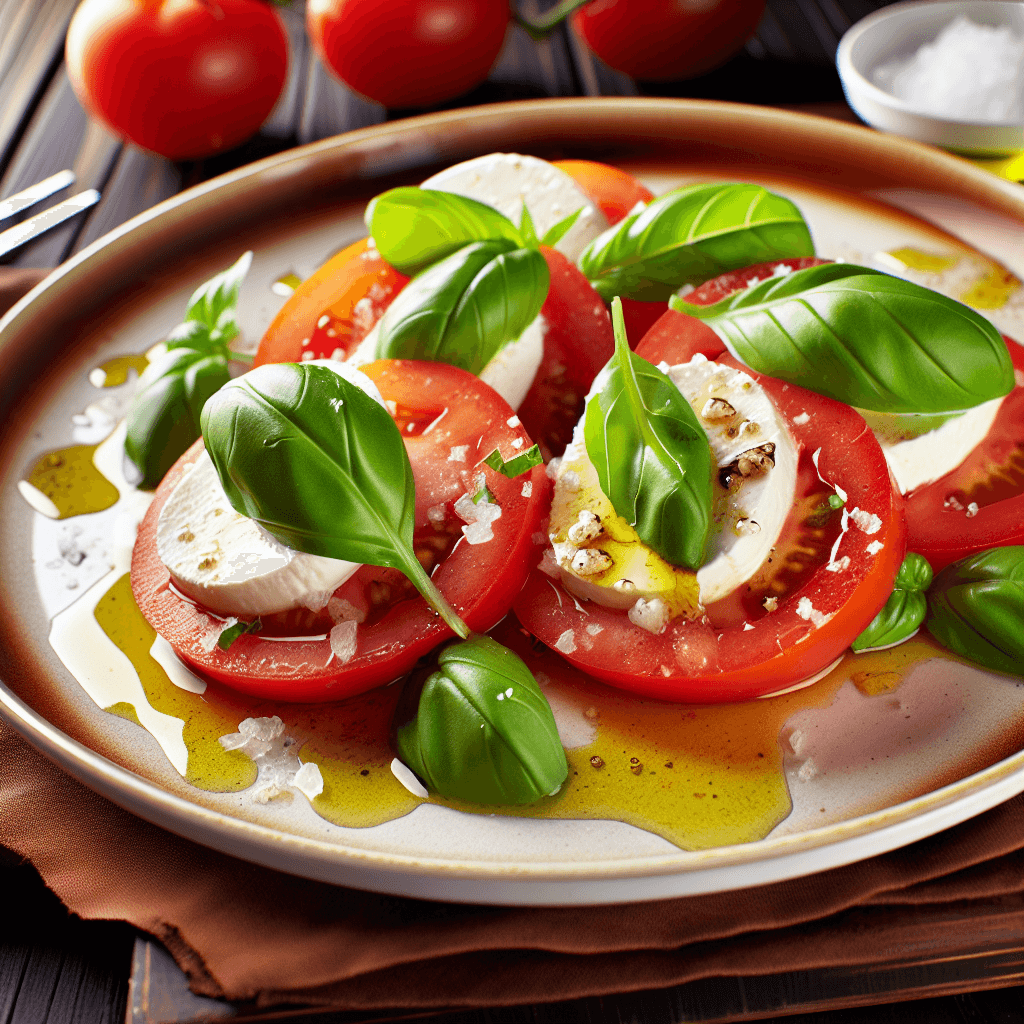
Caprese Salad
Fresh tomato, mozzarella, and basil drizzled with olive oil.
About This Recipe
Insalata Caprese — salad of the isle of Capri — is arguably the most famous no-cook dish in Italian cuisine. Born on the sun-drenched island off the Campanian coast, it presents the colours of the Italian flag: the vivid red of ripe tomatoes, the pure white of fresh mozzarella, and the deep green of basil leaves. The dish is a study in terroir: when made with local Sorrentino tomatoes and true buffalo mozzarella (mozzarella di bufala Campana DOP), the interplay of sweet, milky, herbal, and peppery flavours is almost unmatched in its elegance. The technique is deliberately minimal because every element must carry its weight. Tomatoes must be room-temperature — a cold fridge-stored tomato loses up to 60 % of its volatile aromatic compounds, turning flavourful flesh mealy and bland. Mozzarella should be similarly unwrapped from brine an hour before serving so its surface moisture evaporates slightly, concentrating the milky sweetness. The olive oil is the final flourish: a grassy, peppery Sicilian or Campanian extra-virgin variety, never neutral, drizzled on just before serving so the basil bruises under its weight and releases its essential oils. With five ingredients, there is nowhere to hide — and no dish rewards quality sourcing more generously.
Ingredients
Serves 2
- 3 largeripe vine tomatoes, sliced 1 cm thick
- 250 gfresh buffalo mozzarella, sliced
- 10 leavesfresh basil
- 3 tbspextra-virgin olive oil
- 1 tbspbalsamic glaze
- 0.5 tspflaky sea salt
- 0.25 tspfreshly ground black pepper
Instructions
- 1
Bring to room temperature
Remove mozzarella from its brine and tomatoes from the fridge at least 30 minutes before assembling. Room-temperature dairy and produce release their full aroma and taste noticeably sweeter.
Pat the mozzarella gently with kitchen paper to remove excess surface moisture — this prevents a watery puddle forming on the platter.
- 2
Slice precisely
Using a sharp serrated knife, slice tomatoes into rounds about 1 cm thick; use the same thickness for the mozzarella so every alternating layer is balanced visually and texturally. Uneven slices break the visual rhythm and mean some bites are tomato-heavy.
A serrated bread knife works better than a chef's knife here — its teeth grip the tomato skin without crushing the flesh.
- 3
Arrange on the platter
Fan tomato and mozzarella slices alternately on a wide, flat serving plate, overlapping each slice by about one-third. This overlapping overlap keeps the composition tight and ensures every forkful includes both components.
For a restaurant-style presentation, stand the alternating slices upright like dominoes along the length of the platter.
- 4
Add the basil
Tuck whole fresh basil leaves between the overlapping slices. Do not stack them flat on top — nestling them between slices keeps them from wilting under the warm oil and protects their colour and scent until the last moment.
- 5
Season and dress
Drizzle the best extra-virgin olive oil you own across the entire platter in a slow, even stream. Follow with a thin zigzag of balsamic glaze. Finish with a generous pinch of flaky sea salt — Maldon or Fiore di Sicilia — and several good grinds of black pepper.
Add the salt right before serving, not before, or it will draw moisture from the tomatoes and dilute the olive oil.
- 6
Serve immediately
Bring to the table as soon as it is dressed. The basil will begin to oxidise within minutes, and the tomatoes will weep their juices into the olive oil, which is actually delicious mopped up with crusty bread — so serve that alongside.
Did you make this?
Rate it and help other cooks find the recipes that actually work.
One tap to sign in, and we'll save the rating you just picked.
Everything you need to plan your week — free
- Meal calendar
- Grocery list
- AI recipe ideas
Track what you eat
Snap your meal to log calories and macros, run fasting timers and track water in the free SnapCal app.
Pro Tips
- →
Never refrigerate tomatoes before serving — cold destroys the volatile aromatic compounds that give vine tomatoes their distinctive sweetness. Keep them on the counter the day you plan to serve.
- →
Seek out mozzarella di bufala Campana DOP (the authentic buffalo milk version) rather than fior di latte (cow's milk). The buffalo variety has a tangier, richer flavour and a creamier pull that elevates the whole dish.
- →
Use a Sicilian or Campanian DOP extra-virgin olive oil for maximum fruitiness and pepper — a neutral blended oil makes the salad taste flat regardless of the other ingredients' quality.
- →
Balsamic glaze is not traditional in Campania but widely used for its sweetness; if you want strict authenticity, omit it and use only olive oil and salt.
- →
For the best colour contrast and photo-worthiness, use a mix of red, yellow, and green heirloom tomatoes when in season.
Variations
- •
Caprese with burrata: replace mozzarella with burrata (fresh mozzarella shell filled with stracciatella cream) — the creamy interior spills over the tomatoes when cut, making it even more indulgent.
- •
Pesto caprese: drizzle a thin stream of basil pesto alongside or instead of the balsamic glaze for a more herbaceous, nutty dressing.
- •
Peach and mozzarella caprese: swap half the tomatoes for ripe white peach slices in summer for a sweet-savoury version popular in Tuscany.
- •
Caprese skewers: thread cherry tomato halves, small mozzarella bocconcini, and basil leaves onto cocktail skewers and finish with olive oil and flaky salt — a two-bite appetiser perfect for parties.
Storage
Caprese does not keep once assembled — the tomatoes weep into the oil and the basil blackens within an hour. If preparing ahead, slice and refrigerate components separately, then assemble and dress at the last minute. Do not attempt to store leftovers; the quality loss is irreversible.
History & Origin
The caprese salad is said to have been invented in the 1920s on the island of Capri, possibly at the Grand Hotel Quisisana, as a patriotic nod to the Italian tricolore using the island's abundant tomatoes and local mozzarella. Food historian records from the 1950s document it being served at the home of Italian futurist architect Filippo Tommaso Marinetti. It gained international recognition when tourists began visiting the Amalfi Coast in the post-war economic boom of the 1960s and brought the recipe home, cementing its status as Italy's most-imitated no-cook dish.
Frequently Asked Questions
Can I make caprese salad ahead of time?
You can prep the components an hour in advance — slice the tomatoes and mozzarella, keep them separately at room temperature covered with a damp cloth — but do not assemble and dress until the very last moment. Salt pulls moisture from the tomatoes immediately, and the basil oxidises to black within 20-30 minutes once torn and exposed to oil.
What if I can't find buffalo mozzarella?
Fresh fior di latte (cow's-milk mozzarella) works well and is much easier to find. Avoid the low-moisture blocks sold for pizza — they are too rubbery and salty. Look for mozzarella packed in water or whey in the deli section; it should feel soft and yield when pressed.
Why is my caprese watery?
Watery caprese usually means the mozzarella was not drained long enough (brine pools under the slices) or the tomatoes were salted and left standing. Pat mozzarella dry before slicing, salt the dish only just before serving, and tilt the finished platter slightly to encourage any juices to collect at one edge rather than swamping the cheese.
Is balsamic glaze traditional in caprese salad?
Strictly no — the original Campanian version uses only extra-virgin olive oil, salt, and fresh basil. Balsamic glaze became popular in restaurants outside Italy in the 1990s as a way to add sweetness and visual drama. It is delicious but not authentic, so feel free to omit it for a more classically correct result.
What is the best tomato variety to use?
Any sweet, fully ripe, meaty tomato works. In Italy, Cuore di Bue (oxheart) and Costoluto Genovese are prized for their low water content and intense sweetness. In summer markets, heirloom varieties like Brandywine or Cherokee Purple are excellent. Whatever you choose, flavour beats variety every time — taste one before buying.
Nutrition Facts
Per serving (250g / 8.8 oz) · 2 servings total
Time Summary
Have Questions?
Ask our AI cooking assistant anything about this recipe — substitutions, techniques, scaling.
Chat with AI Chef →Featured in Guides
This recipe is featured in the following curated guides:
More Italian Recipes
You Might Also Like
Similar dishes from other cuisines around the world.
Browse by Ingredient
More recipes built around the same core ingredients.
Free Kitchen Tools
Calculators and converters that pair with this page — no signup needed.
Put This Into a Plan
Schedule it, shop for it, and track what you already have.
Read Next
Longer reads that go deeper on the ideas behind this dish.
Community
Join the conversation
Sign in to leave a comment and save your favourite recipes