
Classic Trifle
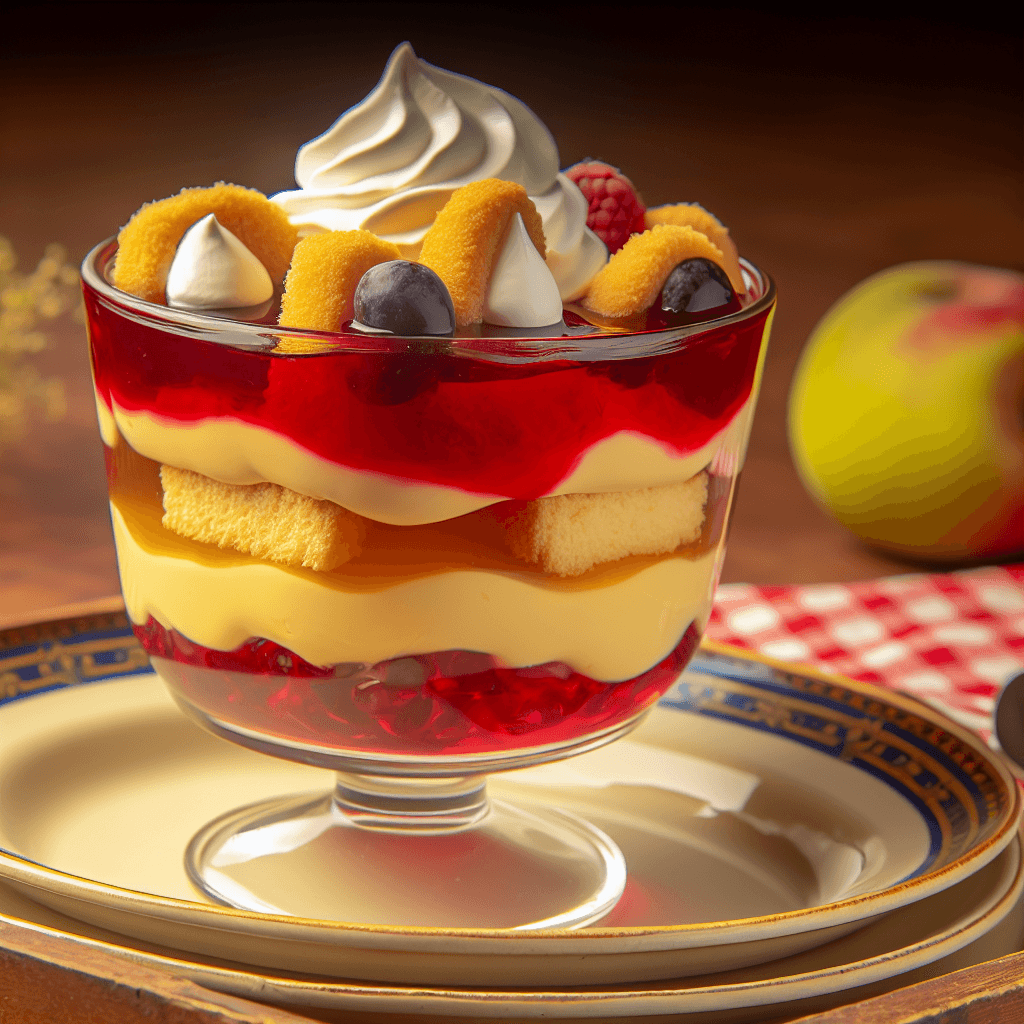
Sherry-soaked sponge, wobbly jelly, thick vanilla custard and billowing cream, layered in a glass bowl so every stratum shows — Britain's showstopping Christmas dessert.
About This Recipe
The English trifle is a spectacular layered dessert served in a glass bowl so every colourful stratum is visible — sherry-soaked sponge fingers, a layer of fruit and wobbly jelly, thick vanilla custard, and a crown of softly whipped cream. It is a celebration dessert, traditionally served at Christmas and summer gatherings, and tastes even better after a night in the fridge.
Ingredients
Serves 8
- 1 packetstrawberry jelly (135 g), prepared
- 200 gsponge fingers or Madeira cake, sliced
- 4 tbspsweet sherry or fruit juice
- 300 gmixed berries (strawberries, raspberries)
- 500 mlthick vanilla custard
- 300 mldouble cream
- 1 tbspcaster sugar
- 25 gtoasted flaked almonds, for decoration
Instructions
- 1
Layer the sponge
Arrange sponge fingers or cake slices in the base of a large glass trifle bowl. Drizzle with sherry or fruit juice, ensuring even coverage.
- 2
Add fruit and jelly
Scatter most of the berries over the sponge layer, reserving a few for decoration. Pour the liquid jelly (cooled but not set) over the sponge and fruit. Refrigerate for 2-3 hours until the jelly is fully set.
- 3
Add the custard
Spoon the thick custard over the set jelly layer, spreading it gently to the edges of the bowl. Return to the fridge for 30 minutes.
- 4
Top with cream
Whip the cream with the sugar to soft peaks. Spoon or pipe over the custard layer. Decorate with reserved berries and toasted almonds. Chill for at least 1 hour before serving.
Did you make this?
Rate it and help other cooks find the recipes that actually work.
One tap to sign in, and we'll save the rating you just picked.
Everything you need to plan your week — free
- Meal calendar
- Grocery list
- AI recipe ideas
Cook this hands-free
Get AI meal plans, step-by-step cooking mode, and your saved recipes in the free Bento app.
Pro Tips
- →
Allow each layer to set fully before adding the next for clean, distinct layers.
- →
Make the trifle the day before serving — it improves overnight as the flavours meld.
- →
Weigh dry ingredients on a scale instead of using cups — grams are the difference between a tender and a tough crumb.
- →
Bring eggs and dairy to room temperature before mixing; cold ingredients seize fats and produce a dense, uneven texture.
Variations
- •
Use tropical fruit (mango, passion fruit) and coconut cream for a summer twist.
- •
Replace sherry with Amaretto and use cherry jelly for a Black Forest-style trifle.
- •
Vegetarian: swap the protein for roasted king oyster mushrooms, smoked tofu or cooked chickpeas — adjust seasoning slightly upward to compensate.
- •
Spicier: add a finely chopped fresh chile or a teaspoon of crushed Aleppo/Urfa pepper to the aromatics for warm, layered heat instead of a single sharp hit.
Storage
Refrigerate covered up to 3 days. Do not freeze — the custard and cream layers break down.
History & Origin
Classic Trifle is a hearty fixture of British kitchens where pub culture and Sunday tables shape the canon. Regional variations are the rule rather than the exception — neighboring villages, families and even individual cooks adapt the dish to what's in the pantry and what's in season, which is why no two versions taste exactly alike and why the recipe has stayed alive for so long.
Frequently Asked Questions
Can I make this ahead of time?
Yes — most of the components can be prepared up to a day in advance and refrigerated separately. Reheat gently and assemble just before serving so textures stay distinct.
What can I substitute if I don't have all the ingredients?
Stay close to the role each ingredient plays: swap aromatics for similar ones (shallot for onion, lime for lemon), and keep the fat-acid-salt balance intact. Spice blends can usually be approximated with what's in the cupboard.
How do I know it's authentic?
Authenticity sits on a spectrum — what matters more is honoring the technique and balance of flavors. If the dish tastes harmonious and respects how cooks in its home region would build it, you're on solid ground.
Why didn't mine turn out as expected?
The two most common issues are under-seasoning and rushing the heat. Taste as you go, season in layers, and give aromatics and proteins the time they need to develop color and depth before moving on.
Nutrition Facts
Per serving (250g / 8.8 oz) · 8 servings total
Time Summary
Have Questions?
Ask our AI cooking assistant anything about this recipe — substitutions, techniques, scaling.
Chat with AI Chef →Featured in Guides
This recipe is featured in the following curated guides:
More British Recipes
You Might Also Like
Similar dishes from other cuisines around the world.
Free Kitchen Tools
Calculators and converters that pair with this page — no signup needed.
Put This Into a Plan
Schedule it, shop for it, and track what you already have.
Read Next
Longer reads that go deeper on the ideas behind this dish.
Community
Join the conversation
Sign in to leave a comment and save your favourite recipes