
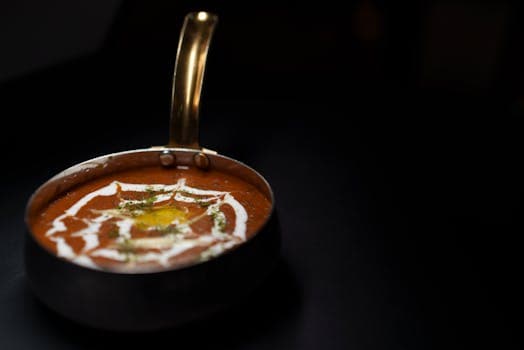
Dal Makhani — Sanjeev Kapoor-Inspired
Black urad lentils slow-cooked with kidney beans, cream, butter and tomato — North India's most beloved restaurant dish.
⭐Inspired by Sanjeev Kapoor · 🇮🇳 IndiaAbout This Recipe
This recipe is inspired by Chef Sanjeev Kapoor's lifelong work documenting Indian home cooking and the Punjabi restaurant tradition for South Asian audiences worldwide. Dal makhani — black urad lentils with rajma (kidney beans), simmered with butter, cream and tomato — is the flagship of North Indian restaurant menus. Properly made, it requires patience: the dal must simmer for at least 4 hours (some restaurants go 8) and finish with a generous lashing of cream. This is our take on the home tradition Kapoor has championed across hundreds of episodes of Khana Khazana.
Ingredients
Serves 6
- 200 gwhole black urad dal (sabut urad)(soaked overnight)
- 60 grajma (red kidney beans)(soaked overnight)
- 2 tbspghee(or unsalted butter)
- 2 tbspneutral oil
- 1 largeonion(very finely chopped)
- 1 tbspginger-garlic paste
- 2green chilies(slit lengthwise)
- 4ripe tomatoes(puréed)
- 2 tbsptomato paste
- 1 tspKashmiri red chili powder
- 1 tspground cumin
- 1 tspground coriander
- 0.5 tspgaram masala(plus extra to finish)
- 0.5 tspkasuri methi (dried fenugreek leaves)(crushed)
- 150 mldouble cream
- 60 gunsalted butter(to finish)
- 1 tbspsalt(or to taste)
- 0.5 bunchfresh coriander(chopped)
Instructions
- 1
Pressure cook the lentils
Drain the soaked urad and rajma. Pressure cook with 1.2L water and 2 teaspoons salt for 25 minutes (or 2.5 hours simmered conventionally). The lentils should be very tender — they will be cooked further. Lightly mash with a wooden spoon to release the starch.
- 2
Build the masala base
Heat the ghee and oil in a wide heavy pan over medium heat. Sauté the onion for 8–10 minutes until deeply golden. Add the ginger-garlic paste and green chilies and cook 90 seconds. Add the tomato purée and tomato paste — fry for 6–8 minutes until the mixture darkens and the oil separates at the edges.
- 3
Add the spices
Stir in the Kashmiri chili powder, cumin, coriander and garam masala. Toast 30 seconds.
- 4
Long, slow simmer
Add the cooked lentils with all their cooking liquid. Bring to a gentle simmer. Cover partially and cook for 90 minutes, stirring every 10–15 minutes — the dal will gradually thicken and the colour will deepen. Add hot water as needed if it gets too thick.
The slow simmer is the secret. Restaurant versions cook for 8+ hours; 90 minutes at home is the practical compromise.
- 5
Cream and butter finish
Stir in the cream, kasuri methi (rub between your palms first to release the flavour), and 30g of butter. Simmer 10 more minutes. Taste and adjust salt.
- 6
Serve restaurant-style
Ladle into warm bowls. Float the remaining 30g butter on top — it should melt into a glossy yellow pool. Sprinkle with fresh coriander and a final pinch of garam masala. Serve with hot naan, jeera rice or roti.
Did you make this?
Rate it and help other cooks find the recipes that actually work.
One tap to sign in, and we'll save the rating you just picked.
Everything you need to plan your week — free
- Meal calendar
- Grocery list
- AI recipe ideas
Cook this hands-free
Get AI meal plans, step-by-step cooking mode, and your saved recipes in the free Bento app.
Pro Tips
- →
Whole black urad (sabut urad) is essential — split urad won't give the same texture.
- →
Don't skip the kasuri methi — it's the defining aromatic note.
- →
Dal makhani always tastes better the next day — make ahead if you can.
Variations
- •
Vegan Dal Makhani: substitute coconut cream and vegan butter for the dairy.
- •
Slow Cooker Version: after step 3, transfer to a slow cooker and cook on LOW for 8 hours.
Storage
Improves with age. Refrigerate up to 5 days. Freezes excellently for 3 months.
History & Origin
Dal makhani originated in the Punjab and was popularised across India in the 1950s by the Moti Mahal chain in Delhi, which also invented butter chicken. It has since become the signature dish of North Indian restaurant menus globally. Sanjeev Kapoor's TV demonstrations have shaped how a generation of Indian home cooks approach this dish.
Frequently Asked Questions
What is sabut urad?
Sabut urad — also called whole black urad or kala dal — is the whole, unhulled black gram lentil. It's essential for dal makhani because it has a creamier, richer texture than the split white version (urad dal).
Why does it take 4+ hours?
The long, slow simmer is what gives dal makhani its characteristic creaminess — the lentils slowly break down and emulsify with the butter and cream into a thick, almost velvety dal. Shortcuts produce a drier, less unified texture.
Why does dal makhani take so long?
Restaurant versions cook for 8+ hours; the long simmer breaks down the lentils into a creamy, almost emulsified state and develops deep umami from butter and tomato. Skipping this step produces a thinner, less unified dal that lacks the characteristic richness.
What is the difference between dal makhani and butter chicken?
Both come from the same Delhi restaurant tradition (Moti Mahal in the 1950s) and share the buttery-tomato base. Dal makhani is the vegetarian counterpart — black urad lentils + kidney beans simmered in the same kind of cream-tomato sauce. Many North Indian restaurants serve them as a pair.
Can I make this in an Instant Pot?
Yes — pressure cook the lentils for 25 minutes. Build the masala separately on sauté mode. Then combine and simmer 30-45 minutes on slow cook. The flavour is excellent though slightly less developed than the full long-simmer method.
Nutrition Facts
Per serving (320g / 11.3 oz) · 6 servings total
Time Summary
Have Questions?
Ask our AI cooking assistant anything about this recipe — substitutions, techniques, scaling.
Chat with AI Chef →Featured in Guides
This recipe is featured in the following curated guides:
More Indian Recipes
You Might Also Like
Similar dishes from other cuisines around the world.
Browse by Ingredient
More recipes built around the same core ingredients.
Free Kitchen Tools
Calculators and converters that pair with this page — no signup needed.
Put This Into a Plan
Schedule it, shop for it, and track what you already have.
Read Next
Longer reads that go deeper on the ideas behind this dish.
Community
Join the conversation
Sign in to leave a comment and save your favourite recipes