
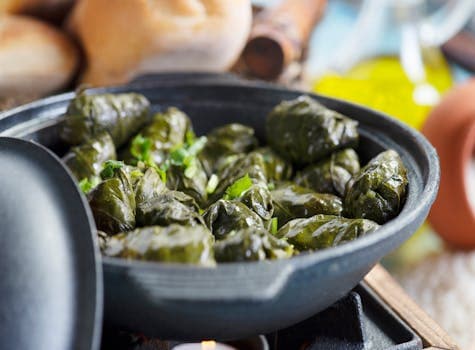
Dolmades
Greek stuffed grape leaves with rice, herbs, and lemon — bright, tangy, ancient.
About This Recipe
Dolmades are one of the oldest dishes still on Greek tables — tender grape leaves rolled around rice perfumed with fresh dill, mint, parsley, and slow-cooked onion, then braised gently in olive oil and lemon until the rice swells and the leaves turn silky. The vegetarian, olive-oil-based version made here is known as 'dolmadakia gialantzi,' served warm or cold as meze with thick yogurt and lemon wedges. The technique rewards patience: rolling each leaf snug but not tight (the rice needs room to expand), packing the pot in close layers, and weighting everything with a plate so nothing unravels during the simmer. The payoff is a platter of bright, herbaceous, citrusy parcels that taste even better the next day.
Ingredients
Serves 8
- 1 jargrape leaves (about 60), drained and rinsed
- 1.5 cupslong-grain rice
- 2 largeonions, finely diced
- 1/2 cupolive oil, plus more
- 1/2 cupfresh dill, chopped
- 1/2 cupfresh mint, chopped
- 1/2 cupfresh parsley, chopped
- 3lemons, juiced
- 2 tspsalt
- 1 tspblack pepper
- 3 cupshot water or vegetable stock
- 2 tbsppine nuts (optional)
Instructions
- 1
Sauté onions
Heat 1/4 cup of olive oil in a wide pan over medium heat and cook the diced onions for about 8 minutes, stirring often, until completely soft, translucent, and sweet without browning. Soft onions melt invisibly into the filling; undercooked ones stay crunchy through the braise.
- 2
Make filling
Off the heat, stir the raw rice into the onions along with the dill, mint, parsley, juice of 1 lemon, salt, pepper, and pine nuts. Mix thoroughly so the herbs distribute evenly — the rice will finish cooking inside the leaves, absorbing the lemony braising liquid as it swells.
- 3
Roll dolmades
Lay a grape leaf shiny-side down, vein-side up, stem toward you (snip off any tough stem). Place a scant tablespoon of filling near the stem end, fold the bottom over it, fold both sides in, and roll away from you into a snug little cylinder. Repeat with all the leaves.
Roll firmly but not tight — the rice expands by half again as it cooks, and over-tight rolls split open in the pot.
- 4
Layer in pot
Line the bottom of a heavy pot with torn or leftover leaves to protect the dolmades from direct heat. Pack the rolls in tightly, seam-side down, in concentric circles, building a second layer once the first is full. Snug packing is what keeps them from unrolling.
Tuck any torn leaves between layers too — they add flavor and cushioning.
- 5
Add liquid
Pour the remaining olive oil and the juice of 2 lemons over the rolls, then add enough hot water or stock to just barely cover them. Set a heatproof plate directly on top of the dolmades — this weight keeps them submerged and intact throughout the simmer.
- 6
Simmer
Bring the pot to a gentle simmer over medium heat, then cover, reduce the heat to low, and cook for about 45 minutes. The dolmades are done when a test roll has fully tender rice and most of the liquid has been absorbed into the leaves.
Keep the simmer truly gentle — vigorous bubbling jostles the rolls loose and tears the leaves.
- 7
Rest and serve
Remove from the heat and let the dolmades rest in the covered pot for 20 minutes — they firm up and finish absorbing the lemony liquid as they cool. Serve warm or at room temperature with lemon wedges and a bowl of thick Greek yogurt or tzatziki.
Did you make this?
Rate it and help other cooks find the recipes that actually work.
One tap to sign in, and we'll save the rating you just picked.
Everything you need to plan your week — free
- Meal calendar
- Grocery list
- AI recipe ideas
Track what you eat
Snap your meal to log calories and macros, run fasting timers and track water in the free SnapCal app.
Pro Tips
- →
Don't overfill — a scant tablespoon per leaf is right, since the rice expands significantly as it cooks.
- →
The plate weighted on top is non-negotiable; it's the difference between intact rolls and a pot of unraveled leaves and loose rice.
- →
Rinse jarred leaves well and blanch very salty ones in hot water for a minute to tame the brine.
- →
Use small-to-medium leaves for meze-sized rolls; reserve giant or torn leaves for lining the pot.
- →
Dolmades genuinely improve overnight as the lemon and herbs penetrate the rice — make them a day ahead for parties.
Variations
- •
Add ground lamb or beef to the filling and finish with avgolemono (egg-lemon sauce) for the hearty meat version served warm as a main.
- •
Stir in currants and a pinch of cinnamon and allspice for the Istanbul-Greek style.
- •
Use short-grain rice for a creamier, stickier filling, as many island cooks prefer.
- •
Swap some parsley for fennel fronds for a subtle anise note common in spring versions.
Storage
Refrigerate covered, with a drizzle of olive oil, for up to 5 days — they're often better on day two. Serve cold or gently warmed; they also freeze well for 2 months, layered with parchment.
History & Origin
Stuffed leaves appear in Greek cooking as far back as antiquity, and the dish later flourished across the Ottoman world — the name 'dolma' comes from the Turkish verb 'to fill.' Nearly every culture from the Balkans through the Levant claims its own version, with fillings ranging from rice and herbs to spiced meats. The cold, olive-oil-braised vegetarian style remains a defining Greek meze.
Frequently Asked Questions
Can I use canned or jarred grape leaves?
Yes — jarred brined leaves are the standard outside grape-growing regions and work beautifully. Rinse each leaf well under cold water to remove excess brine, and taste one: if it's still aggressively salty, blanch the leaves in hot water for a minute and drain. Sort them as you go, reserving torn or oversized leaves for lining the pot.
Can I use fresh grape leaves from a vine?
Absolutely, and many Greeks consider them superior. Pick young, palm-sized leaves in late spring from unsprayed vines — older summer leaves turn tough and leathery. Blanch fresh leaves in boiling salted water for 1–2 minutes until they darken and go limp, then cool before rolling. They have a brighter, greener flavor than brined leaves.
Why did my dolmades unravel or burst in the pot?
Three common causes: rolls packed too loosely in the pot (they need to support each other snugly), no weighted plate on top to hold them down, or overfilling, since the rice expands as it cooks and bursts tight rolls. Pack them shoulder to shoulder seam-side down, weight them, and keep the simmer gentle rather than boiling.
Are dolmades served hot or cold?
These vegetarian, olive-oil-based dolmades (gialantzi) are traditionally served at room temperature or chilled, as part of a meze spread with yogurt, lemon, and bread — the flavors are actually clearer once cool. Meat-filled dolmades are the opposite: always served hot, often blanketed in avgolemono sauce as a main course. Either way, a squeeze of fresh lemon is essential.
Nutrition Facts
Per serving (200g / 7.1 oz) · 8 servings total
Time Summary
Have Questions?
Ask our AI cooking assistant anything about this recipe — substitutions, techniques, scaling.
Chat with AI Chef →Featured in Guides
This recipe is featured in the following curated guides:
More Greek Recipes
You Might Also Like
Similar dishes from other cuisines around the world.
Browse by Ingredient
More recipes built around the same core ingredients.
Free Kitchen Tools
Calculators and converters that pair with this page — no signup needed.
Put This Into a Plan
Schedule it, shop for it, and track what you already have.
Read Next
Longer reads that go deeper on the ideas behind this dish.
Community
Join the conversation
Sign in to leave a comment and save your favourite recipes