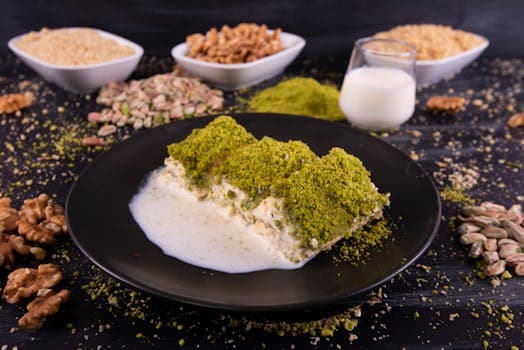
Galaktoboureko is one of Greece's most adored desserts — layers of buttery, shattering phyllo pastry encasing a thick, velvety semolina custard, all drenched in fragrant lemon syrup. The contrast between the crispy golden pastry and the smooth, creamy filling is irresistible. Found in every zacharoplasteio (pastry shop) in Greece, it rivals baklava for the title of greatest Greek sweet.
Serves 12
Heat milk and sugar. Slowly whisk in semolina and cook until thick, about 5 minutes. Off heat, whisk in eggs, vanilla, and butter. Let cool slightly.
Brush a baking dish with butter. Layer half the phyllo sheets, brushing each with melted butter.
Pour custard over phyllo. Layer remaining phyllo sheets on top, brushing each with butter. Score the top into squares.
Bake at 180C for 40-45 minutes until deep golden.
Boil sugar, water, and lemon zest for 8 minutes. Add lemon juice. Pour hot syrup over the hot pastry. Let cool before serving.
Everything you need to plan your week — free
Cook this hands-free
Get AI meal plans, step-by-step cooking mode, and your saved recipes in the free Bento app.
Pour hot syrup over hot pastry for the best absorption.
Let it rest for at least 2 hours before serving.
Weigh dry ingredients on a scale instead of using cups — grams are the difference between a tender and a tough crumb.
Bring eggs and dairy to room temperature before mixing; cold ingredients seize fats and produce a dense, uneven texture.
Add orange zest to the syrup for a different citrus note.
Vegetarian: swap the protein for roasted king oyster mushrooms, smoked tofu or cooked chickpeas — adjust seasoning slightly upward to compensate.
Spicier: add a finely chopped fresh chile or a teaspoon of crushed Aleppo/Urfa pepper to the aromatics for warm, layered heat instead of a single sharp hit.
Lighter: reduce the fat by a third and finish with a squeeze of citrus or a splash of vinegar to keep brightness without losing body.
Cover loosely and keep at room temperature for up to 2 days. Do not refrigerate or the phyllo will soften.
Galaktoboureko is celebrating Greek table culture of olive oil, herbs and unhurried Mediterranean meals. Regional variations are the rule rather than the exception — neighboring villages, families and even individual cooks adapt the dish to what's in the pantry and what's in season, which is why no two versions taste exactly alike and why the recipe has stayed alive for so long.
Yes — most of the components can be prepared up to a day in advance and refrigerated separately. Reheat gently and assemble just before serving so textures stay distinct.
Stay close to the role each ingredient plays: swap aromatics for similar ones (shallot for onion, lime for lemon), and keep the fat-acid-salt balance intact. Spice blends can usually be approximated with what's in the cupboard.
Authenticity sits on a spectrum — what matters more is honoring the technique and balance of flavors. If the dish tastes harmonious and respects how cooks in its home region would build it, you're on solid ground.
The two most common issues are under-seasoning and rushing the heat. Taste as you go, season in layers, and give aromatics and proteins the time they need to develop color and depth before moving on.
Per serving (350g / 12.3 oz) · 12 servings total
Ask our AI cooking assistant anything about this recipe — substitutions, techniques, scaling.
Chat with AI Chef →This recipe is featured in the following curated guides:
Join the conversation
Sign in to leave a comment and save your favourite recipes
Everything you need to plan your week — free
Have feedback or need help?
We read every email and reply within 1–2 business days.
© 2026 MyCookingCalendar. All rights reserved.