
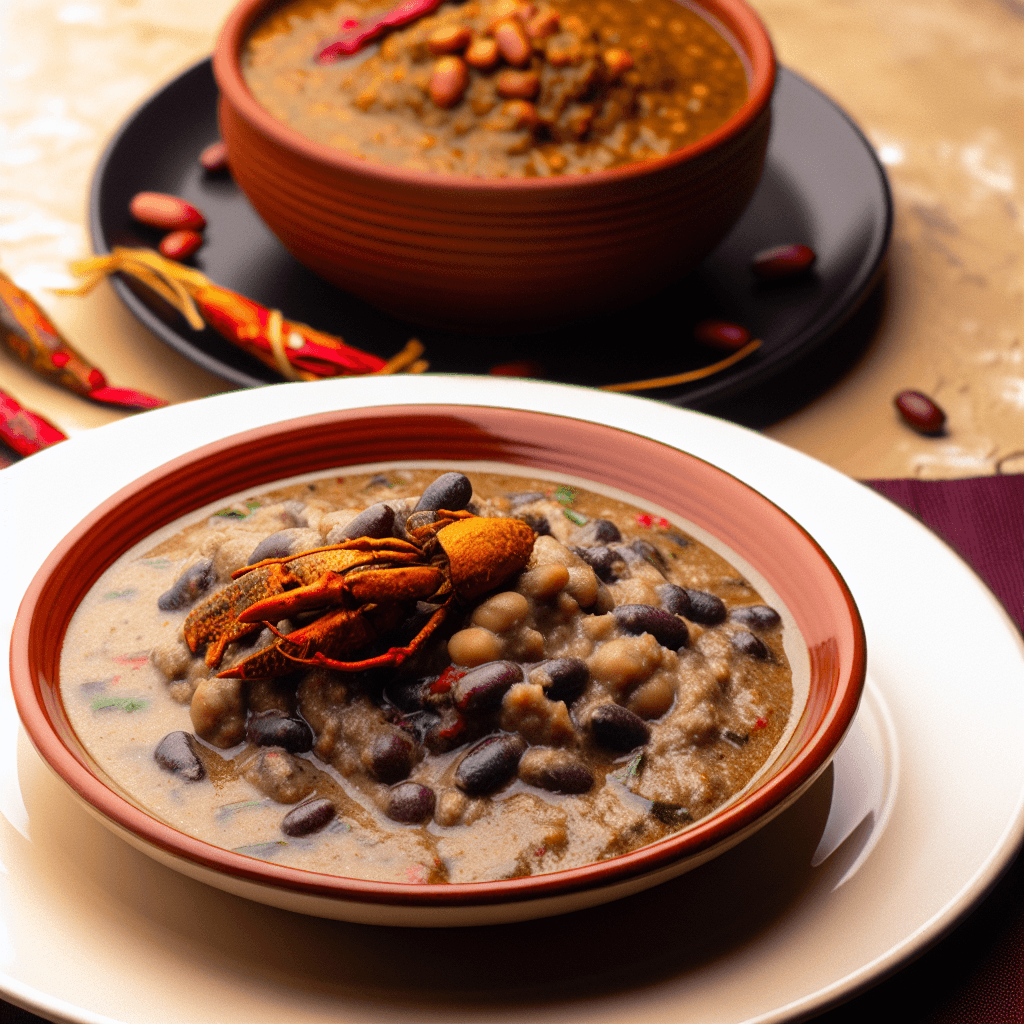
Gbegiri
Smooth Beninese black-eyed pea soup with palm oil and ground crayfish.
About This Recipe
Gbegiri is a velvety, golden-brown bean soup that forms an essential part of the Yoruba and Fon culinary heritage shared across southern Benin and south-western Nigeria. Black-eyed peas are simmered until completely tender, then blended or pounded until they form a luxuriously smooth purée, which is then seasoned with red palm oil, dried crayfish, and ground pepper. The result is a soup with the richness of a bisque and an unmistakably West African depth of flavour. In traditional Yoruba cuisine, gbegiri is rarely eaten alone — it is most celebrated as the foundational layer in a dish called 'abula', where it is ladled into a bowl alongside egusi soup (melon seed stew) and ewedu (jute leaf) soup, the three soups intermingling on a bed of amala (yam flour dough). This three-soup combination is considered the jewel of Yoruba cooking and is central to festive meals, naming ceremonies, and weddings. Across Benin, gbegiri is eaten more straightforwardly as a soup with the local staples — rice, amiwo, or akassa. The technique is straightforward but demands patience: the beans must be cooked far beyond what you might consider 'done' for salads — they need to be so soft that they virtually dissolve when pressed between two fingers. Blending at this stage produces a silky purée with no gritty granules. The palm oil is stirred in at the end (not fried off first) to preserve its fresh, earthy character, and the dried crayfish contributes an almost umami-like sealant of flavour that ties everything together.
Ingredients
Serves 4
- 2 cupsblack-eyed peas, soaked overnight
- 3 tbsppalm oil
- 2 tbspground dried crayfish
- 1 tspground pepper
- 1 tspsalt
Instructions
- 1
Cook the beans
Drain the soaked black-eyed peas and place in a pot with fresh water to cover by 5 cm. Bring to a boil, then reduce heat to a steady simmer. Cook uncovered for 30–40 minutes, skimming any foam that rises to the surface, until the beans are completely tender — they should crush effortlessly between your thumb and forefinger with zero resistance.
Do not add salt at this stage; salting beans too early toughens their skins and dramatically extends the cooking time.
- 2
Reserve liquid and blend
Drain the beans, reserving about 2 cups of the cooking liquid. Transfer beans to a blender in batches and blend on high speed for 60–90 seconds, adding the reserved liquid gradually until you achieve a completely smooth, pourable purée. The texture should resemble a thick cream soup with no granular feel.
For the smoothest result, blend while the beans are still hot — hot beans purée more cleanly than cold ones.
- 3
Return to heat
Pour the purée back into the pot over medium-low heat. Bring to a gentle simmer, stirring frequently to prevent the thick base from scorching. The soup will thicken as it heats; add reserved cooking liquid to adjust to your preferred consistency — traditionally gbegiri is thick enough to coat a spoon generously.
- 4
Season with palm oil and crayfish
Stir in the palm oil, ground crayfish, and pepper. Do not fry or heat the palm oil separately — adding it at this stage preserves its earthy, slightly fruity character. Mix thoroughly until the oil is fully incorporated and the soup takes on a warm amber colour.
- 5
Simmer and adjust
Cook for a further 8–10 minutes over low heat, stirring every couple of minutes. Taste carefully and adjust salt and pepper. The finished soup should be deeply savoury, faintly smoky from the crayfish, and rich from the palm oil, with a consistency similar to a thick lentil soup.
- 6
Serve
Ladle into bowls and serve with amala, white rice, or amiwo. For the traditional abula combination, serve alongside egusi soup and ewedu (jute leaf soup) in the same bowl, allowing the three soups to mingle.
Did you make this?
Rate it and help other cooks find the recipes that actually work.
One tap to sign in, and we'll save the rating you just picked.
Everything you need to plan your week — free
- Meal calendar
- Grocery list
- AI recipe ideas
Cook this hands-free
Get AI meal plans, step-by-step cooking mode, and your saved recipes in the free Bento app.
Pro Tips
- →
A high-speed blender (such as a Vitamix or Blendtec) produces a genuinely silky purée — standard blenders work but may leave faint graininess; blend for longer if needed.
- →
The beans must be cooked until they literally fall apart when pressed — under-cooked beans will never blend smooth, regardless of how long the blender runs.
- →
Ground dried crayfish is sold in West African grocery stores as a powder; if unavailable, substitute 1 tablespoon of fish sauce for a different but comparable umami depth.
- →
Add a small piece of smoked fish (smoked catfish or smoked mackerel, bones removed) to the cooking water for an authentically deep, smoky flavour.
- →
Gbegiri thickens considerably as it cools; always reheat with a splash of water and stir well to restore its velvety texture.
Variations
- •
Abula trio: serve alongside egusi soup (melon seed) and ewedu (jute leaf soup) over amala for the iconic Yoruba festive combination.
- •
Meat-enriched: stir in shredded cooked beef, tripe, or goat meat in the final 5 minutes for a more substantial meal.
- •
Kidney bean version: substitute red kidney beans for an earthier, slightly sweeter flavour — common in Togo and the Volta region.
- •
Vegan gbegiri: omit the crayfish and replace with 1 teaspoon of miso paste plus a pinch of smoked paprika for an umami substitute.
Storage
Gbegiri keeps in the refrigerator in an airtight container for up to 4 days. It freezes exceptionally well for up to 2 months — portion into freezer bags and thaw overnight in the fridge. Reheat in a saucepan over low heat with 3–4 tablespoons of water per serving, stirring constantly until smooth and hot.
History & Origin
Gbegiri is a cornerstone of Yoruba culinary heritage, documented in oral traditions and cookbook literature as a festive soup served at naming ceremonies, weddings, and chieftaincy celebrations for hundreds of years. The dish shares its bean-soup DNA with preparations found across West Africa — from the Nigerian Yoruba belt through southern Benin and into Togo — reflecting the region's ancient trade networks and shared agricultural base. The Fon people of Benin adopted the soup into their own festive culinary repertoire, pairing it with local staples like amiwo and akassa rather than amala.
Frequently Asked Questions
Can I use canned black-eyed peas to save time?
Yes — drain and rinse 2 cans (about 800 g drained weight) and skip the cooking step entirely. Start directly from the blend step. The flavour will be slightly less developed than home-cooked beans, but the soup will still be very good. Reduce blending liquid since canned beans are already softer.
What exactly is ground crayfish and where do I find it?
Ground crayfish is dried African crayfish (a small freshwater crustacean) that is sun-dried and ground into a pungent, umami-rich powder. It is sold in small packets at West African, Caribbean, and some Asian grocery stores. Dried shrimp powder is the closest substitute — use the same quantity. It is not the same as Western dried shrimp flakes, which are larger and less intense.
Why is my gbegiri grainy instead of smooth?
The most common cause is under-cooked beans — if the beans still have any resistance when pressed, blend them back with more hot water and return to the pot to cook longer. The second cause is an under-powered blender; if that's the case, push the purée through a fine-mesh sieve after blending to remove any remaining granules.
Can I skip the palm oil?
You can, but palm oil is what gives gbegiri its characteristic colour, richness, and earthy flavour. If you omit it, add a tablespoon of butter or coconut oil as a partial substitute for richness. The soup will be less traditional but still enjoyable.
What is the difference between gbegiri and bean soup found elsewhere?
Gbegiri is distinguished by its extremely smooth, almost bisque-like texture — unlike rougher bean soups found elsewhere, every trace of texture is removed before seasoning. The combination of palm oil and dried crayfish also gives it a flavour profile that is uniquely West African, quite different from European bean soups or South American frijoles.
Nutrition Facts
Per serving (300g / 10.6 oz) · 4 servings total
Time Summary
Have Questions?
Ask our AI cooking assistant anything about this recipe — substitutions, techniques, scaling.
Chat with AI Chef →More Beninese Recipes
You Might Also Like
Similar dishes from other cuisines around the world.
Free Kitchen Tools
Calculators and converters that pair with this page — no signup needed.
Put This Into a Plan
Schedule it, shop for it, and track what you already have.
Read Next
Longer reads that go deeper on the ideas behind this dish.
Community
Join the conversation
Sign in to leave a comment and save your favourite recipes