
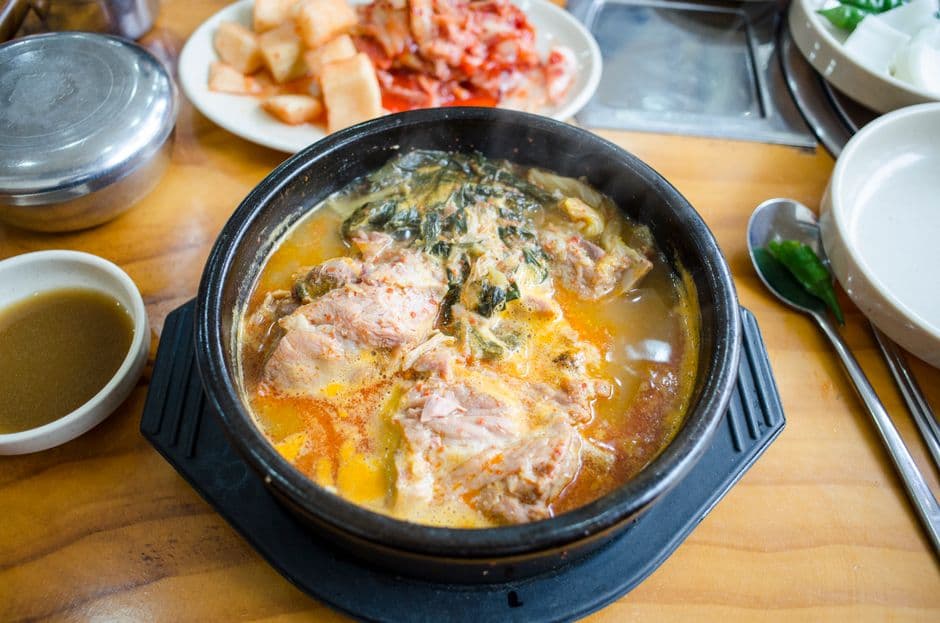
Kimchi Jjigae Stew
Hearty Korean fermented kimchi stew with pork.
About This Recipe
A comforting bubbling stew made with aged kimchi, pork belly, and tofu. This kimchi jjigae stew is grounded in Korean banchan culture and the deep umami of fermented seasonings. Served at the table it fills the room — steam rising, deep savory notes, the kind of plate people lean over. Home cooks return to it because the technique is forgiving once the order of operations clicks: build aromatics first, season in layers, and let time do the heavy lifting. The result lands somewhere between everyday and special — humble enough for a weeknight, generous enough for company.
Ingredients
Serves 4
- 300 gaged kimchi, chopped
- 200 gpork belly, sliced
- 200 gsoft tofu
- 500 mlwater or anchovy broth
Instructions
- 1
Sauté
Sauté pork belly and kimchi for 5 minutes.
- 2
Simmer
Add broth and simmer 20 minutes.
- 3
Add tofu
Slide in tofu, simmer 3 more minutes. Serve bubbling hot.
Did you make this?
Rate it and help other cooks find the recipes that actually work.
One tap to sign in, and we'll save the rating you just picked.
Everything you need to plan your week — free
- Meal calendar
- Grocery list
- AI recipe ideas
Track what you eat
Snap your meal to log calories and macros, run fasting timers and track water in the free SnapCal app.
Pro Tips
- →
Use well-fermented (sour) kimchi for best flavor.
- →
Taste and adjust salt at the very end — flavors concentrate as liquids reduce, and a final pinch of flaky salt sharpens the whole dish.
- →
Mise en place pays for itself: chop, measure and pre-mix everything before the heat goes on, especially for any step that moves fast.
- →
Read the recipe through once before starting — knowing what's coming prevents the small timing mistakes that compound into bigger ones.
Variations
- •
Use canned tuna instead of pork for a lighter version.
- •
Vegetarian: swap the protein for roasted king oyster mushrooms, smoked tofu or cooked chickpeas — adjust seasoning slightly upward to compensate.
- •
Spicier: add a finely chopped fresh chile or a teaspoon of crushed Aleppo/Urfa pepper to the aromatics for warm, layered heat instead of a single sharp hit.
- •
Lighter: reduce the fat by a third and finish with a squeeze of citrus or a splash of vinegar to keep brightness without losing body.
Storage
Store in fridge up to 3 days.
History & Origin
Kimchi Jjigae Stew is grounded in Korean banchan culture and the deep umami of fermented seasonings. Regional variations are the rule rather than the exception — neighboring villages, families and even individual cooks adapt the dish to what's in the pantry and what's in season, which is why no two versions taste exactly alike and why the recipe has stayed alive for so long.
Frequently Asked Questions
Can I make this ahead of time?
Yes — most of the components can be prepared up to a day in advance and refrigerated separately. Reheat gently and assemble just before serving so textures stay distinct.
What can I substitute if I don't have all the ingredients?
Stay close to the role each ingredient plays: swap aromatics for similar ones (shallot for onion, lime for lemon), and keep the fat-acid-salt balance intact. Spice blends can usually be approximated with what's in the cupboard.
How do I know it's authentic?
Authenticity sits on a spectrum — what matters more is honoring the technique and balance of flavors. If the dish tastes harmonious and respects how cooks in its home region would build it, you're on solid ground.
Why didn't mine turn out as expected?
The two most common issues are under-seasoning and rushing the heat. Taste as you go, season in layers, and give aromatics and proteins the time they need to develop color and depth before moving on.
Nutrition Facts
Per serving (400g / 14.1 oz) · 4 servings total
Time Summary
Have Questions?
Ask our AI cooking assistant anything about this recipe — substitutions, techniques, scaling.
Chat with AI Chef →More Korean Recipes
You Might Also Like
Similar dishes from other cuisines around the world.
Browse by Ingredient
More recipes built around the same core ingredients.
Free Kitchen Tools
Calculators and converters that pair with this page — no signup needed.
Put This Into a Plan
Schedule it, shop for it, and track what you already have.
Read Next
Longer reads that go deeper on the ideas behind this dish.
Community
Join the conversation
Sign in to leave a comment and save your favourite recipes