
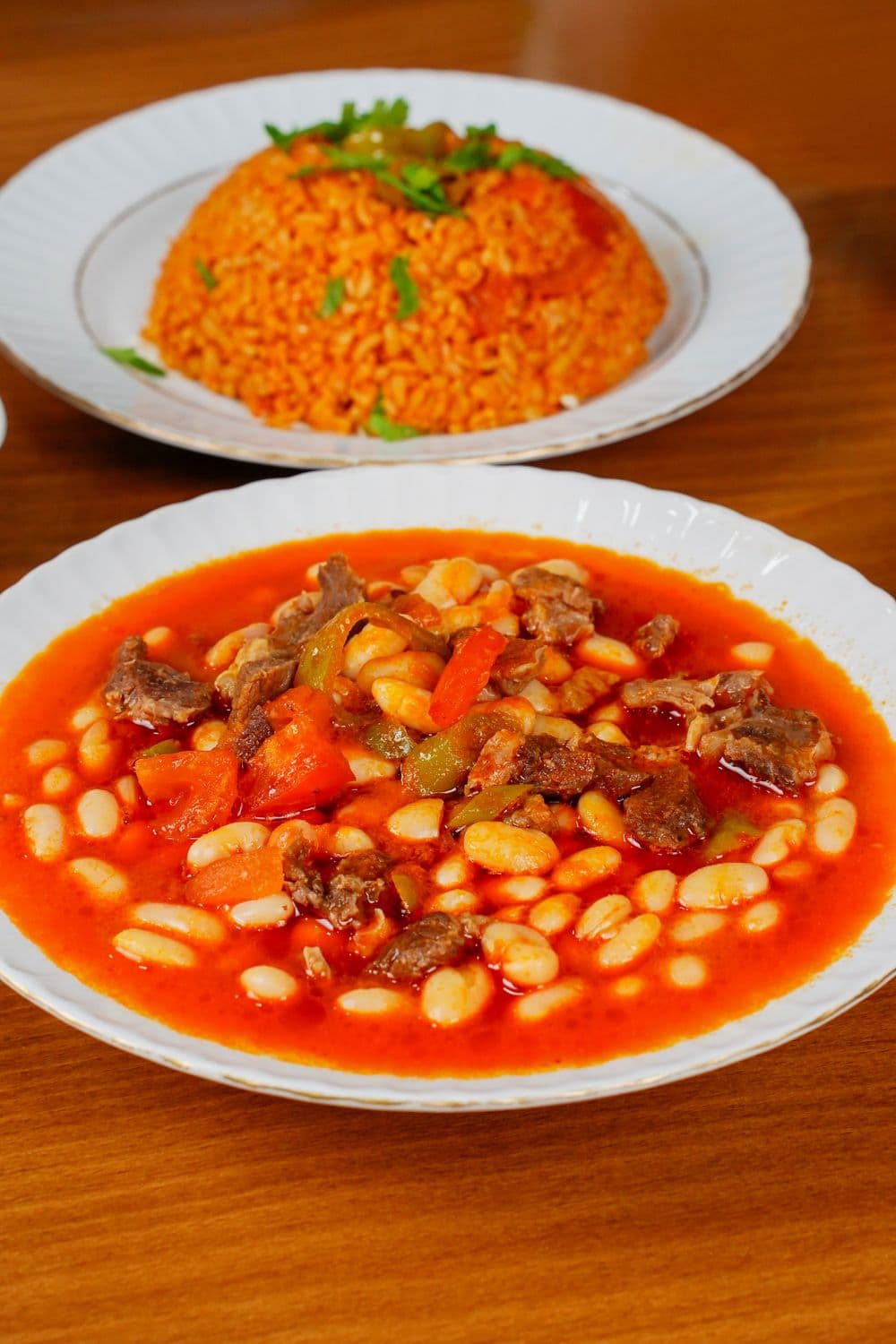
Kuru Fasulye (Turkish White Bean Stew)
Hearty Turkish white bean stew cooked with tomato, onion and lamb — a national comfort food served with rice pilav and pickles.
About This Recipe
Kuru fasulye, meaning 'dried beans', is Turkey's unofficial national dish. Large white beans are slow-cooked with onion, tomato, tomato paste and meat until completely tender in a rich, savoury sauce. It is always served with white rice pilav and frequently with a tart salad of raw onion, sumac and parsley, plus pickled chillies or turnip pickle. The dish appears on menus of lokanta restaurants and is carried in thermoses by school children. Every Turkish family has a version, often using their grandmother's tomato paste or village beans.
Ingredients
Serves 6
- 400 gdried white beans (cannellini or borlotti)
- 300 glamb shoulder or beef, diced
- 1 largeonion, finely chopped
- 3garlic cloves, minced
- 400 gcanned chopped tomatoes
- 2 tbsptomato paste
- 3 tbspolive oil or butter
- 1 litrehot water or meat stock
- to tastesalt and black pepper
- 1 tsppul biber (Aleppo pepper flakes)
- 1 tspdried mint
Instructions
- 1
Soak beans
Cover beans with cold water and soak overnight (at least 8 hours). Drain and rinse.
- 2
Parboil beans
Cover soaked beans with fresh cold water and boil for 20 minutes. Drain and set aside.
- 3
Brown meat
Heat oil in a heavy pot over high heat. Brown meat in batches until coloured. Remove and set aside.
- 4
Sauté aromatics
Sauté onion until golden, about 10 minutes. Add garlic and tomato paste, cook 2 minutes more.
- 5
Build the stew
Return meat to the pot. Add chopped tomatoes, parboiled beans, stock, pul biber, salt and pepper. Bring to a boil, then reduce to a low simmer.
- 6
Slow cook
Cover and simmer for 60–80 minutes until beans are completely tender and broth has thickened. Stir in dried mint in the last 5 minutes.
- 7
Serve
Ladle into bowls alongside white rice pilav and raw onion sprinkled with sumac and parsley.
Did you make this?
Rate it and help other cooks find the recipes that actually work.
One tap to sign in, and we'll save the rating you just picked.
Everything you need to plan your week — free
- Meal calendar
- Grocery list
- AI recipe ideas
Cook this hands-free
Get AI meal plans, step-by-step cooking mode, and your saved recipes in the free Bento app.
Pro Tips
- →
Don't add salt until the beans are fully tender — salt added too early can make bean skins tough.
- →
A pressure cooker reduces the cooking time to 30–40 minutes at full pressure.
- →
The beans should absorb most of the liquid; if too soupy, simmer uncovered for 10 minutes.
- →
Taste and adjust salt at the very end — flavors concentrate as liquids reduce, and a final pinch of flaky salt sharpens the whole dish.
Variations
- •
Vegetarian kuru fasulye: omit meat and use vegetable stock for an equally satisfying plant-based version.
- •
Pastırma kuru fasulye: add 100 g thin-sliced pastırma (cured beef) for deep umami flavour.
- •
Spicier: add a finely chopped fresh chile or a teaspoon of crushed Aleppo/Urfa pepper to the aromatics for warm, layered heat instead of a single sharp hit.
- •
Lighter: reduce the fat by a third and finish with a squeeze of citrus or a splash of vinegar to keep brightness without losing body.
Storage
Excellent the next day — flavour improves overnight. Keeps in the fridge for 4 days or freezes well for up to 3 months.
History & Origin
Beans arrived in Ottoman cuisine after being brought from the Americas in the 16th century. Within a century, beans had become a staple crop across Anatolia. In the early Turkish Republic, kuru fasulye with pilav became the canonical dish of military canteens, schools and worker kitchens — cementing its status as national comfort food.
Frequently Asked Questions
Can I use canned beans?
Yes — drain and rinse 2 cans (800 g) of white beans. Skip the soaking and parboiling and reduce total cooking time to 30 minutes.
How do I prevent beans from becoming mushy?
Don't over-soak, don't cook at a rolling boil, and don't add acidic tomatoes until the beans are nearly tender.
What is the best cut of meat?
Lamb shoulder is traditional. Beef chuck or shin works equally well. Bone-in pieces add extra flavour to the broth.
Can I make this ahead of time?
Yes — most of the components can be prepared up to a day in advance and refrigerated separately. Reheat gently and assemble just before serving so textures stay distinct.
Nutrition Facts
Per serving · 6 servings total
Time Summary
Have Questions?
Ask our AI cooking assistant anything about this recipe — substitutions, techniques, scaling.
Chat with AI Chef →Featured in Guides
This recipe is featured in the following curated guides:
More Turkish Recipes
You Might Also Like
Similar dishes from other cuisines around the world.
Browse by Ingredient
More recipes built around the same core ingredients.
Free Kitchen Tools
Calculators and converters that pair with this page — no signup needed.
Put This Into a Plan
Schedule it, shop for it, and track what you already have.
Read Next
Longer reads that go deeper on the ideas behind this dish.
Community
Join the conversation
Sign in to leave a comment and save your favourite recipes