
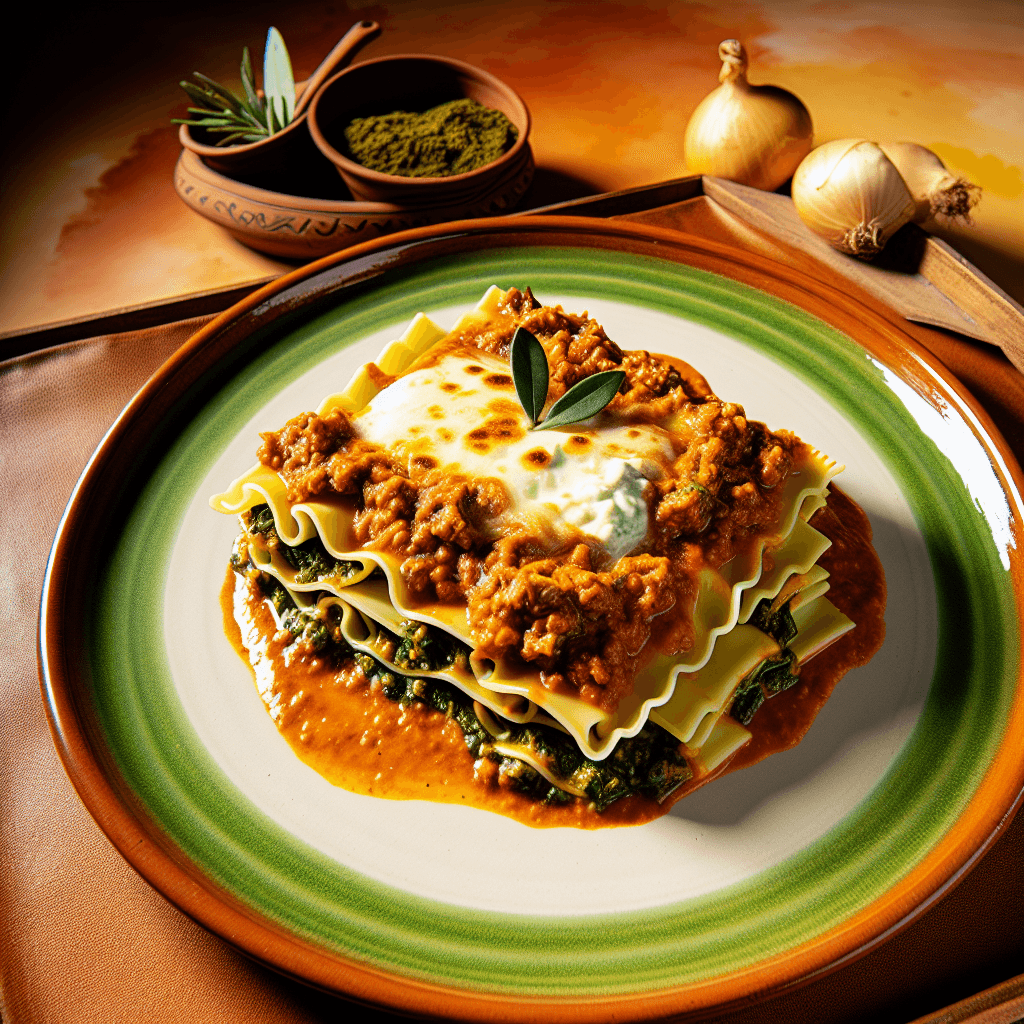
Lasagne alla Bolognese (Authentic Baked Lasagne)
The original layered pasta from Bologna — slow-cooked beef ragù, creamy béchamel and wide egg pasta sheets baked until golden and bubbling.
About This Recipe
Authentic lasagne alla Bolognese bears little resemblance to the heavy, overly tomato-sauced versions found outside Italy. The real Bolognese ragù is slow-cooked for at least 2–3 hours with a small amount of tomato paste (not crushed tomatoes), wine, milk or cream and a soffritto of carrot, celery and onion. The besciamella (béchamel) is light, just enough to bind and moisten. The pasta is ideally fresh egg pasta (the green spinach version, lasagne verdi, is traditional in Bologna). The result is a refined, harmonious dish where no single element dominates. The Bolognese term 'ragù' refers specifically to this slow-cooked meat sauce, not a generic tomato-meat sauce.
Ingredients
Serves 8
- 300 gdried lasagne sheets
- 500 gbeef mince (or half beef, half pork)
- 100 gpancetta, finely diced
- 1 mediumcarrot, finely diced
- 2celery stalks, finely diced
- 1onion, finely diced
- 150 mldry white or red wine
- 150 mlwhole milk
- 2 tbsptomato paste
- 200 mlbeef stock
- 3 tbspolive oil
- 60 gbutter for béchamel
- 60 gplain flour for béchamel
- 800 mlwhole milk for béchamel
- pinchnutmeg
- 100 gParmesan, finely grated
- to tastesalt and black pepper
Instructions
- 1
Make the ragù
Sauté pancetta in olive oil until it renders its fat. Add carrot, celery and onion, cook gently for 10 minutes until soft. Add mince and cook, breaking it up, until browned. Add wine and simmer until evaporated. Add tomato paste, stock and milk. Season, then simmer over the lowest heat, partially covered, for 2–3 hours, adding splashes of water if it dries out. It should be rich and barely moist.
- 2
Make béchamel
Melt butter over medium heat, add flour and stir for 2 minutes. Gradually whisk in warm milk until smooth. Simmer 5 minutes, stirring, until thick. Season with salt, pepper and nutmeg.
- 3
Assemble
Preheat oven to 180°C (350°F). Spread a thin layer of béchamel on the base of a baking dish. Layer: pasta sheets, ragù, béchamel, Parmesan. Repeat for 4–5 layers, finishing with béchamel and a generous layer of Parmesan.
- 4
Bake
Cover with foil and bake for 30 minutes. Remove foil and bake for a further 20 minutes until the top is golden and bubbling.
- 5
Rest and serve
Let the lasagne rest for 10–15 minutes before cutting — this helps it hold its shape when served.
Did you make this?
Rate it and help other cooks find the recipes that actually work.
One tap to sign in, and we'll save the rating you just picked.
Everything you need to plan your week — free
- Meal calendar
- Grocery list
- AI recipe ideas
Cook this hands-free
Get AI meal plans, step-by-step cooking mode, and your saved recipes in the free Bento app.
Pro Tips
- →
The ragù must cook slowly — rushing it produces a thin, acidic sauce rather than a rich, complex one.
- →
Let the assembled lasagne rest before baking if time allows — it helps the layers firm up.
- →
Don't over-sauce: authentic Bolognese lasagne is drier than you might expect.
- →
Taste and adjust salt at the very end — flavors concentrate as liquids reduce, and a final pinch of flaky salt sharpens the whole dish.
Variations
- •
Lasagne verdi: use green spinach pasta sheets for the traditional Bolognese version.
- •
Vegetarian lasagne: replace ragù with a rich mushroom and lentil sauce.
- •
Spicier: add a finely chopped fresh chile or a teaspoon of crushed Aleppo/Urfa pepper to the aromatics for warm, layered heat instead of a single sharp hit.
- •
Lighter: reduce the fat by a third and finish with a squeeze of citrus or a splash of vinegar to keep brightness without losing body.
Storage
Keeps in the fridge for 4 days. Freezes beautifully — slice into portions before freezing.
History & Origin
Lasagne is one of Italy's oldest pasta dishes, with layered pasta recorded in medieval Italian manuscripts. The Bolognese version became codified in the 20th century and the recipe was deposited with the Bologna Chamber of Commerce in 1982 to protect its authenticity.
Frequently Asked Questions
Do I need to pre-cook lasagne sheets?
No-boil sheets can be used but the result is denser. If using regular dried sheets, parboil them for 4 minutes and drain before layering.
Can I make this ahead?
Yes — assemble fully, cover and refrigerate overnight. Add 15 minutes to the baking time.
Can I make this ahead of time?
Yes — most of the components can be prepared up to a day in advance and refrigerated separately. Reheat gently and assemble just before serving so textures stay distinct.
What can I substitute if I don't have all the ingredients?
Stay close to the role each ingredient plays: swap aromatics for similar ones (shallot for onion, lime for lemon), and keep the fat-acid-salt balance intact. Spice blends can usually be approximated with what's in the cupboard.
Nutrition Facts
Per serving · 8 servings total
Time Summary
Have Questions?
Ask our AI cooking assistant anything about this recipe — substitutions, techniques, scaling.
Chat with AI Chef →Featured in Guides
This recipe is featured in the following curated guides:
More Italian Recipes
You Might Also Like
Similar dishes from other cuisines around the world.
Browse by Ingredient
More recipes built around the same core ingredients.
Free Kitchen Tools
Calculators and converters that pair with this page — no signup needed.
Put This Into a Plan
Schedule it, shop for it, and track what you already have.
Read Next
Longer reads that go deeper on the ideas behind this dish.
Community
Join the conversation
Sign in to leave a comment and save your favourite recipes