
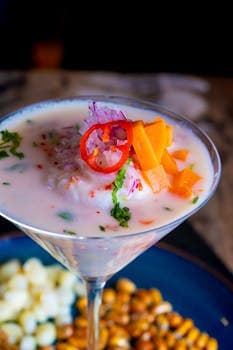
Sea Bass Ceviche with Leche de Tigre — Acurio-Inspired
Diced sea bass in a tiger's milk lime cure, with sweet potato, choclo corn and crispy cancha — Peru's national dish.
⭐Inspired by Gastón Acurio · 🇵🇪 PeruAbout This Recipe
This dish is inspired by Chef Gastón Acurio's career-long advocacy for Peruvian cuisine and his pioneering La Mar cebicherías across the Americas, Europe and Asia. Ceviche is Peru's national dish — declared so by the Peruvian government in 2008 — and the leche de tigre ('tiger's milk') is its essential element: the spicy, citrus-acid cure that transforms raw fish into something at once fresh and deeply seasoned. The accompaniments — sweet potato, choclo corn, crispy toasted corn (cancha) and red onion — are non-negotiable and create the classic Peruvian ceviche plate. This is our original recipe in the tradition Acurio has done so much to globalise.
Ingredients
Serves 4
- 600 gsea bass fillet(sushi-grade, skin off, cut into 2cm dice)
- 12fresh limes(Peruvian or key limes preferred)
- 1red onion(very thinly sliced)
- 1rocoto chili(or red habanero, seeded and finely minced)
- 1 tspaji amarillo paste(Peruvian yellow chili paste)
- 1 smallgarlic clove(minced into paste)
- 2 tbspfresh coriander (cilantro)(leaves and tender stems, chopped)
- 1 stickcelery(finely diced)
- 2sweet potatoes(for serving)
- 1ear of choclo (Peruvian large-kernel corn)(or regular sweetcorn, husked)
- 60 gcancha (toasted Peruvian corn)(or salted corn nuts, for garnish)
- salt(to taste)
Instructions
- 1
Prepare the accompaniments
Boil the sweet potatoes whole until completely tender, 20–25 minutes. Boil the choclo / corn for 12 minutes. Cool both, peel the sweet potatoes and slice into 1cm rounds. Cut the corn into wheels.
These accompaniments are non-negotiable — they balance the acid of the leche de tigre.
- 2
Soak the onion
Soak the sliced red onion in ice water for 10 minutes — this softens its sharpness and makes it crisp. Drain and pat dry.
- 3
Make the leche de tigre
In a bowl, whisk together the juice of 10 limes, the rocoto, aji amarillo paste, garlic, half the coriander, the celery and 1 teaspoon salt. Taste — it should be aggressively sour, slightly hot and pleasantly aromatic. This is your tiger's milk.
The salt, acid and chili must all be assertive — they will be diluted by the fish.
- 4
Cure the fish
5 minutes before serving, add the diced fish to the leche de tigre and stir gently. Let cure for exactly 3–5 minutes — the fish should turn opaque on the outside but remain slightly translucent in the centre. Over-curing makes the fish chalky.
- 5
Plate Peruvian-style
Spoon the ceviche and a generous amount of leche de tigre into shallow bowls. Arrange sweet potato rounds and corn wheels alongside. Top the fish with the drained red onion and the remaining coriander. Scatter cancha over the top. Add the juice of the remaining 2 limes if you want extra acidity. Serve immediately.
Did you make this?
Rate it and help other cooks find the recipes that actually work.
One tap to sign in, and we'll save the rating you just picked.
Everything you need to plan your week — free
- Meal calendar
- Grocery list
- AI recipe ideas
Cook this hands-free
Get AI meal plans, step-by-step cooking mode, and your saved recipes in the free Bento app.
Pro Tips
- →
The fish must be sushi-grade — buy from a fishmonger, never supermarket fish.
- →
Cure for exactly 3–5 minutes — over-curing makes the fish chalky and tough.
- →
Drink the leftover leche de tigre in a small glass — Peruvians say it's the world's best hangover cure.
Variations
- •
Mixed Seafood Ceviche: add diced raw shrimp, squid and octopus alongside the fish.
- •
Tiradito: instead of dicing the fish, slice it sashimi-thin and dress with leche de tigre — a Nikkei (Japanese-Peruvian) variation.
- •
Vegan Ceviche: substitute hearts of palm or roasted oyster mushrooms for the fish.
Storage
Ceviche must be eaten immediately — it cannot be stored. The leche de tigre alone keeps for 24 hours.
History & Origin
Ceviche has roots stretching back at least 2,000 years on the Peruvian coast, where ancient Moche civilisations cured fish in fermented banana passion fruit juice. The Spanish brought citrus, Japanese immigrants in the 19th century brought sashimi knife technique, and the result is the modern Peruvian ceviche. Gastón Acurio's La Mar restaurants brought this dish to a global audience starting in the late 2000s.
Frequently Asked Questions
Why is it called 'tiger's milk'?
Leche de tigre is the milky-looking, spicy citrus liquid the fish cures in. The name refers both to its appearance and to its reputation as a powerful aphrodisiac and hangover cure in Peruvian folklore.
Is ceviche actually raw?
Yes — the fish is technically raw, but the citric acid in lime juice 'denatures' the proteins, producing a similar texture to lightly cooked fish. The cure must be brief (3–5 minutes) so the fish stays tender.
How is Peruvian ceviche different from Mexican ceviche?
Peruvian ceviche cures the fish for only 3-5 minutes (Mexican versions often cure for 30+ minutes producing chalky fish), uses Peruvian aji peppers (not jalapeños), and is always served immediately with sweet potato, choclo corn and cancha — non-negotiable accompaniments unique to Peru.
What is the leche de tigre meant to taste like?
Aggressively sour, slightly hot, deeply savoury and aromatic — the salt and acid must be assertive because they will be diluted by the fish. Many Peruvians drink the leftover leche de tigre as a small chaser; it's said to be a hangover cure.
Can I make ceviche without fresh limes?
Bottled lime juice loses most of its character within hours of bottling. If fresh limes are unavailable, use the freshest lemon you can find — purists object, but it's better than stale bottled lime.
Nutrition Facts
Per serving (320g / 11.3 oz) · 4 servings total
Time Summary
Have Questions?
Ask our AI cooking assistant anything about this recipe — substitutions, techniques, scaling.
Chat with AI Chef →Featured in Guides
This recipe is featured in the following curated guides:
More Peruvian Recipes
You Might Also Like
Similar dishes from other cuisines around the world.
Browse by Ingredient
More recipes built around the same core ingredients.
Free Kitchen Tools
Calculators and converters that pair with this page — no signup needed.
Put This Into a Plan
Schedule it, shop for it, and track what you already have.
Read Next
Longer reads that go deeper on the ideas behind this dish.
Community
Join the conversation
Sign in to leave a comment and save your favourite recipes