
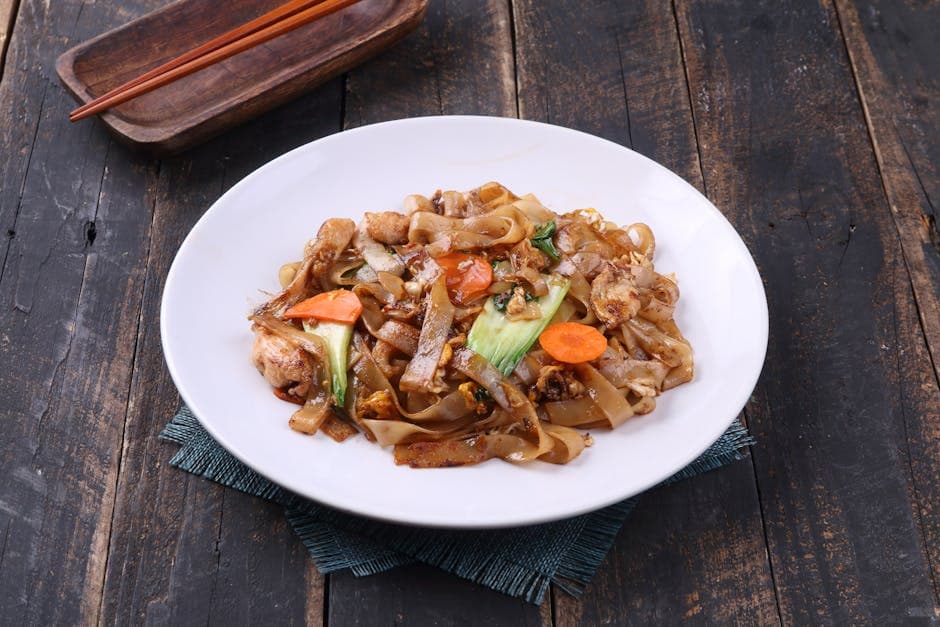
Penang Char Koay Teow (Stir-Fried Flat Noodles)
Iconic Penang stir-fried flat rice noodles with shrimp, bean sprouts, and egg in a savory soy sauce.
About This Recipe
Char koay teow is Penang's most famous noodle dish and is often cited as one of the best street foods in the world. Flat, silky rice noodles are stir-fried over extremely high heat with shrimp, cockles, bean sprouts, Chinese chives, and eggs, all coated in a dark soy-and-lard-based sauce that's savory without being heavy. The result is deeply aromatic, with a balance of wok-char flavor against fresh, crisp vegetables. The key is high heat, proper technique, and generous use of lard — though modern versions use oil. Rooted in the everyday cooking of Malaysian kitchens, Penang Char Koay Teow (Stir-Fried Flat Noodles) balances technique and tradition: the flat rice noodles (koay teow) is treated with care, drawing on time-honoured ratios that locals have refined across generations. The dish carries an unmistakable sensory signature — aromas that fill the kitchen as it cooks, layered textures that reveal themselves bite by bite, and a depth of flavour that comes from patient seasoning rather than shortcuts. Whether served as a weeknight lunch or as the centrepiece of a celebratory table, it reflects a regional pantry where local produce, seasoning habits and cooking vessels shape the final result. Home cooks who make this dish often note how forgiving it is once the core method is understood, and how a few small choices — the freshness of the flat rice noodles (koay teow), the order of additions, the resting time at the end — separate a good version from a memorable one. This recipe walks through those choices so the dish arrives with the character it has on its home turf.
Ingredients
Serves 2
- 300 gflat rice noodles (koay teow)
- 150 gshrimp, peeled
- 100 gcockles (kerang), shelled
- 2 largeeggs
- 100 gbean sprouts
- 2 stalkschinese chives (gau choy), cut into 3cm pieces
- 3 tbspdark soy sauce (kicap pekat)
- 3 tbsplard or vegetable oil
- 4 clovesgarlic, minced
Instructions
- 1
Prep ingredients
Have all ingredients prepped and within arm's reach. High-heat wok cooking happens fast.
- 2
Heat wok
Heat wok on the highest heat until smoking. Add lard and let it shimmer.
- 3
Stir-fry base
Add garlic and fry for 10 seconds. Add shrimp and cockles, stir-fry until shrimp is just pink, 1–2 minutes.
- 4
Add noodles and sauce
Add noodles to the wok, breaking up any clumps. Pour dark soy sauce evenly. Toss constantly for 2 minutes until noodles are coated and heated.
- 5
Finish with egg and vegetables
Push noodles to the side. Crack eggs into the center and scramble. When half-set, mix into noodles. Add bean sprouts and chinese chives. Toss for 1 minute. Serve immediately.
Did you make this?
Rate it and help other cooks find the recipes that actually work.
One tap to sign in, and we'll save the rating you just picked.
Everything you need to plan your week — free
- Meal calendar
- Grocery list
- AI recipe ideas
Track what you eat
Snap your meal to log calories and macros, run fasting timers and track water in the free SnapCal app.
Pro Tips
- →
The wok must be smoking hot — low heat will make the noodles soggy.
- →
Dark soy sauce (kicap pekat) is non-negotiable; it's not the same as regular soy sauce.
- →
Don't overcook the seafood; 1–2 minutes is enough.
- →
Source the freshest flat rice noodles (koay teow) you can find — it is the flavour anchor of the dish.
- →
Season in layers as you go; tasting at each stage prevents a flat or over-salted final result.
Variations
- •
Add squid or scallops for variety
- •
Make vegetarian with extra mushrooms and tofu
- •
Top with crispy fried shallots
- •
Vegetarian: replace the main protein with mushrooms, paneer, tofu or hearty beans for a meat-free version.
- •
Spicier: add fresh chilli, a chilli paste or a pinch of cayenne with the aromatics for a warmer profile.
Storage
Best eaten immediately. Reheating in a hot wok is possible but texture won't be the same.
History & Origin
Char koay teow is one of Penang's most celebrated dishes, sold at hawker stalls across the island. It's considered essential Penang food culture and often appears on lists of best Asian street foods.
Frequently Asked Questions
What are cockles?
Cockles are small shellfish similar to clams. Find them fresh or frozen in Asian markets. If unavailable, use mussels or extra shrimp.
Why is lard important?
Lard has a higher smoke point and adds authentic richness. Modern versions use vegetable oil, which is fine, but traditional char koay teow uses lard.
Can I make Penang Char Koay Teow (Stir-Fried Flat Noodles) ahead of time?
Yes — most components hold well in the fridge for a day or two. Reheat gently with a splash of liquid to bring it back to life.
What can I substitute for flat rice noodles (koay teow)?
If flat rice noodles (koay teow) is hard to find, the closest substitutes share its texture and water content. Adjust seasoning slightly since substitutes often carry less character of their own.
Nutrition Facts
Per serving · 2 servings total
Time Summary
Have Questions?
Ask our AI cooking assistant anything about this recipe — substitutions, techniques, scaling.
Chat with AI Chef →Featured in Guides
This recipe is featured in the following curated guides:
More Malaysian Recipes
You Might Also Like
Similar dishes from other cuisines around the world.
Browse by Ingredient
More recipes built around the same core ingredients.
Free Kitchen Tools
Calculators and converters that pair with this page — no signup needed.
Put This Into a Plan
Schedule it, shop for it, and track what you already have.
Read Next
Longer reads that go deeper on the ideas behind this dish.
Community
Join the conversation
Sign in to leave a comment and save your favourite recipes