
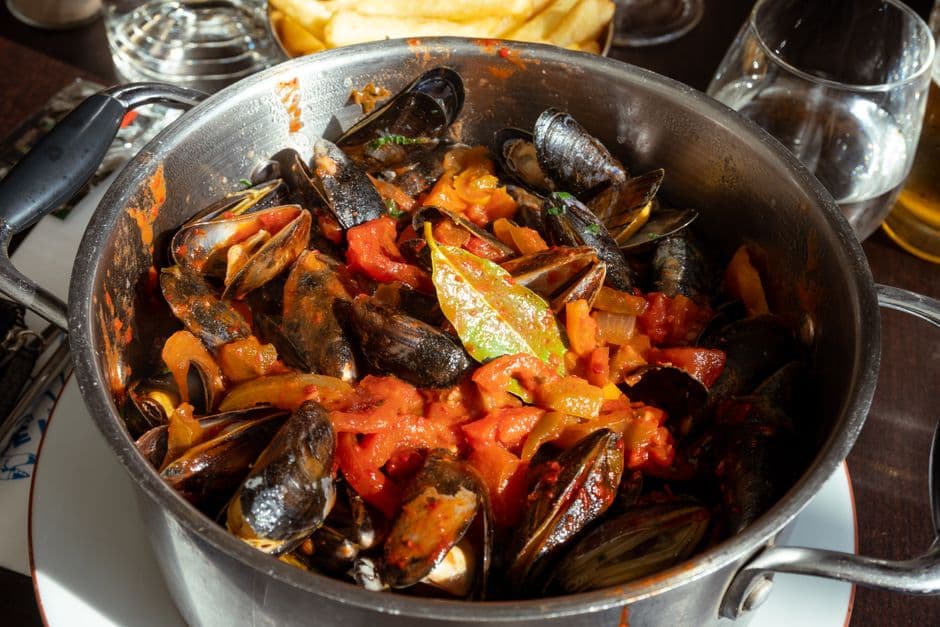
Moules-Frites
Plump steamed mussels in a fragrant white wine and shallot broth, served with a mountain of golden Belgian fries. Belgium's most iconic café dish.
About This Recipe
Moules-frites is the unofficial national dish of Belgium, enjoyed from seaside taverns in Ostend to bustling Brussels brasseries. The mussels, typically sourced from Zeeland in the Netherlands, are steamed in a classic marinier broth of white wine, shallots, celery, and parsley until they burst open, releasing their briny juices into the sauce. What truly sets the Belgian version apart are the frites—double-fried in beef tallow for an incomparable crunch and usually served with mayonnaise. The tradition of eating moules-frites dates to the early 20th century when mussels were an affordable working-class staple across coastal Belgium.
Ingredients
Serves 2
- 2 kgfresh mussels, scrubbed and debearded
- 3shallots, finely diced
- 3 stalkscelery, finely sliced
- 3 clovesgarlic, minced
- 200 mldry white wine
- 50 gunsalted butter
- 1 small handfulflat-leaf parsley, roughly chopped
- 2bay leaves
- 800 gfloury potatoes (e.g. Bintje or Maris Piper)
- 1 litresunflower or beef tallow oil, for frying
- 1 tspsea salt
- 200 ggood-quality mayonnaise, to serve
Instructions
- 1
Prepare the frites (first fry)
Peel the potatoes and cut into 1 cm thick batons. Rinse in cold water and dry thoroughly. Heat oil to 150°C and fry the potato batons in batches for 5–6 minutes until pale and cooked through but not colored. Remove, drain, and allow to cool completely on a rack.
- 2
Clean and check the mussels
Scrub the mussels under cold running water, removing beards. Discard any mussels with cracked shells or that remain open when tapped sharply. Set aside in a colander.
- 3
Make the broth
In a very large pot with a tight-fitting lid, melt the butter over medium heat. Add the shallots, celery, and garlic and sweat for 4–5 minutes until softened. Add the white wine and bay leaves and bring to a rolling boil.
- 4
Steam the mussels
Add all the mussels to the pot, cover immediately, and cook over high heat for 4–5 minutes, shaking the pot once or twice. Remove the lid—all shells should be open. Discard any that remain closed. Stir in the parsley and season to taste.
- 5
Second fry and serve
While the mussels are steaming, increase the frying oil to 180°C and fry the blanched potato batons for 2–3 minutes until deeply golden and crisp. Drain and season with sea salt immediately. Serve the mussels in their pot alongside the hot frites and plenty of mayonnaise.
Did you make this?
Rate it and help other cooks find the recipes that actually work.
One tap to sign in, and we'll save the rating you just picked.
Everything you need to plan your week — free
- Meal calendar
- Grocery list
- AI recipe ideas
Track what you eat
Snap your meal to log calories and macros, run fasting timers and track water in the free SnapCal app.
Pro Tips
- →
Only buy mussels the day you plan to cook them, and keep them refrigerated until needed.
- →
The double-frying method is essential for truly crispy Belgian frites.
- →
Don't overcook the mussels—they only need a few minutes once the pot is covered.
- →
Use a crusty baguette to mop up the delicious broth.
Variations
- •
Moules à la crème: stir 100 ml of heavy cream into the broth at the end.
- •
Moules provençale: add diced tomatoes and fresh basil to the broth.
- •
Replace white wine with Belgian white beer (witbier) for a local twist.
- •
Vegetarian: swap the protein for roasted king oyster mushrooms, smoked tofu or cooked chickpeas — adjust seasoning slightly upward to compensate.
Storage
Mussels must be eaten immediately after cooking. Leftover cooked mussels can be removed from shells, stored in their broth in the refrigerator for 1 day, and used in pasta or soup.
History & Origin
The combination of mussels and fries became popular in Belgium in the early 20th century. Street vendors and seaside cafés popularized the pairing, which has since become an enduring symbol of Belgian culinary culture, celebrated each August at the Moules-Frites festival in Liège.
Frequently Asked Questions
How do I know if mussels are fresh?
Fresh mussels should smell like the ocean, not fishy. Shells should be tightly closed or close when tapped. Discard any with cracked shells or that stay open.
Can I use frozen mussels?
Fresh mussels are strongly preferred. Frozen mussels (usually pre-cooked) can work in a pinch but won't release the same flavorful juices into the broth.
Can I make this ahead of time?
Yes — most of the components can be prepared up to a day in advance and refrigerated separately. Reheat gently and assemble just before serving so textures stay distinct.
What can I substitute if I don't have all the ingredients?
Stay close to the role each ingredient plays: swap aromatics for similar ones (shallot for onion, lime for lemon), and keep the fat-acid-salt balance intact. Spice blends can usually be approximated with what's in the cupboard.
Nutrition Facts
Per serving (900g / 31.7 oz) · 2 servings total
Time Summary
Have Questions?
Ask our AI cooking assistant anything about this recipe — substitutions, techniques, scaling.
Chat with AI Chef →Featured in Guides
This recipe is featured in the following curated guides:
More Belgian Recipes
You Might Also Like
Similar dishes from other cuisines around the world.
Free Kitchen Tools
Calculators and converters that pair with this page — no signup needed.
Put This Into a Plan
Schedule it, shop for it, and track what you already have.
Read Next
Longer reads that go deeper on the ideas behind this dish.
Community
Join the conversation
Sign in to leave a comment and save your favourite recipes