
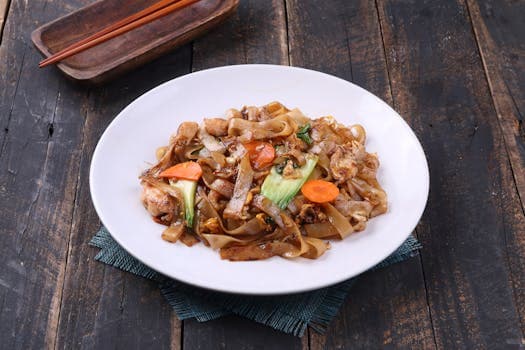
Pad See Ew — Jet Tila-Inspired
Wide rice noodles stir-fried with Chinese broccoli, soy sauce and egg — Bangkok's most beloved street wok dish.
⭐Inspired by Jet Tila · 🇹🇭 ThailandAbout This Recipe
This recipe is inspired by Chef Jet Tila's championship of Thai-American cooking and his work as the first Culinary Ambassador of Thai Cuisine to the United States. Pad See Ew — literally 'fried with soy sauce' — is one of Thailand's most beloved street dishes: wide flat rice noodles charred over screaming heat, tossed with Chinese broccoli, eggs and dark soy sauce. The soul of the dish is wok hei — the smoky 'breath of the wok' that comes from extremely high heat and split-second timing.
Ingredients
Serves 4
- 400 gfresh wide rice noodles (sen yai)(or 250g dried)
- 300 gchicken thighs or beef sirloin(thinly sliced)
- 1 tbspoyster sauce(for the meat marinade)
- 1 tspcornflour
- 200 gChinese broccoli (gai lan)(or substitute broccolini)
- 3eggs
- 4 clovesgarlic(minced)
- 3 tbspneutral oil
- 2 tbspdark soy sauce
- 1 tbsplight soy sauce
- 2 tbspoyster sauce(for the sauce)
- 1 tbspsugar
- 0.5 tspwhite pepper
- chili vinegar and sugar(to serve)
Instructions
- 1
Prep the noodles
If fresh: separate the noodles gently with your hands. If dried: soak in hot water 8 minutes until pliable but still firm. Don't oversoak.
- 2
Marinate the meat
Toss the sliced meat with oyster sauce, cornflour and a splash of water. Rest 10 minutes.
- 3
Mix the sauce
Whisk dark soy, light soy, oyster sauce, sugar and white pepper in a small bowl.
- 4
Get the wok screaming
Heat the wok over the highest heat possible. Add 2 tablespoons oil. Stir-fry the marinated meat for 90 seconds until just cooked. Push to the side.
- 5
Eggs and broccoli
Crack the eggs into the centre of the wok and scramble loosely. Add the garlic and Chinese broccoli stems (cut into 4cm pieces). Stir-fry 60 seconds until the stems just soften. Add the leaves and toss.
- 6
Noodles and sauce
Add the remaining 1 tablespoon oil and the noodles. Don't stir for 30 seconds — let them char on the bottom (this is wok hei). Pour in the sauce and toss vigorously for 60 seconds until everything is glossy and the noodles have caught some char.
- 7
Serve immediately
Tip onto warm plates. Serve with prik nam som (chili vinegar) and sugar on the side — Thai diners typically add their own at the table.
Did you make this?
Rate it and help other cooks find the recipes that actually work.
One tap to sign in, and we'll save the rating you just picked.
Everything you need to plan your week — free
- Meal calendar
- Grocery list
- AI recipe ideas
Cook this hands-free
Get AI meal plans, step-by-step cooking mode, and your saved recipes in the free Bento app.
Pro Tips
- →
Don't overcrowd the wok — work in 2 batches if making 4 servings at once.
- →
Char is the soul of the dish — let the noodles sit motionless for 30 seconds.
- →
Fresh wide rice noodles >> dried — find them at Asian groceries refrigerated.
Variations
- •
Pad Kee Mao (Drunken Noodles): same noodles with Thai basil, holy basil and chilies — the spicy sister.
- •
Vegetarian Version: substitute crispy tofu and use vegetarian oyster sauce.
Storage
Best eaten immediately — leftover noodles stiffen and lose char.
History & Origin
Pad See Ew is Bangkok street food dating to the early 20th century, when Chinese immigrants adapted southern Chinese stir-fried wide-noodle dishes to local Thai ingredients. Jet Tila, a Los Angeles-born Thai-American chef, was named the first Culinary Ambassador of Thai Cuisine to the United States by the Royal Thai Consulate-General.
Frequently Asked Questions
What is wok hei?
Wok hei (literally 'breath of the wok' in Cantonese) is the smoky, slightly charred flavour that comes from stir-frying over extreme heat in a well-seasoned wok. It is essential to authentic Thai and Chinese stir-fries and is the difference between restaurant and home noodle dishes.
Can I use rice noodles from the dry pack?
Yes — soak in hot water 8 minutes until pliable but still firm. Fresh wide rice noodles are noticeably better; look for them refrigerated at Asian markets.
What is 'wok hei'?
Cantonese for 'breath of the wok' — the smoky, slightly charred flavour that comes from stir-frying over extreme heat. It is the single biggest difference between restaurant and home stir-fry. Most home stoves cannot produce enough heat; outdoor propane burners and well-seasoned woks help.
Why is Pad See Ew different from Pad Thai?
Pad Thai uses thin rice noodles, tamarind, fish sauce and tamarind for a sour-savoury balance. Pad See Ew uses wide flat noodles, dark soy sauce, Chinese broccoli and egg — sweeter, smokier, less acidic. They're entirely different dishes despite both being Bangkok street food.
Why was Jet Tila named Culinary Ambassador of Thai Cuisine?
The Royal Thai Consulate-General appointed him in 2010 as the first such ambassador to the United States, recognising his work bringing Thai food to mainstream American audiences. His family had run the first Thai grocery and restaurant in Los Angeles in the 1960s.
Nutrition Facts
Per serving (420g / 14.8 oz) · 4 servings total
Time Summary
Have Questions?
Ask our AI cooking assistant anything about this recipe — substitutions, techniques, scaling.
Chat with AI Chef →Featured in Guides
This recipe is featured in the following curated guides:
More Thai Recipes
You Might Also Like
Similar dishes from other cuisines around the world.
Browse by Ingredient
More recipes built around the same core ingredients.
Free Kitchen Tools
Calculators and converters that pair with this page — no signup needed.
Put This Into a Plan
Schedule it, shop for it, and track what you already have.
Read Next
Longer reads that go deeper on the ideas behind this dish.
Community
Join the conversation
Sign in to leave a comment and save your favourite recipes