
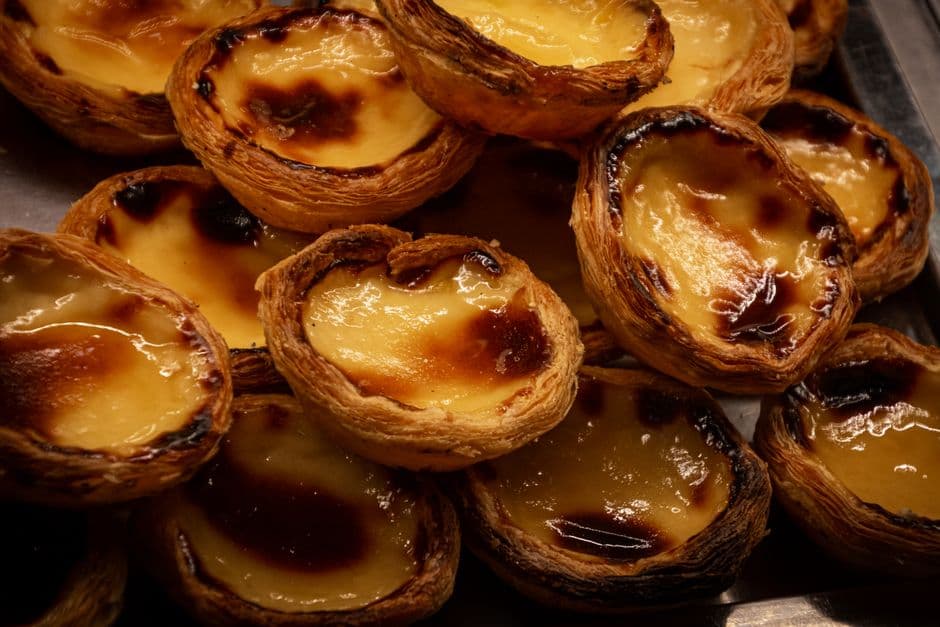
Pastéis de Nata
Portugal's beloved custard tarts with a flaky pastry shell and a rich, slightly caramelised egg custard filling, dusted with cinnamon and icing sugar.
About This Recipe
Pastéis de nata are perhaps Portugal's greatest contribution to the world of pastry. Created by Catholic monks at the Jerónimos Monastery in Belém, Lisbon, around the 18th century, the recipe was sold to a nearby sugar refinery after the monastery closed. The original Pastéis de Belém shop has been using the same secret recipe since 1837, producing thousands of tarts daily.
Ingredients
Serves 12
- 250 gpuff pastry(all-butter, chilled)
- 300 mlwhole milk
- 6egg yolks
- 150 gcaster sugar
- 30 gplain flour
- 1cinnamon stick
- 1 striplemon zest
- 1 tspvanilla extract
- 1 tspground cinnamon(for dusting)
Instructions
- 1
Make custard
Heat milk with cinnamon stick and lemon zest until steaming. Whisk sugar, flour, and yolks; pour hot milk over while whisking. Return to heat, stir until thickened. Add vanilla. Cool.
- 2
Line tins
Roll pastry into a tight log, slice into 12 rounds. Press each round into a greased muffin tin, working up the sides.
- 3
Fill
Spoon cooled custard into shells, filling ¾ full.
- 4
Bake
Bake at 250 °C (or maximum oven temp) for 12–15 min until pastry is golden and custard has dark caramelised spots.
- 5
Serve
Cool 5 min, dust with cinnamon and icing sugar. Serve warm.
Did you make this?
Rate it and help other cooks find the recipes that actually work.
One tap to sign in, and we'll save the rating you just picked.
Everything you need to plan your week — free
- Meal calendar
- Grocery list
- AI recipe ideas
Cook this hands-free
Get AI meal plans, step-by-step cooking mode, and your saved recipes in the free Bento app.
Pro Tips
- →
The oven must be as hot as possible — the caramelised dark spots are essential to the authentic flavour.
- →
Weigh dry ingredients on a scale instead of using cups — grams are the difference between a tender and a tough crumb.
- →
Bring eggs and dairy to room temperature before mixing; cold ingredients seize fats and produce a dense, uneven texture.
- →
Read the recipe through once before starting — knowing what's coming prevents the small timing mistakes that compound into bigger ones.
Variations
- •
Add orange zest to the custard
- •
Use shortcrust instead of puff pastry for a denser shell
- •
Infuse custard with cardamom
- •
Vegetarian: swap the protein for roasted king oyster mushrooms, smoked tofu or cooked chickpeas — adjust seasoning slightly upward to compensate.
Storage
Best eaten the day they are made. Store at room temperature up to 2 days.
History & Origin
The monks of Jerónimos Monastery created the tarts to use up surplus egg yolks left over from starching habits with egg whites. After the monastery was closed in 1834, the recipe was sold to a local businessman who opened Pastéis de Belém in 1837.
Frequently Asked Questions
Why did my custard sink?
Over-filling or under-baking can cause sinking. Fill only ¾ full and bake at very high heat.
Can I make this ahead of time?
Yes — most of the components can be prepared up to a day in advance and refrigerated separately. Reheat gently and assemble just before serving so textures stay distinct.
What can I substitute if I don't have all the ingredients?
Stay close to the role each ingredient plays: swap aromatics for similar ones (shallot for onion, lime for lemon), and keep the fat-acid-salt balance intact. Spice blends can usually be approximated with what's in the cupboard.
How do I know it's authentic?
Authenticity sits on a spectrum — what matters more is honoring the technique and balance of flavors. If the dish tastes harmonious and respects how cooks in its home region would build it, you're on solid ground.
Nutrition Facts
Per serving · 12 servings total
Time Summary
Have Questions?
Ask our AI cooking assistant anything about this recipe — substitutions, techniques, scaling.
Chat with AI Chef →Featured in Guides
This recipe is featured in the following curated guides:
More Portuguese Recipes
You Might Also Like
Similar dishes from other cuisines around the world.
Free Kitchen Tools
Calculators and converters that pair with this page — no signup needed.
Put This Into a Plan
Schedule it, shop for it, and track what you already have.
Read Next
Longer reads that go deeper on the ideas behind this dish.
Community
Join the conversation
Sign in to leave a comment and save your favourite recipes