
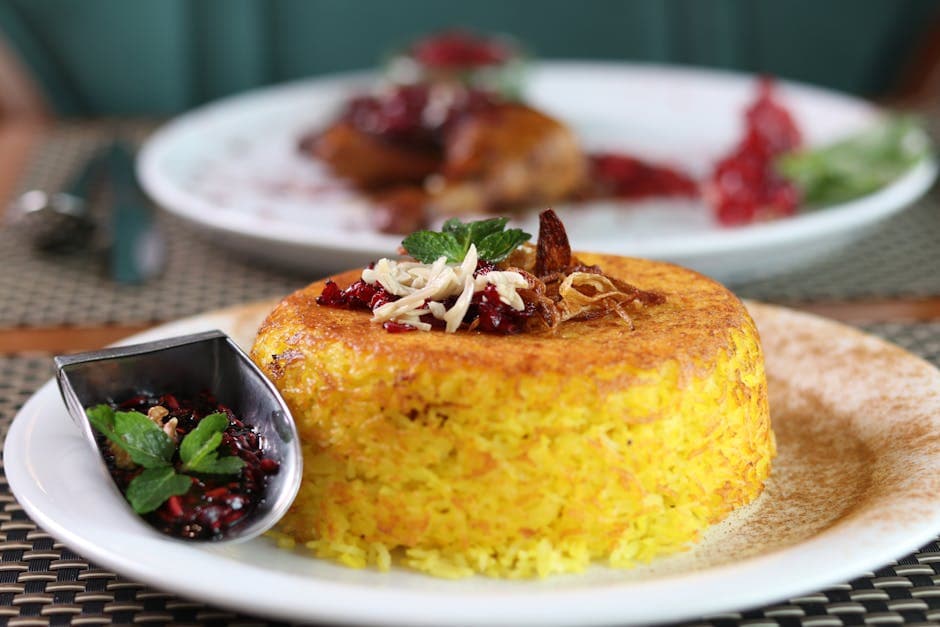
Reshteh Polo
Persian noodle rice cooked with caramelized onions and raisins — a Nowruz tradition.
About This Recipe
Reshteh Polo is one of the most symbolic dishes in the Persian repertoire: toasted reshteh noodles layered through saffron basmati, steamed polo-style, and crowned with a glistening sweet-savory tangle of caramelized onions, raisins, and cinnamon. The noodles carry meaning — at Nowruz, the Persian New Year, eating reshteh represents taking the 'threads' of one's fate in hand, untangling the year's difficulties and weaving good fortune. Beyond the symbolism, it is a masterclass in Persian texture: chewy noodle against fluffy grain, with the crisp tahdig below and jammy onion-raisin topping above. Many families serve it with dates, fried chicken, or simply yogurt.
Ingredients
Serves 6
- 3 cupsbasmati rice
- 200 gPersian reshteh noodles or thin vermicelli
- 2 largeonions, thinly sliced
- 1/2 cupraisins or dates, chopped
- 1/2 tspsaffron, bloomed
- 1 tspcinnamon
- 4 tbspbutter or oil
- 2 tspsalt
Instructions
- 1
Caramelize onions
Cook the sliced onions in half the butter over medium-low heat for a patient 30 minutes, stirring often, until deeply golden-brown and jammy — not merely soft. Stir in the cinnamon and raisins and cook 5 minutes more until the raisins plump and glisten.
Low and slow is everything here; rushed onions taste sharp instead of sweet and never reach the proper mahogany color.
- 2
Cook noodles
Break the reshteh into roughly 5cm lengths. If they aren't pre-toasted, dry-toast them in a pan until golden and nutty-smelling, then boil briefly — 2–3 minutes — until just barely cooked, since they will finish in the steam. Drain well.
Undercook the noodles deliberately; soft noodles turn mushy during the 45-minute steam.
- 3
Parboil rice
Rinse and soak the basmati, then boil it in generously salted water for about 6 minutes until the grains are tender outside with a firm white core. Drain and gently toss with the drained noodles, handling lightly so neither breaks.
- 4
Steam together
Melt the remaining butter in a heavy pot, spread a thin layer of the rice-noodle mixture for tahdig, then mound the rest into a pyramid. Poke steam holes to the bottom, drizzle with saffron water, cover with a towel-wrapped lid, and cook 5 minutes on medium-high, then 45 minutes on the lowest heat.
- 5
Serve
Rest the pot off the heat 5 minutes, then flip onto a platter or spoon the polo out in fluffy layers with shards of tahdig. Crown generously with the caramelized onion and raisin mixture, letting it cascade down the rice, and serve with yogurt or saffron chicken.
Did you make this?
Rate it and help other cooks find the recipes that actually work.
One tap to sign in, and we'll save the rating you just picked.
Everything you need to plan your week — free
- Meal calendar
- Grocery list
- AI recipe ideas
Track what you eat
Snap your meal to log calories and macros, run fasting timers and track water in the free SnapCal app.
Pro Tips
- →
The sweet caramelized onion and raisin topping is the soul of the dish — don't economize on the 30-minute onion cook.
- →
Use toasted reshteh from a Persian grocer if you can; the pre-toasting adds a deep, nutty flavor.
- →
Keep the noodle pieces around 5cm so they distribute evenly through the rice without clumping.
- →
Boil the noodles only until barely done — they finish cooking in the steam.
- →
Serve with a side of dates and yogurt in the traditional Nowruz manner.
Variations
- •
Use chopped dates instead of raisins for a deeper, caramel-like sweetness.
- •
Add browned lamb or beef between the rice layers for a heartier celebratory version.
- •
Stir sautéed mushrooms into the onion topping for an earthy vegetarian main.
- •
Add a handful of lentils to the parboil for the cousin dish that edges toward adas polo.
Storage
Refrigerate for up to 3 days in a sealed container; store the onion-raisin topping separately so it stays glossy. Reheat the polo covered with a splash of water over low heat to revive the steamed texture.
History & Origin
Reshteh — Persia's ancient hand-cut noodle — predates many noodle traditions of the region, and dishes built on it carry layers of folklore. Reshteh Polo is eaten on the eve of Nowruz and at Sizdah Bedar because the threads symbolize grasping the strings of one's destiny and untangling the knots of the year ahead; some families also serve it before a journey or a new venture for luck. The sweet onion-raisin garnish reflects the old Persian court taste for pairing fruit with grain.
Frequently Asked Questions
Where do I find reshteh noodles?
Persian grocery stores sell reshteh both plain and pre-toasted (reshteh-ye polo), the latter being ideal for this dish. If unavailable, use thin linguine or spaghetti broken into 5cm lengths and dry-toasted in a pan until golden — the toasting step recreates the nutty flavor that defines the dish.
Why is reshteh polo eaten at Nowruz?
The noodles symbolize the threads of fate: eating them at the New Year represents taking control of life's strands and untangling the difficulties of the coming year. Some families say it helps 'find the thread' of good fortune. It shares the holiday table with sabzi polo and kuku sabzi.
Can I make it without saffron?
You can, though saffron supplies the golden color and floral aroma that mark a festive polo. As a budget alternative, a pinch of turmeric in the steaming butter approximates the color, but not the fragrance. Given how little saffron is needed, blooming a small pinch is worth it.
What do you serve with reshteh polo?
Traditional partners include saffron-braised chicken, lamb shank, or simply Medjool dates, fried in a little butter and tucked around the rice. Plain thick yogurt and a shirazi salad balance the sweetness. At Nowruz it often appears as one of several symbolic dishes rather than standing alone.
Nutrition Facts
Per serving (400g / 14.1 oz) · 6 servings total
Time Summary
Have Questions?
Ask our AI cooking assistant anything about this recipe — substitutions, techniques, scaling.
Chat with AI Chef →Featured in Guides
This recipe is featured in the following curated guides:
More Persian Recipes
You Might Also Like
Similar dishes from other cuisines around the world.
Browse by Ingredient
More recipes built around the same core ingredients.
Free Kitchen Tools
Calculators and converters that pair with this page — no signup needed.
Put This Into a Plan
Schedule it, shop for it, and track what you already have.
Read Next
Longer reads that go deeper on the ideas behind this dish.
Community
Join the conversation
Sign in to leave a comment and save your favourite recipes