
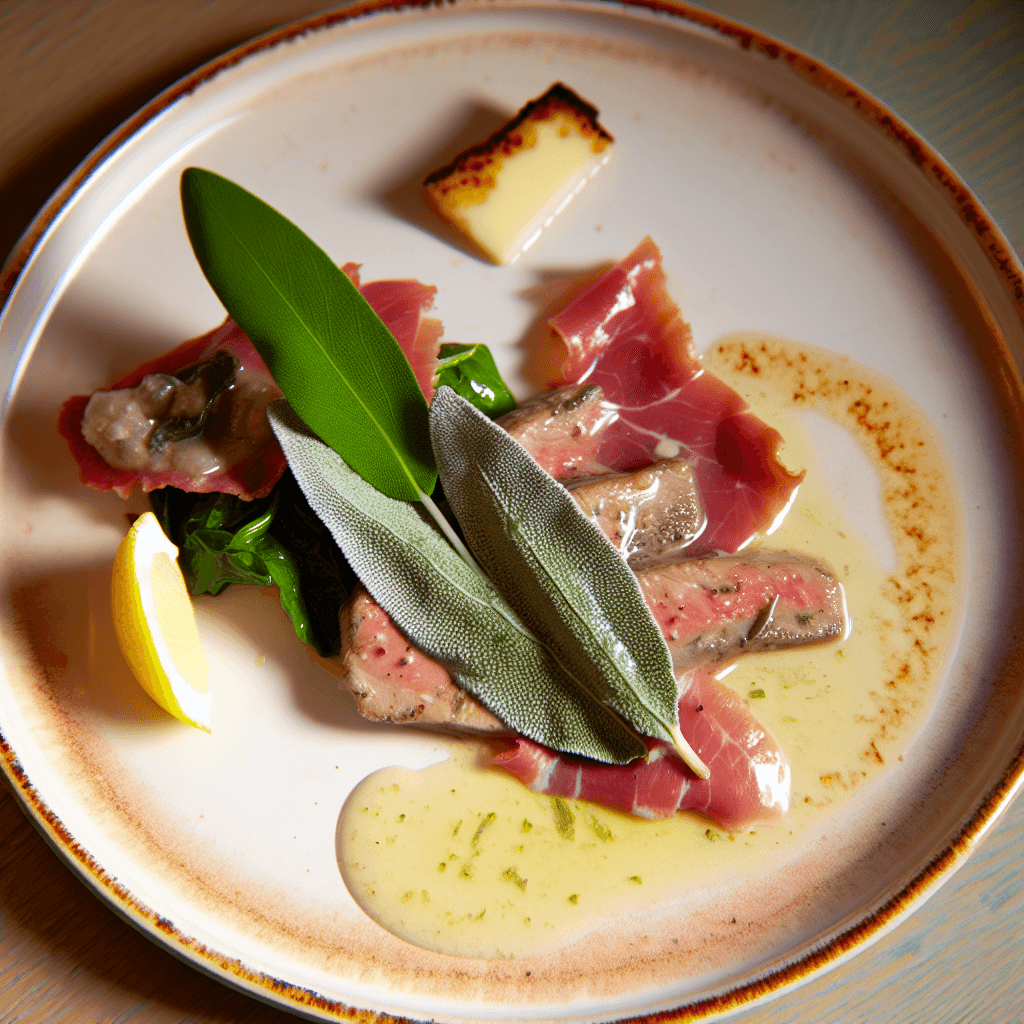
Saltimbocca alla Romana (Roman Veal with Prosciutto and Sage)
One of Rome's most famous secondi — thin veal escalopes wrapped in prosciutto and sage, pan-fried and finished with white wine butter sauce.
About This Recipe
Saltimbocca, meaning 'jumps in the mouth', is a quintessentially Roman preparation: thin veal escalopes (or nowadays also chicken or pork) pinned with a sage leaf and a slice of prosciutto crudo, then quickly pan-fried. The prosciutto crisps on the outside while keeping the veal moist beneath; the sage leaf fries and perfumes the whole dish. A splash of white wine is added to deglaze the pan, creating a quick, glossy sauce finished with cold butter. The dish is ready in under 15 minutes and is as impressive as it is simple. Rome's trattorie serve it with nothing more than a wedge of lemon and perhaps some seasonal greens.
Ingredients
Serves 4
- 8 thin slicesveal escalopes (or chicken breast, butterflied)
- 8prosciutto crudo, thin slices
- 8fresh sage leaves, large
- 60 gunsalted butter
- 100 mldry white wine
- to tastesalt and white pepper
- 8cocktail sticks or toothpicks
Instructions
- 1
Prepare the escalopes
Place veal between two sheets of cling film and pound gently to an even 5 mm thickness. Season lightly with salt and white pepper (prosciutto is salty — use salt sparingly).
- 2
Assemble
Lay a sage leaf on the top side of each escalope, then lay a slice of prosciutto over the sage. Secure with a cocktail stick through all three layers.
- 3
Cook prosciutto-side down
Heat 30 g butter in a large frying pan over medium-high heat until foaming. Place escalopes prosciutto-side down in the pan. Cook for 2 minutes until the prosciutto is crispy.
- 4
Flip and finish
Flip each escalope and cook for 1 minute on the veal side. Remove to a warm plate.
- 5
Deglaze and make sauce
Pour off excess fat from the pan. Add white wine and let it bubble, scraping up any browned bits. Reduce by half, then swirl in remaining cold butter to create a glossy sauce.
- 6
Serve
Remove cocktail sticks. Spoon sauce over the saltimbocca and serve immediately.
Did you make this?
Rate it and help other cooks find the recipes that actually work.
One tap to sign in, and we'll save the rating you just picked.
Everything you need to plan your week — free
- Meal calendar
- Grocery list
- AI recipe ideas
Cook this hands-free
Get AI meal plans, step-by-step cooking mode, and your saved recipes in the free Bento app.
Pro Tips
- →
Cook prosciutto-side down first — it crisps beautifully and the sage releases its fragrance into the butter.
- →
Don't overcook the veal — 3 minutes total is usually enough for thin escalopes.
- →
The sauce should be glossy and light. Add cold butter off the heat to prevent breaking.
- →
Taste and adjust salt at the very end — flavors concentrate as liquids reduce, and a final pinch of flaky salt sharpens the whole dish.
Variations
- •
Chicken saltimbocca: use thin chicken breast instead of veal — slightly longer cooking time needed.
- •
Some versions add a thin slice of fontina cheese under the prosciutto, melting into the veal.
- •
Vegetarian: swap the protein for roasted king oyster mushrooms, smoked tofu or cooked chickpeas — adjust seasoning slightly upward to compensate.
- •
Spicier: add a finely chopped fresh chile or a teaspoon of crushed Aleppo/Urfa pepper to the aromatics for warm, layered heat instead of a single sharp hit.
Storage
Best eaten immediately. Not suitable for storing or reheating.
History & Origin
Saltimbocca is traditionally associated with Rome and the surrounding Lazio region, though the dish appears in cookbooks across central and southern Italy. It has been a staple of Roman trattorie since at least the 19th century.
Frequently Asked Questions
Can I make this without the cocktail sticks?
Yes — the prosciutto tends to stick to the veal during cooking and may not need securing. Try without and see if the layers hold.
What can I substitute for veal?
Chicken breast (pounded thin), pork escalopes or turkey breast are all good substitutes.
Can I make this ahead of time?
Yes — most of the components can be prepared up to a day in advance and refrigerated separately. Reheat gently and assemble just before serving so textures stay distinct.
What can I substitute if I don't have all the ingredients?
Stay close to the role each ingredient plays: swap aromatics for similar ones (shallot for onion, lime for lemon), and keep the fat-acid-salt balance intact. Spice blends can usually be approximated with what's in the cupboard.
Nutrition Facts
Per serving · 4 servings total
Time Summary
Have Questions?
Ask our AI cooking assistant anything about this recipe — substitutions, techniques, scaling.
Chat with AI Chef →Featured in Guides
This recipe is featured in the following curated guides:
More Italian Recipes
You Might Also Like
Similar dishes from other cuisines around the world.
Browse by Ingredient
More recipes built around the same core ingredients.
Free Kitchen Tools
Calculators and converters that pair with this page — no signup needed.
Put This Into a Plan
Schedule it, shop for it, and track what you already have.
Read Next
Longer reads that go deeper on the ideas behind this dish.
Community
Join the conversation
Sign in to leave a comment and save your favourite recipes