
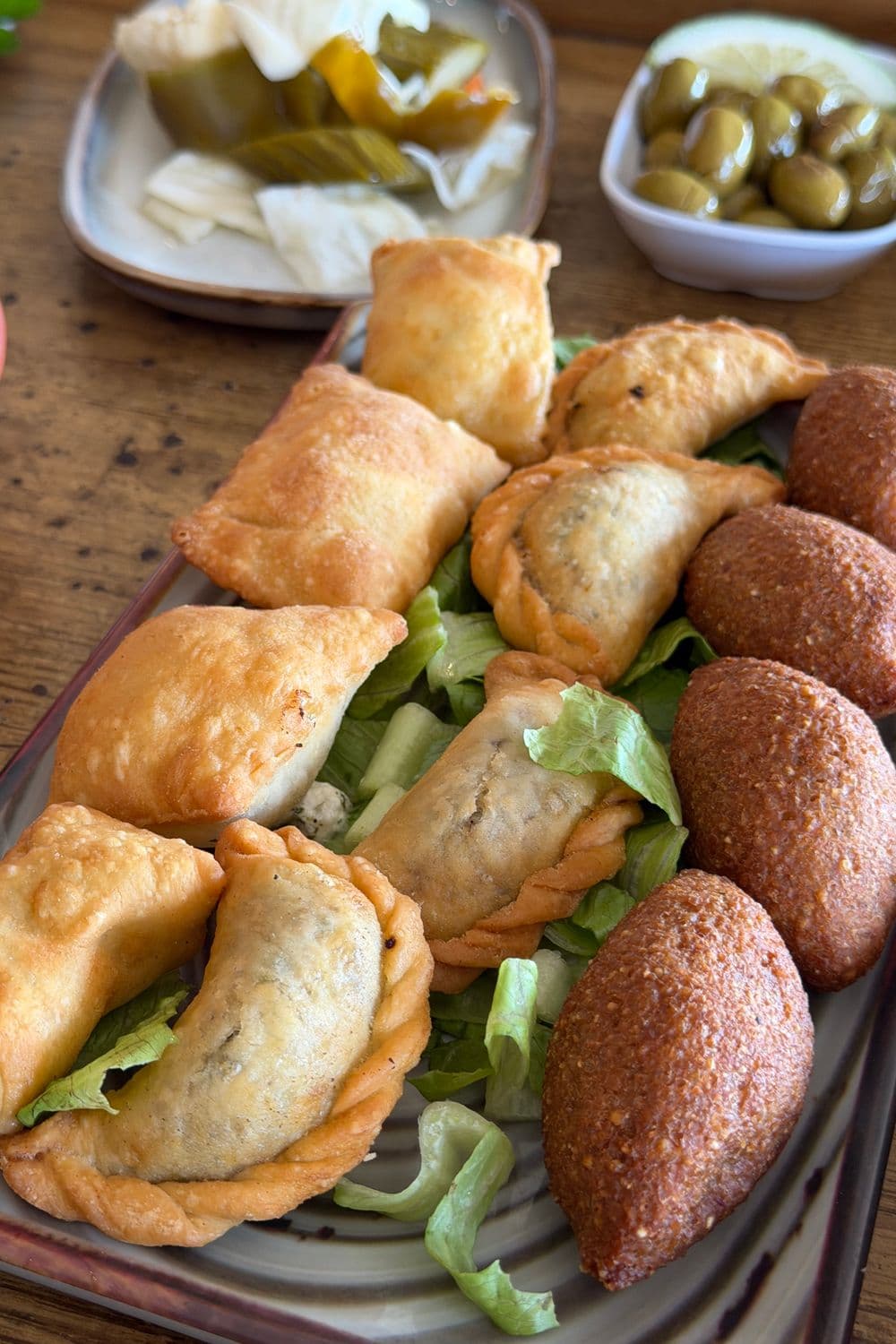
Sambousek
Crispy fried pastry pockets filled with spiced meat or cheese — Lebanese party food.
About This Recipe
No Lebanese celebration table is complete without a platter of sambousek — golden half-moon pastries that shatter at the first bite to reveal a filling of cinnamon-and-allspice-scented meat studded with pine nuts, or molten salty cheese. They are the dish grandmothers make by the hundred before holidays, crimping the edges in assembly-line fashion with daughters and grandchildren around the table. The pastry here matters as much as the filling: rubbing cold butter into the flour before adding water creates fine flaky layers that blister and crisp in hot oil. Cooled filling, well-sealed edges, and steady 170°C oil are the three details that guarantee sambousek that are crunchy outside, juicy inside, and never greasy.
Ingredients
Serves 24
- 3 cupsall-purpose flour
- 1/2 cupbutter or ghee, cold and cubed
- 3/4 cupwarm water
- 1 tspsalt
- 300 gground beef or lamb
- 1 mediumonion, finely chopped
- 2 tbsppine nuts, toasted
- 1 tspallspice
- 1/2 tspcinnamon
- 1/2 tspblack pepper
- oil for frying
Instructions
- 1
Make dough
Rub the cold butter into the flour and salt with your fingertips until the mixture looks like coarse breadcrumbs with no large lumps remaining. Add the warm water a little at a time, kneading just until a smooth, supple dough forms — about 3 minutes. Wrap and rest at room temperature for 30 minutes so the gluten relaxes.
Overworking the dough after the water goes in makes it tough; stop kneading as soon as it comes together.
- 2
Cook filling
Cook the onion and ground meat together in a dry pan over medium-high heat, breaking the meat into fine crumbles, until browned and any liquid has evaporated — about 8 minutes. Season with allspice, cinnamon, pepper, and salt, stir in the toasted pine nuts, and spread on a plate to cool completely before filling.
Warm filling melts the dough and breaks the seal — cool it fully, even briefly in the fridge.
- 3
Shape
Roll the rested dough out to about 2 mm thick and cut 8 cm circles with a cutter or glass. Place a scant tablespoon of filling on one half of each circle, leaving a clean border, fold into a half-moon, and press the edges firmly together. Crimp with fork tines or rope-twist the edge for the traditional finish.
- 4
Fry
Heat 4–5 cm of oil to 170°C — a scrap of dough should bubble steadily, not violently. Fry the sambousek in batches of 5–6 so the temperature holds, turning once, until deep golden brown all over, about 3–4 minutes total. Drain on paper towels and serve hot, with yogurt or as part of a mezze spread.
Did you make this?
Rate it and help other cooks find the recipes that actually work.
One tap to sign in, and we'll save the rating you just picked.
Everything you need to plan your week — free
- Meal calendar
- Grocery list
- AI recipe ideas
Track what you eat
Snap your meal to log calories and macros, run fasting timers and track water in the free SnapCal app.
Pro Tips
- →
Cold butter rubbed into the flour is what makes the pastry flaky — soft butter just makes it greasy.
- →
Seal the edges with a fingertip dipped in water if the dough has dried; an open seam leaks filling into the oil.
- →
Fry in small batches and let the oil recover to 170°C between rounds — crowded, cool oil makes soggy pastry.
- →
Shape all the sambousek before you start frying so none sit half-made while you tend the pot.
- →
They are best 5 minutes out of the oil, when the shell is crispest and the filling still steams.
Variations
- •
Cheese sambousek: fill with crumbled desalted akkawi or grated halloumi mixed with chopped parsley and a little egg.
- •
Baked version: brush with olive oil or egg wash and bake at 200°C for 18–20 minutes until golden.
- •
Spinach filling: sautéed spinach with onion, sumac, and lemon, in the style of fatayer, works beautifully in this dough.
- •
Add a teaspoon of pomegranate molasses to the meat filling for a subtle sweet-sour note.
Storage
Fried sambousek keep 2 days refrigerated; re-crisp at 180°C in the oven for 6–8 minutes rather than microwaving. For best results, freeze them shaped and unfried in a single layer for up to 3 months and fry straight from frozen, adding a minute or two to the cooking time.
History & Origin
Sambousek descend from the medieval sanbusaj, a stuffed pastry praised in 10th-century Baghdadi cookbooks and poetry, which spread along trade routes both east — becoming the South Asian samosa — and west across the Arab world. In Lebanon the half-moon shape and the meat-and-pine-nut filling became the standard, and the pastry settled into its role as essential celebration and mezze food, made in big communal batches before holidays.
Frequently Asked Questions
What cheese is used for the cheese version?
Akkawi is the classic — a white brined cheese that melts into a soft, stretchy filling once desalted by soaking in water for a few hours. Halloumi gives a saltier, squeakier result. Outside the Middle East, a mix of low-moisture mozzarella for melt and feta for tang is a very good substitute, bound with a little chopped parsley.
Can I bake sambousek instead of frying?
Yes — arrange them on a parchment-lined tray, brush generously with olive oil or beaten egg, and bake at 200°C for 18–20 minutes until golden. The texture is more like a short pastry than the blistered, flaky fried shell, but they are lighter and you can cook a whole batch at once, which is handy for parties.
Why do my sambousek burst open in the oil?
Three usual causes: the edges were not pressed firmly enough (or flour on the rim prevented a seal), the filling was still warm and created steam pressure, or air was trapped inside the pocket. Press the dough around the filling to expel air before sealing, crimp firmly, and always cool the filling completely.
Can I prepare them ahead for a party?
This is exactly how Lebanese hosts do it. Shape the sambousek up to a day ahead and refrigerate on a floured tray under plastic wrap, or freeze them for weeks. Fry just before guests arrive — from frozen they need only an extra 1–2 minutes — so they hit the table hot and crisp.
Nutrition Facts
Per serving (70g / 2.5 oz) · 24 servings total
Time Summary
Have Questions?
Ask our AI cooking assistant anything about this recipe — substitutions, techniques, scaling.
Chat with AI Chef →Featured in Guides
This recipe is featured in the following curated guides:
More Lebanese Recipes
You Might Also Like
Similar dishes from other cuisines around the world.
Browse by Ingredient
More recipes built around the same core ingredients.
Free Kitchen Tools
Calculators and converters that pair with this page — no signup needed.
Put This Into a Plan
Schedule it, shop for it, and track what you already have.
Read Next
Longer reads that go deeper on the ideas behind this dish.
Community
Join the conversation
Sign in to leave a comment and save your favourite recipes