
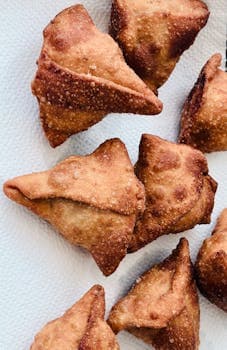
Samosa
Crispy triangular pastries filled with spiced potatoes and peas — India's most loved street food.
About This Recipe
The samosa is India's most beloved snack — a triangular pastry with a blistered, shatteringly flaky shell wrapped around a punchy filling of coarsely mashed potato, peas, ginger, green chili, and a masala sharpened with tangy amchur. Two counterintuitive techniques make a great samosa. First, the dough: ghee rubbed into the flour until it holds a fist-print (the 'moyan'), kneaded stiff, which fries up crisp rather than puffy. Second, the fry: low oil at 150°C for a slow 8–10 minutes, which dries the crust into its signature bubbled flakiness — hot oil produces blistered-soft shells that go limp in minutes. Eaten with mint and tamarind chutneys at tea time, samosas are equally at home at street stalls, weddings, and home kitchens.
Ingredients
Serves 8
- 2 cupsall-purpose flour (maida)
- 1/4 cupghee or oil
- 1 tspajwain (carom seeds)
- 1 tspsalt
- 1/2 cupcold water
- 4 mediumpotatoes, boiled and mashed coarsely
- 1 cupfrozen peas, thawed
- 2 tbspghee
- 1 tspcumin seeds
- 1 tbspginger, grated
- 2green chilies, finely chopped
- 1 tspground cumin
- 1 tspground coriander
- 1 tspgaram masala
- 1 tspamchur (dry mango powder)
- 1/2 tspred chili powder
- 1 tspsalt (for filling)
- 1/4 cupfresh cilantro, chopped
- oil for deep frying
Instructions
- 1
Make dough
Rub the ghee into the flour, ajwain, and salt with your fingertips until the mixture resembles breadcrumbs and clumps when squeezed — this fat-coating step (moyan) is what makes the shell flaky. Add cold water a little at a time to form a stiff, firm dough. Knead briefly, cover, and rest 30 minutes.
The dough should be noticeably stiffer than chapati dough; a soft dough blisters and turns chewy instead of crisp and flaky.
- 2
Make filling
Heat the ghee in a wide pan and add the cumin seeds. When they sizzle and darken a shade, add the grated ginger and chopped green chilies and cook 30 seconds until fragrant — this tempering infuses the fat that will carry flavor through the whole filling.
- 3
Add spices
Add the ground cumin, coriander, garam masala, amchur, and chili powder and stir for just 30 seconds in the hot ghee. Ground spices scorch fast, so have the potatoes standing by — toasted is the goal, burnt is bitter.
- 4
Combine
Add the coarsely mashed potatoes, peas, salt, and cilantro and fold everything together until the spices streak evenly through the filling, keeping some potato chunks intact for texture. Spread on a plate and cool completely before filling — warm filling steams the pastry and breaks the seals.
The filling must be cool and dry; this is the make-or-break rule for samosas that seal properly and fry crisp.
- 5
Roll dough
Divide the rested dough into 8 equal balls. Roll each into an oval roughly 18cm long and 2mm thick — slightly thicker than you'd think, since thin dough tears under the filling. Cut each oval in half crosswise to give two half-moons, each becoming one samosa.
- 6
Form cones
Hold a half-moon flat-edge up, moisten the straight edge with water, and bring the two corners together, overlapping slightly, to form a sealed cone. Fill with about 2 tablespoons of cooled filling, leaving a 1cm rim, then moisten and pinch the top edge firmly closed into a plump triangle.
Press the seams hard and pleat the top seal — any gap lets oil flood in and filling leak out during the long fry.
- 7
Heat oil
Heat the oil to just 150°C — markedly cooler than standard deep-frying. Test with a scrap of dough: it should sink, then rise slowly with lazy bubbles. This low temperature is deliberate and traditional; it sets the crust slowly into layered flakiness.
- 8
Fry
Slide in the samosas in batches and fry slowly for 8–10 minutes, turning occasionally, until the shells are deep golden, rigid, and covered in tiny bubbles. Resist raising the heat to speed things up — a fast, hot fry produces a blistered, oily, soft shell that won't hold its crunch.
- 9
Serve
Drain on paper towels for a minute or two. Serve hot with mint-cilantro chutney and sweet tamarind chutney — the classic pairing of cool herbaceousness and sticky tang against the spiced potato and crisp shell.
Did you make this?
Rate it and help other cooks find the recipes that actually work.
One tap to sign in, and we'll save the rating you just picked.
Everything you need to plan your week — free
- Meal calendar
- Grocery list
- AI recipe ideas
Track what you eat
Snap your meal to log calories and macros, run fasting timers and track water in the free SnapCal app.
Pro Tips
- →
Fry low and slow at 150°C — high heat is the number one samosa mistake, giving oily, blistered, quickly-softening shells.
- →
The filling must be completely cool and fairly dry before shaping, or the seals fail and the pastry steams soggy.
- →
Make the dough stiff and rest it well; the ghee rub (moyan) should let a handful of flour hold its shape when squeezed.
- →
Don't skip the ajwain in the dough — its thyme-like sharpness is the signature aroma of a proper samosa shell.
- →
Coarsely mash the potatoes rather than puréeing; the filling should have rustic chunks, not paste.
Variations
- •
Keema samosa: fill with spiced minced lamb or chicken cooked dry with onions and garam masala.
- •
Add boiled chana dal or crushed peanuts to the potato filling for extra protein and crunch, Punjabi-street style.
- •
Bake or air-fry brushed with oil for a lighter (if less flaky) version.
- •
Crush leftover samosas into samosa chaat, smothered with chickpea curry, yogurt, and both chutneys.
Storage
Best eaten fresh and hot. Keep at room temperature a few hours and re-crisp at 200°C for 8 minutes. Shaped, unfried samosas freeze excellently for 2 months — fry straight from frozen at 150°C, adding a few minutes.
History & Origin
The samosa traces back to the medieval Middle East and Central Asia, where a meat-filled pastry called sanbusak traveled with traders and migrants along trade routes into the Indian subcontinent by around the 13th–14th century. India transformed it — the potato filling arrived only after the Portuguese introduced potatoes — and made the vegetarian samosa its own. Today every region has a version, from Punjabi giants to Bengali singaras.
Frequently Asked Questions
Can I bake or air-fry samosas instead of deep-frying?
Yes — brush generously with oil and bake at 200°C for about 25 minutes, turning once, or air-fry at 180°C for 15–18 minutes. You'll get a crisp but more biscuit-like shell without the layered flakiness that slow oil-frying creates, since the pastry was designed for the fryer. For best baked results, roll the dough slightly thinner and don't skimp on the oil brushing.
Why did my samosa shells turn out bubbly and soft instead of flaky?
Your oil was too hot. Samosas break the usual deep-frying rules: they need a slow fry starting around 150°C so the stiff dough dries gradually into rigid, flaky layers. Hot oil puffs the surface into large blisters that soak oil and collapse soft within minutes. Soft dough or insufficient ghee in the moyan rub compounds the problem — keep the dough stiff.
What is amchur and what can I use instead?
Amchur is dried unripe mango ground to a tart, fruity powder — it gives samosa filling its signature sour brightness without adding moisture, which matters in a sealed pastry. Indian groceries stock it cheaply. The best substitutes are a generous squeeze of lemon juice (fold in after the filling cools slightly) or a pinch of chaat masala, which itself contains amchur.
Can I prepare samosas ahead for a party?
Absolutely — they're ideal make-ahead party food. Shape the samosas, lay them on a tray without touching, and refrigerate up to a day or freeze solid and bag for 2 months. Fry refrigerated ones as normal and frozen ones straight from the freezer at 150°C, adding 2–3 minutes. You can also fully fry them hours ahead and re-crisp in a 200°C oven for 8 minutes.
Nutrition Facts
Per serving (130g / 4.6 oz) · 8 servings total
Time Summary
Have Questions?
Ask our AI cooking assistant anything about this recipe — substitutions, techniques, scaling.
Chat with AI Chef →Featured in Guides
This recipe is featured in the following curated guides:
More Indian Recipes
You Might Also Like
Similar dishes from other cuisines around the world.
Browse by Ingredient
More recipes built around the same core ingredients.
Free Kitchen Tools
Calculators and converters that pair with this page — no signup needed.
Put This Into a Plan
Schedule it, shop for it, and track what you already have.
Read Next
Longer reads that go deeper on the ideas behind this dish.
Community
Join the conversation
Sign in to leave a comment and save your favourite recipes