
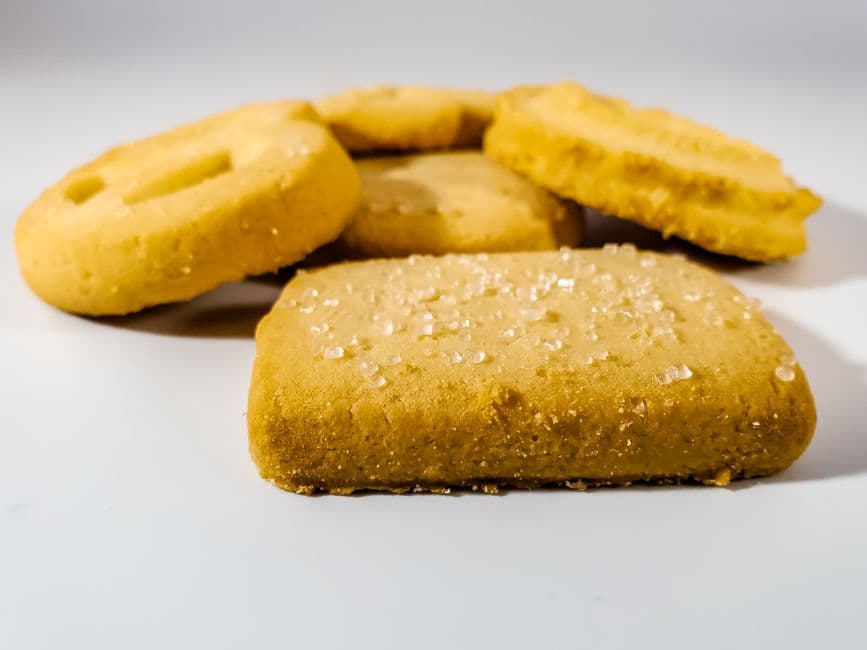
Scottish Shortbread
The definitive Scottish biscuit — three simple ingredients baked to a crumbling, buttery, melt-in-the-mouth perfection.
About This Recipe
Scottish shortbread is one of the world's most perfect biscuits, its recipe unchanged for centuries: one part sugar, two parts butter, three parts flour. The magic lies entirely in the quality of these three ingredients and the care taken not to overwork the dough. Shortbread was historically a luxury, baked only at Christmas and New Year (Hogmanay), when it was given as a gift to bring good luck. The most famous regional shapes are the round 'petticoat tails' from Edinburgh and the thick 'fingers' associated with Walker's of Aberlour in Speyside. Eaten with a cup of tea or alongside whisky, it is Scotland's most internationally recognisable food.
Ingredients
Serves 16
- 225 gunsalted butter, at room temperature (best quality possible)
- 110 gcaster sugar, plus extra for dusting
- 340 gplain flour, sifted
- 0.25 tspfine sea salt
Instructions
- 1
Cream butter and sugar
Beat the softened butter and caster sugar together with a wooden spoon or electric beater until pale and very well combined, about 3–4 minutes. Do not rush this step.
- 2
Add flour
Sift in the flour and salt. Bring together gently with your hands until a cohesive dough forms. Do not knead — work it just until it holds together. Overworking makes tough shortbread.
- 3
Shape
For fingers: press the dough into a lightly floured 20 x 30 cm baking tin to about 1 cm thickness. Use the back of a spoon to smooth the surface. Prick all over with a fork and mark into fingers with a knife.
- 4
Chill
Refrigerate the shaped shortbread for 20–30 minutes. Preheat the oven to 150°C (130°C fan / 300°F) during this time. Chilling helps the biscuits hold their shape.
- 5
Bake
Bake for 25–30 minutes until the shortbread is pale golden — it should not be brown. Remove from the oven and immediately re-cut the finger shapes and dust lightly with caster sugar while still warm.
- 6
Cool
Leave in the tin to cool completely before removing. The shortbread will firm up significantly as it cools. Once cold, separate along the cut lines.
Did you make this?
Rate it and help other cooks find the recipes that actually work.
One tap to sign in, and we'll save the rating you just picked.
Everything you need to plan your week — free
- Meal calendar
- Grocery list
- AI recipe ideas
Track what you eat
Snap your meal to log calories and macros, run fasting timers and track water in the free SnapCal app.
Pro Tips
- →
The butter is everything — use the best quality unsalted butter you can find. This is not the time to cut corners.
- →
Low and slow is the key — shortbread baked too hot browns before it dries out properly.
- →
Rice flour (30 g replacing 30 g plain flour) gives a superior sandy, crumbly texture beloved in Scotland.
- →
Taste and adjust salt at the very end — flavors concentrate as liquids reduce, and a final pinch of flaky salt sharpens the whole dish.
Variations
- •
Lavender shortbread: add 1 tsp dried culinary lavender to the dough.
- •
Orange shortbread: add the finely grated zest of 1 orange.
- •
Chocolate dipped shortbread: dip cooled fingers halfway in melted dark chocolate.
- •
Vegetarian: swap the protein for roasted king oyster mushrooms, smoked tofu or cooked chickpeas — adjust seasoning slightly upward to compensate.
Storage
Store in an airtight tin at room temperature for up to 2 weeks. Shortbread also freezes very well — freeze baked and cooled fingers for up to 3 months.
History & Origin
Mary, Queen of Scots, is said to have been particularly fond of petticoat tail shortbread. The earliest printed recipe for shortbread appears in a Scottish cookbook from 1736, though the biscuit had certainly been made for generations before that.
Frequently Asked Questions
Why is my shortbread spreading?
Either the butter was too warm, or the dough was not chilled before baking. Rest the shaped dough in the fridge for 30 minutes before baking.
What makes Scottish shortbread different from other shortbread?
Scottish shortbread uses a very high butter ratio and is baked very slowly at low temperature, giving it an exceptionally crumbly, melt-in-the-mouth texture distinct from other versions.
Can I make this ahead of time?
Yes — most of the components can be prepared up to a day in advance and refrigerated separately. Reheat gently and assemble just before serving so textures stay distinct.
What can I substitute if I don't have all the ingredients?
Stay close to the role each ingredient plays: swap aromatics for similar ones (shallot for onion, lime for lemon), and keep the fat-acid-salt balance intact. Spice blends can usually be approximated with what's in the cupboard.
Nutrition Facts
Per serving (55g / 1.9 oz) · 16 servings total
Time Summary
Have Questions?
Ask our AI cooking assistant anything about this recipe — substitutions, techniques, scaling.
Chat with AI Chef →Featured in Guides
This recipe is featured in the following curated guides:
More Scottish Recipes
You Might Also Like
Similar dishes from other cuisines around the world.
Free Kitchen Tools
Calculators and converters that pair with this page — no signup needed.
Put This Into a Plan
Schedule it, shop for it, and track what you already have.
Read Next
Longer reads that go deeper on the ideas behind this dish.
Community
Join the conversation
Sign in to leave a comment and save your favourite recipes